
Quick Answer: Of the decorating technologies available to commercial print shops and promotional product manufacturers today, UV DTF (direct-to-film) printing is one of the most versatile in terms of substrates, ideal for short runs, and chemically durable.
According to Leach, Pierce and Mackenzie in The Printing Ink Manual (6th edition, 2023), UV-curable ink systems deliver measurably superior adhesion and abrasion resistance compared to water-based or solvent alternatives. This is precisely why UV DTF transfers bond reliably to glass, metal, acrylic, and coated plastics without the need for a heat press or pressure-sensitive overlaminate in the conventional sense. The PRINTING United Alliance’s State of the Wide-Format Market Report (2024) identifies UV hybrid and roll-to-roll UV DTF platforms as the fastest-growing segment of wide-format digital printing. This growth is driven by the rising demand for on-demand personalisation, zero-minimum-quantity production and the ability to decorate surfaces that cannot be economically reached by any other digital process.
Understanding What UV DTF Printing Actually Is
Before deciding which UV DTF printer is best for a given application, it is helpful to understand exactly what the technology involves, as the term is often used loosely, which can lead to disappointing purchasing decisions. A UV DTF printer does not print directly onto the final product. Instead, it deposits UV-curable ink in reverse sequence onto a transparent release film. First, it builds up a full CMYK image layer, then it applies a white ink foundation layer. Finally, it applies a pressure-sensitive adhesive laminate on top. Once complete, the transfer is peeled from the liner and pressed by hand onto virtually any hard or semi-rigid surface, bonding immediately without the need for heat or a heat press, and without the substrate needing to be removed from a production line.
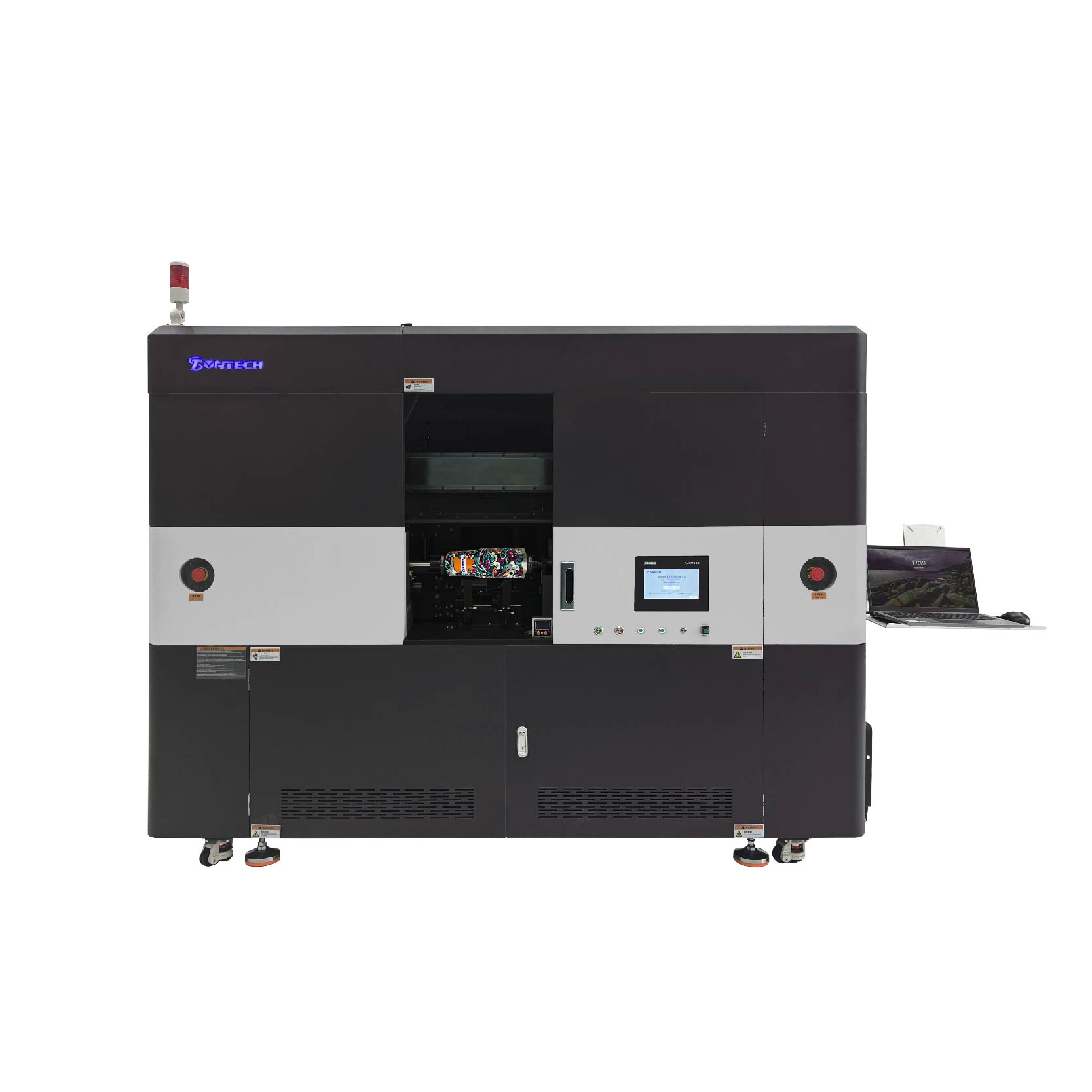
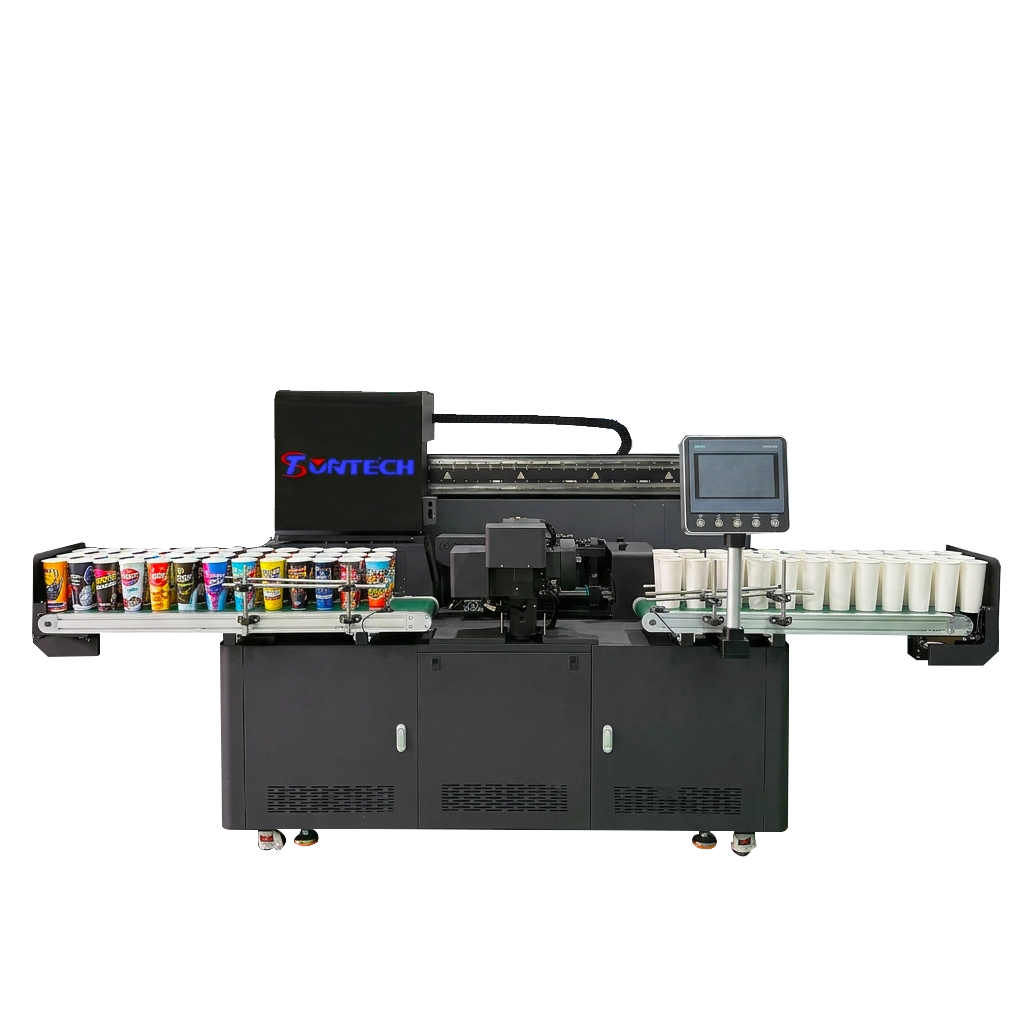
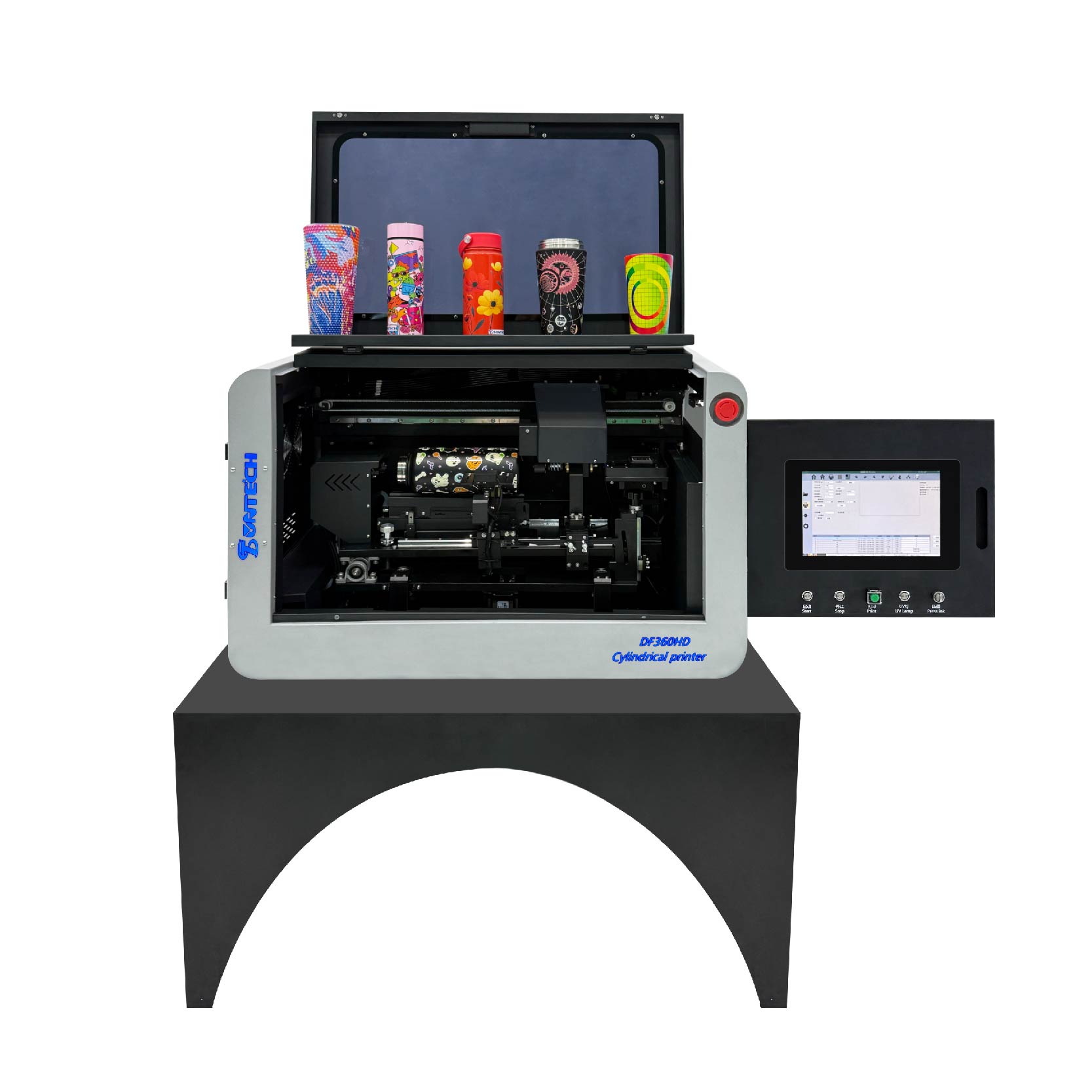
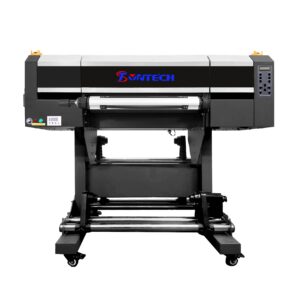
This workflow distinction is important when comparing UV DTF with conventional UV flatbed printing, pad printing, or standard DTF textile decoration. A UV flatbed printer prints directly onto an object placed on its bed, meaning the object must fit within the machine’s travel area and be flat or only slightly curved. Setup time per job can also be substantial. UV DTF eliminates all of these constraints. Transfers can be produced in bulk during off-peak hours, stored flat and applied anywhere — to finished products, in the field and by non-technical staff. This operational flexibility is one of the core reasons I have followed this segment closely over the past several years when evaluating new equipment lines from manufacturers, including Suntech Digital Equipment. I have had the opportunity to evaluate their UV DTF roll-to-roll configurations in a production context.
The Specifications That Actually Determine Performance
Most buyer guides for UV DTF printers lead with resolution figures and move quickly to price. That framing is misleading. In practice, the specifications that most determine output quality, uptime reliability, and total cost of ownership across a 24-month production cycle are printhead architecture, white ink management system design, and ink-film-laminate system compatibility — not peak resolution alone. A machine rated at 2,400 dpi running poorly matched third-party inks on incompatible release film will produce inferior results to a 1,200 dpi system running a properly profiled, manufacturer-validated consumable set.
| Print Width | 30–40 cm (A3+) | 60 cm | 60–130 cm |
| Native Resolution | 720 dpi | 1,200 dpi | 1,200–2,400 dpi |
| Printhead Generation | Epson DX / XP600 | Epson i3200-A1 / Ricoh Gen5 | Kyocera / Ricoh Gen6 |
| White Ink Management | Manual agitation | Automated recirculation | Continuous pressurized loop |
| Ink Channels | CMYK + W | CMYK + W + Varnish | CMYK + W + V + Spot |
| Recommended Monthly Volume | Under 30 m² | 50–200 m² | 200+ m² |
| Approximate Price Range (USD) | $3,000–$8,000 | $9,000–$22,000 | $25,000–$80,000+ |
White ink management deserves particular emphasis because it is the single most consequential engineering decision in a UV DTF machine’s design. UV white inks contain titanium dioxide pigment that settles aggressively during any idle period. On machines that rely on manual agitation — a daily or per-shift shake-and-prime routine — even a single missed cycle can cause pigment accumulation in the manifold that clogs the printhead within hours. Automated recirculation systems, which continuously circulate white ink through a closed loop regardless of whether the machine is actively printing, reduce this failure mode dramatically. Shops running two-shift operations or weekend production schedules should treat automated white ink recirculation not as a premium option but as a baseline requirement, regardless of budget pressure.
A Practical Comparison of Leading UV DTF Platforms
The UV DTF printer market in 2024–2025 segments into three broad categories: globally branded OEM machines from manufacturers with established Western distribution networks, Chinese-origin OEM machines built around licensed printhead platforms, and hybrid flatbed systems that support DTF film workflows as a secondary capability. Each category serves different buyer profiles, and the right choice depends more on your support infrastructure and production cadence than on any single specification.
| Roland VersaUV LEF2-300 | Roland proprietary | 300 mm | 1,440 dpi | Manual circulation | Awards, promos, mixed flatbed | $14,000–$18,000 |
| Mimaki UJF-7151 Plus | Ricoh Gen5 | 510 mm | 1,200 dpi | Automated | Fine-detail production DTF | $22,000–$30,000 |
| Epson SureColor V7000 | Epson PrecisionCore TFP | 762 mm | 1,200 dpi | Automated | Mid-volume, broad substrate | $18,000–$24,000 |
| Suntech UV DTF Roll-to-Roll | Epson i3200-A1 | 600–1,200 mm | 1,200 dpi | Pressurized recirculation | High-volume continuous DTF | Contact for pricing |
| Nocai UV-0609 / UV-0612 | Epson i3200-A1 | 600–1,200 mm | 1,200 dpi | Automated recirculation | Mid-to-high volume roll-to-roll | $9,000–$18,000 |
The Roland LEF2-300 is one of the most widely used small-format UV systems in the promotional products industry — and for good reason. Its GREENGUARD Gold-certified ink chemistry, combined with Roland’s colour management ecosystem, delivers consistent, repeatable results on substrates commonly used for awards and personalisation work. However, its limitations for dedicated DTF production are throughput and the flatbed architecture, which constrain output per hour compared with roll-to-roll systems. Additionally, the manual white ink circuit requires disciplined daily maintenance.
Mimaki’s UJF-7151 Plus is well-suited to shops that prioritise fine detail output over throughput volume. Its Ricoh Gen5 printhead delivers clean dot placement at 1,200 dpi, and its automated ink circulation system reliably handles white ink stability. Mimaki’s Kebab cylindrical printing option gives the machine a secondary capability for direct-to-object decoration, which flatbed-only DTF systems cannot replicate. For studios producing branded merchandise, packaging prototypes and custom gifts, where image quality and surface fidelity are non-negotiable, the Mimaki platform is a popular choice.
However, for operators focused on dedicated, high-volume roll-to-roll UV DTF production — such as the continuous-run sticker and transfer market, promotional item decoration at scale, or OEM supply to resellers — the Chinese OEM platforms based on the i3200-A1 offer a compelling total cost argument. When properly configured with manufacturer-matched inks and validated release films, these machines produce output quality that is difficult to distinguish from that of their Western-branded counterparts, but at a fraction of the acquisition cost. However, the trade-off is support geography: after-sales service quality varies significantly by distributor, so buyers sourcing from overseas should confirm local technical support capacity before committing.
What the Consumable Ecosystem Costs You Over Time?
One of the most consistent blind spots in evaluations of UV DTF purchases is the failure to model consumable costs over a 12-month production period before comparing machine prices. In most mid-volume operations, the ink, release film and adhesive laminate used in a UV DTF printer represent a far larger cash outlay than the depreciation of the machine, and consumable compatibility is not interchangeable across platforms.
While proprietary ink systems — such as Roland, Mimaki and Epson native — carry higher per-millilitre costs, they deliver predictable ICC profiles, validated colour gamuts and a known failure mode when inks are due for replacement. Third-party inks formulated for Epson i3200-head machines have lower unit costs, but require independent profiling and have significant implications for the printhead warranty. Similarly, release film quality varies: premium films from well-known UV DTF consumable suppliers produce cleaner peel separation, sharper edge definition, and more consistent adhesive layer uniformity than generic alternatives. Treating film and laminate as commodity line items rather than precision components of the output system is a common cause of quality issues among new UV DTF users.
FAQ: UV DTF Printers — Common Questions Answered
- What surfaces can UV DTF transfers adhere to?
UV DTF transfers bond reliably to most hard and semi-rigid surfaces, including glass, metal, anodized aluminum, acrylic, powder-coated substrates, wood, ceramics, ABS and polycarbonate plastics, and smooth leather. They do not adhere dependably to highly flexible substrates such as soft silicone wristbands or unstretched rubber, nor to deeply textured surfaces where the adhesive laminate cannot achieve full contact across the print area.
- What is the difference between UV DTF and textile DTF printing?
Standard textile DTF uses water-based pigment inks, requires hot-melt powder adhesive activation, and is designed exclusively for fabric decoration via heat press application. UV DTF uses UV-curable inks, employs a pressure-sensitive adhesive laminate applied cold, and is designed for hard-surface decoration. The two technologies share the “DTF” naming convention but use entirely different inks, films, adhesive chemistries, and application workflows — they are not interchangeable.
- Do UV DTF printers require RIP software?
Yes — all production UV DTF workflows require a dedicated RIP (Raster Image Processor) to manage ink channel sequencing, white ink underbase density, color profile application, and media layout. Common RIP platforms used in UV DTF production include Wasatch SoftRIP, Ergosoft Studio, and manufacturer-bundled solutions such as Roland VersaWorks. Without a RIP, consistent white ink opacity and color accuracy across multi-pass production runs cannot be maintained.
- How durable are UV DTF transfers compared with pad printing?
According to durability benchmarks published by the PRINTING United Alliance (2022), UV-cured inkjet transfers demonstrate superior scratch resistance and chemical resistance compared with water-based pad print and screen print transfers on non-textile hard surfaces, when printed with quality UV inks and properly post-cured. The primary durability vulnerability in UV DTF is edge adhesion on sharply curved or impact-prone surfaces, where thick ink layers can crack under sudden compression if ink film build exceeds recommended thickness.
- Is there a minimum order quantity for UV DTF production?
No. UV DTF is one of the few decoration technologies with no practical minimum order quantity, because it carries no plate, screen, die, or fixture setup cost. Single-unit personalization is fully economically viable, which is the primary commercial advantage of UV DTF over pad printing, screen printing, and laser engraving for short-run and on-demand customization applications.
- How do I decide between an entry-level and a mid-range UV DTF printer?
If your monthly production volume is consistently below 30 square meters, your graphics are primarily bold logos and icons rather than photographic imagery or fine-line text, and you can maintain a daily white ink agitation discipline, an entry-level machine is a defensible starting point. If you are running continuous production across multiple shifts, printing fine text below 8 pt, producing photo-quality transfers, or supplying resellers who will judge your output against professional benchmarks, investing in automated white ink recirculation, a proven i3200 or Gen5 printhead platform, and a validated consumable system will deliver materially lower total cost of ownership over a 24-month period through reduced waste, fewer maintenance events, and higher customer acceptance rates.
Conclusion: Matching the Machine to the Business Reality
There is no single best UV DTF printer for all operators — the right printer for you depends on your production volume, the substrates you intend to use, your quality standards, your capital budget, and the after-sales support infrastructure available in your market. Branded machines from globally recognised manufacturers such as Roland, Mimaki and Epson offer lower ownership risk, integrated consumable validation and established service networks, albeit at a higher price. Chinese OEM roll-to-roll platforms built around Epson i3200-A1 or Ricoh Gen5 printheads deliver competitive print quality at a significantly lower acquisition cost. However, the buyer must secure local distributor support and invest in a validated ink-film-laminate system, rather than opting for the lowest available consumable pricing.
The factors that most reliably differentiate long-term satisfied users from those who are disappointed are white ink management architecture, consumable system discipline and RIP software capability, rather than peak resolution figures or advertised speed ratings. Before purchasing any UV DTF machine, request a production sample run on your specific target substrates, calculate total consumable costs over 12 months, and verify your distributor’s on-site technical service capacity. These three steps will provide you with more information than any specification sheet.
