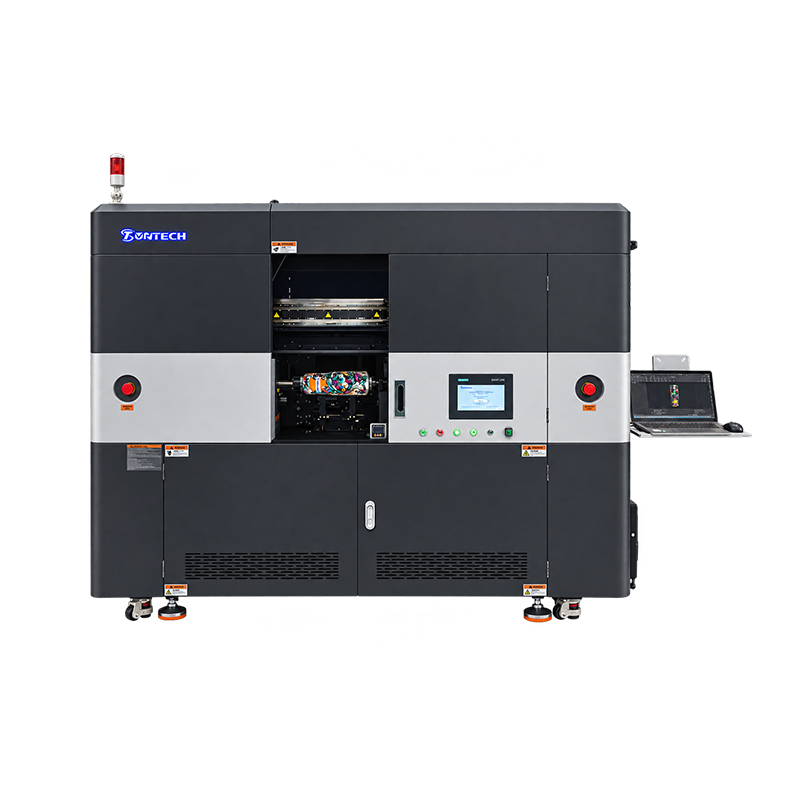
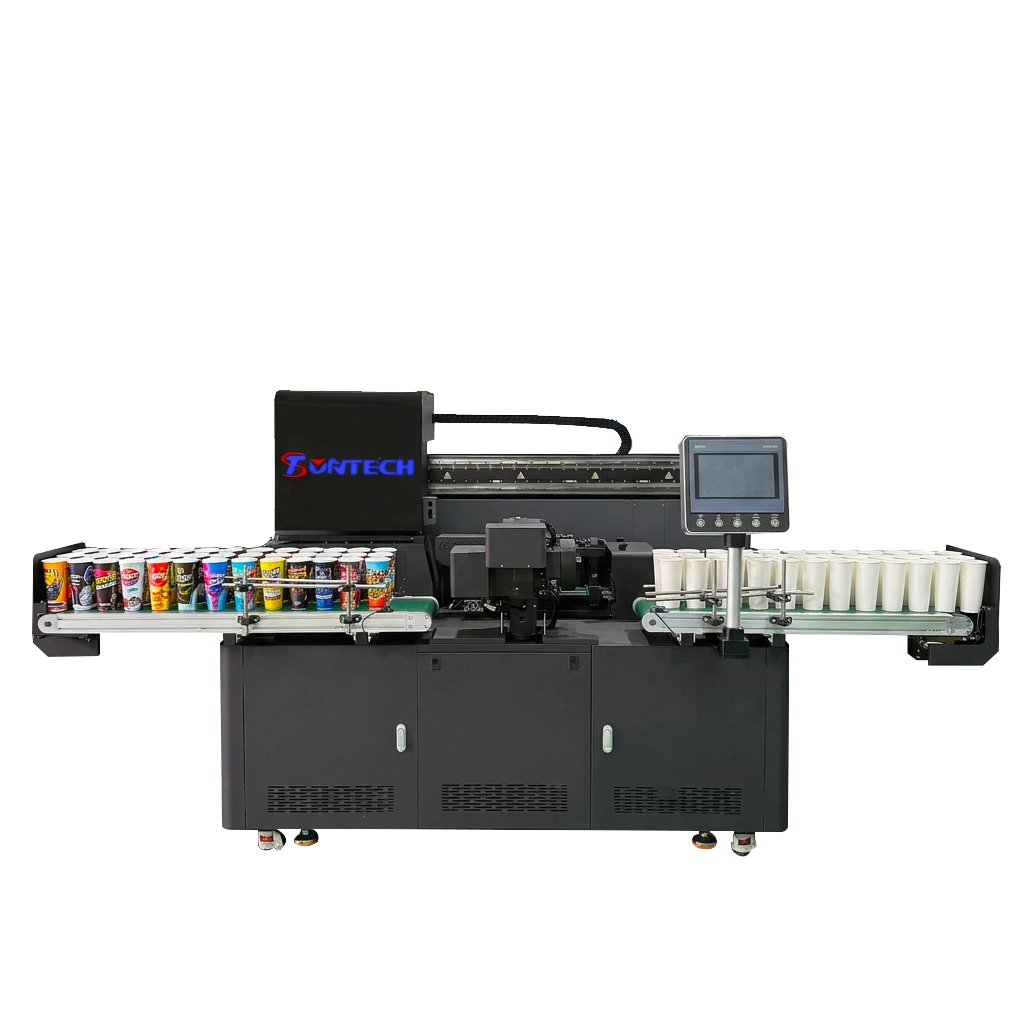

Article Summary: A UV printer uses ultraviolet-curable ink and UV light to print directly onto compatible materials and objects, making it ideal for rigid products such as acrylic, glass, metal, wood, and signage. A DTF (direct-to-film) printer prints textile pigment ink onto a special PET film. The design is then coated with hot-melt adhesive powder, cured, and transferred to fabric using a heat press. As explained in the printing technology guides published by xTool and LexJet, the fundamental differences lie in the production method and target substrate. UV printing is primarily a direct-to-object process, whereas standard DTF is a film-transfer process mainly developed for textile decoration.
An important distinction to note from the outset is that a UV printer is not the same as a UV DTF printer. Traditional UV printing applies ink directly to the product, whereas UV DTF creates a UV-cured design on a special transfer film for application to compatible hard surfaces. This article compares a conventional UV printer with a standard textile DTF printer and explains where UV DTF fits into the wider printing market.
What Is a UV Printer?
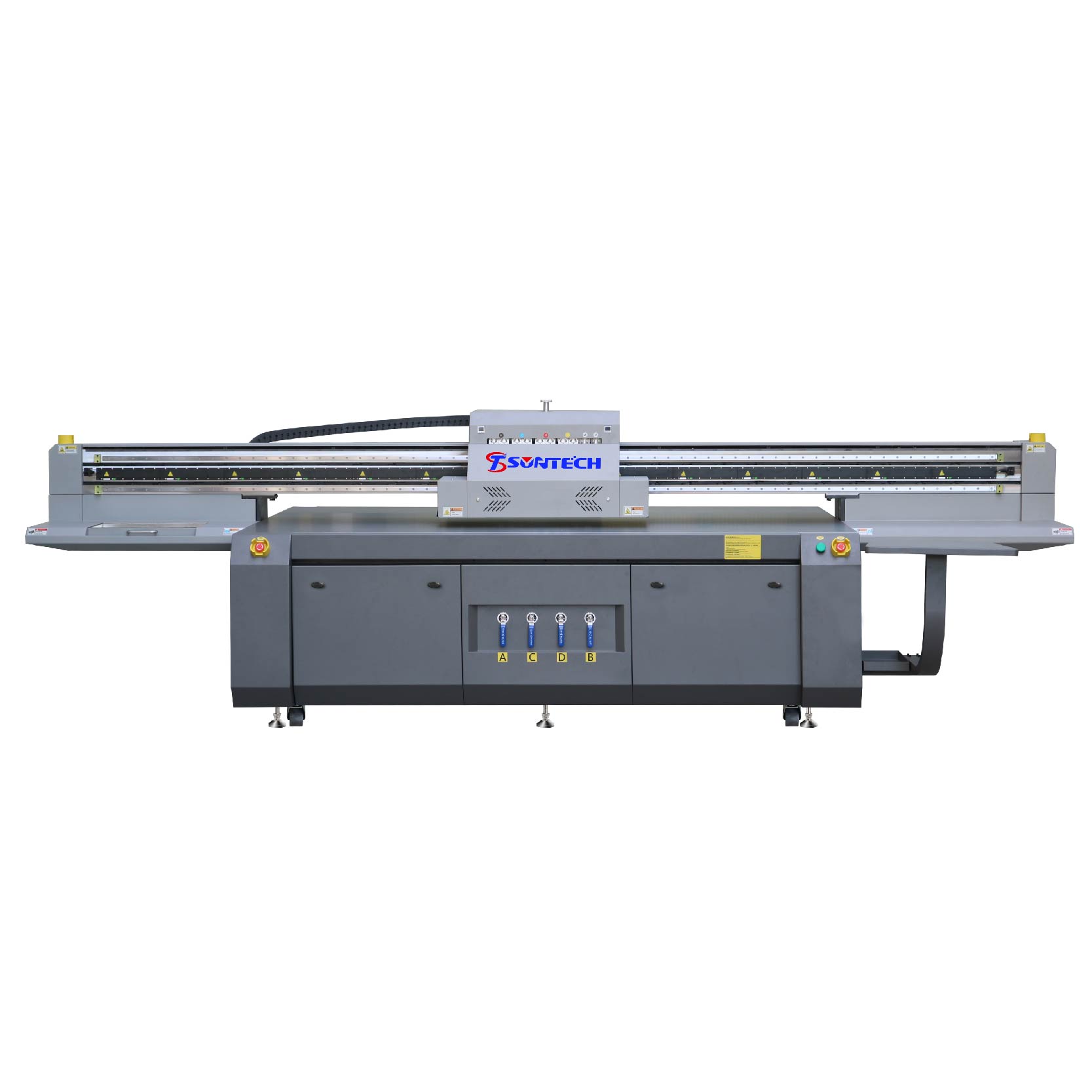
A UV printer is a digital printing machine that uses specially formulated UV-curable inks and ultraviolet light to print images onto a substrate. During the printing process, the printhead deposits the ink onto the material and an integrated UV lamp cures it by initiating a photochemical reaction. Rather than relying on evaporation or absorption to dry the print, the machine solidifies the ink through UV exposure, enabling the printed surface to dry shortly after the curing process.
Most UV printers are designed for direct printing on rigid or semi-rigid materials. Depending on the configuration of the machine, compatible substrates may include acrylic, glass, aluminium, stainless steel, wood, ceramic, PVC, selected plastics, leather and coated promotional products. Flatbed UV printers are particularly useful for printing on panels, signs, plaques, phone cases and personalised gifts. Some models also support rotary attachments for cylindrical products, such as bottles and tumblers. Roll-to-roll UV systems are also available for flexible media.
The main advantage of UV printing is that it can decorate the final product without the need to produce a separate transfer first. White ink can provide an opaque base on dark or transparent materials, and clear varnish or additional ink layers can be used to create gloss, texture, and raised visual effects on supported systems. However, print adhesion depends on the surface energy, coating, cleanliness, and chemical compatibility of the substrate with the ink. Some plastics, metals, and glass products require cleaning, priming, or surface treatment before printing, so compatibility should be tested rather than assumed.
What Is a DTF Printer?
A DTF printer is a digital printing machine that creates designs on a special film before transferring them onto fabric. Although the finished image is not normally printed directly onto the garment, DTF stands for Direct-to-Film. Instead, the printer deposits textile pigment inks onto a coated PET film and combines the printed design with a hot-melt adhesive that bonds it to the target fabric during heat pressing.
A typical DTF production workflow involves five stages:
- Prepare the artwork: Create the design in suitable RIP software, including the correct colour profile and white-ink settings.
- Print onto PET film: The printer deposits CMYK colours and, where required, a white-ink layer to provide opacity on dark fabrics.
- Apply adhesive powder: Hot-melt powder is distributed over the printed ink while it is still in the appropriate condition for bonding.
- Cure the adhesive: The powder is heated according to the film and adhesive manufacturer’s specifications.
- Heat-transfer the design: Position the transfer on the garment and use the specified temperature, pressure, and dwell time before peeling the film as directed.
This process makes standard DTF suitable for a wide range of textile products, including cotton T-shirts, polyester sportswear, hoodies, uniforms, tote bags, and selected blended fabrics. It is especially useful for short-run customization because the same basic printing workflow can support different garment colours and fabric compositions without preparing a separate screen for every design. The actual transfer settings and performance still depend on the ink, film, adhesive powder, fabric, and heat-press system being used.
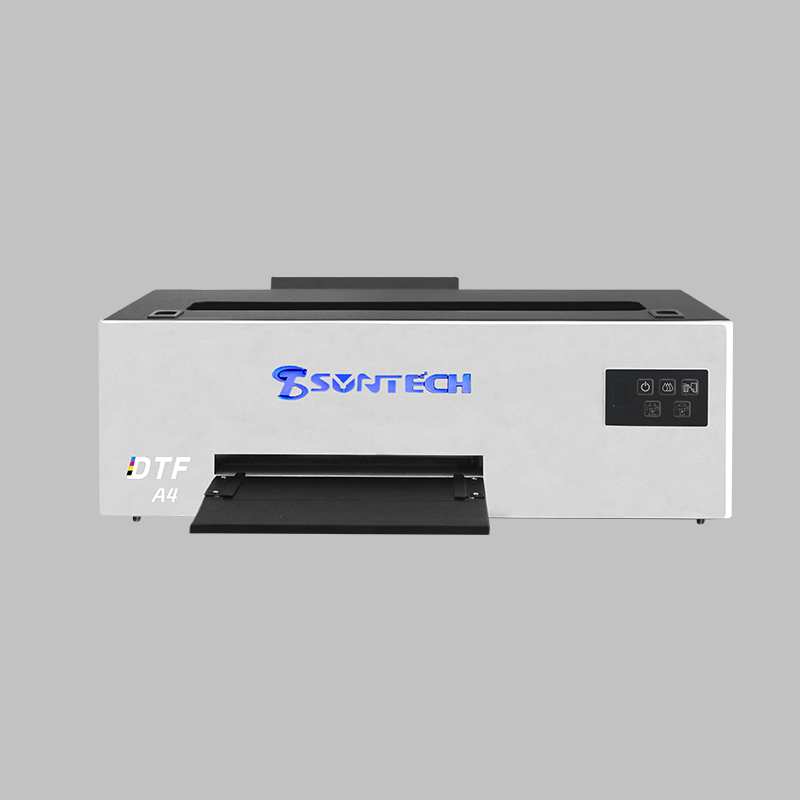
UV Printer vs. DTF Printer: Key Differences
Although both technologies use digital artwork and can produce detailed, colourful graphics, their production systems are designed for different markets. A UV printer is generally selected when the image needs to be applied directly to a compatible product, whereas a DTF printer is chosen when the design needs to become a flexible textile transfer.
| Comparison factor | UV printer | DTF printer |
| Printing technology | Direct-to-substrate digital printing | Direct-to-film textile transfer printing |
| Ink type | UV-curable ink | Textile pigment ink, typically water-based |
| Curing method | Ultraviolet light | Heat curing of hot-melt adhesive powder |
| Printing surface | Directly onto the final object or material | Coated PET transfer film |
| Main applications | Signage, acrylic products, glass, metal, wood, promotional items | T-shirts, hoodies, uniforms, sportswear, tote bags |
| Typical substrate | Rigid or compatible semi-rigid materials | Compatible fabrics and textiles |
| White ink | Used for opacity on dark or transparent substrates | Used as an underbase for coloured or dark fabrics |
| Additional equipment | May need a fixture, pretreatment equipment, or rotary attachment | Usually needs film handling, powder application, curing, and a heat press |
| Transfer required | No for conventional direct UV printing | Yes |
| Main performance considerations | Adhesion, scratch resistance, curing, surface compatibility | Wash durability, stretch performance, transfer adhesion, fabric compatibility |
The distinction also affects production planning. UV printing requires the object to be positioned accurately on the printer bed or supported by an appropriate fixture. DTF separates the printing stage from garment application, allowing transfers to be prepared in advance and applied when an order is ready. This can be useful for businesses producing multiple garment designs or handling customized orders in batches.
Differences in Material Compatibility and Applications
Material compatibility is often the most useful factor to consider when deciding which machine to purchase. While the two technologies can both produce full-colour graphics, their inks and bonding mechanisms behave differently. Therefore, choosing a printer based solely on image quality or advertised resolution can lead to costly errors if the machine is unable to reliably decorate the products that a business intends to sell.
- Materials and products suitable for UV printing
UV printers are commonly used for hard-surface customization, particularly where a business needs to print directly onto individual objects or flat materials. Typical applications include:
- Advertising and signage: Acrylic display boards, promotional signs, indoor panels, and branded display materials.
- Personalized gifts: Phone cases, photo plaques, keychains, decorative products, and selected giftware.
- Industrial product decoration: Control panels, equipment labels, product identification graphics, and branded components.
- Packaging and retail products: Selected boxes, rigid packaging components, display products, and promotional merchandise.
- Glass and ceramic decoration: Compatible bottles, glass panels, tiles, and ceramic products, subject to surface preparation and ink suitability.
The main benefit is production flexibility. A UV flatbed printer can often handle different product shapes and thicknesses within its specified working range, so one machine may serve several product categories. However, a UV printer does not automatically print successfully on every rigid material. Smoothness, surface energy, coating, heat sensitivity, and ink adhesion all affect the final result. For products exposed to frequent handling, moisture, chemicals, or outdoor conditions, test the finished print under realistic use conditions before offering durability guarantees.
- Materials and products suitable for DTF printing
Standard DTF printing is primarily intended for fabric decoration. It is particularly attractive to apparel businesses because it can transfer complex artwork, gradients, small text, and multicolour graphics without the need to prepare a separate screen for each design. Common applications include:
- Fashion and casual clothing: Cotton T-shirts, hoodies, sweatshirts, and personalized garments.
- Sportswear: Team shirts, training clothing, and selected polyester-based apparel.
- Workwear and uniforms: Branded uniforms, staff clothing, and promotional garments.
- Accessories: Tote bags, fabric pouches, selected caps, and textile merchandise.
- Custom merchandise: Small-batch clothing collections, event apparel, and print-on-demand products.
DTF is not limited to one fabric composition, but the transfer must be compatible with the textile and its intended use. Cotton, polyester, and blended fabrics may require different application settings or transfer specifications. Stretch fabrics deserve particular attention because a transfer that performs well on a stable cotton shirt may crack or lose adhesion when applied to a highly elastic garment. Washing instructions, curing conditions, and the adhesive formulation also influence the finished product’s service life.
Print Quality, Durability, and Production Efficiency
The print quality should be assessed in relation to the finished product rather than simply the printer’s resolution. UV printers can produce sharp graphics, fine text, layered white ink, and decorative varnish effects on compatible surfaces. The direct-printing method avoids the need for an additional transfer step, which is useful for rigid products that can be held in place stably during printing. However, peeling, scratching, or inconsistent colour can be caused by poor surface preparation, incorrect curing, unsuitable ink, or inadequate adhesion.
DTF printing focuses on producing a transfer that remains attached to fabric while tolerating normal wear and tear, washing, and movement. The quality of a DTF print depends on several connected variables: ink deposition, white-layer opacity, powder coverage, adhesive curing, heat-press pressure, temperature, and application time. While a transfer may appear excellent immediately after pressing, it may perform poorly if the adhesive is under-cured or the application settings are unsuitable. For this reason, manufacturers should test representative garments by repeatedly washing and stretching them before establishing their own quality standards.
Production efficiency also varies. UV printing can reduce handling steps because the image is printed directly onto the product; however, every object must be correctly positioned and supported. Irregular shapes may require custom fixtures or rotary attachments, and small products can be time-consuming to load and unload. By contrast, DTF allows multiple designs to be arranged on a film or gang sheet, enabling transfers to be printed in batches and applied to garments at a later stage. Although the additional powdering, curing, and heat-press stages create more process variables, they also separate transfer preparation from final garment assembly.
Factors that influence the final result
| Performance factor | UV printing | DTF printing |
| Image detail | Depends on printhead, resolution, ink control, and substrate surface | Depends on printhead, film coating, RIP settings, and transfer quality |
| Colour on dark products | White ink can create an opaque base on compatible substrates | White ink underbase helps colours remain vivid on dark garments |
| Surface feel | Ink forms a cured layer on the object; varnish may add texture | Transfer creates a printed layer bonded to the fabric |
| Flexibility | Standard UV ink layers are generally not designed for repeated textile stretching. | Designed for compatible fabrics, with flexibility depending on the transfer system |
| Durability testing | Check adhesion, abrasion, scratching, moisture, and UV exposure as relevant. | Check washing, stretching, rubbing, and adhesion after repeated use |
| Workflow | Direct printing, positioning, and UV curing | Film printing, powdering, curing, and heat pressing |
| Main production risk | Poor substrate adhesion or unsuitable surface preparation | Incorrect powder application, curing, or heat-press settings |
It is important not to compare durability using a single universal number of years or wash cycles. Actual performance varies with the machine, consumables, substrate, application conditions, and testing method. A supplier’s sample should therefore be evaluated on the same material and under the same conditions expected in commercial production.
UV Printer vs. DTF Printer: Which One Should You Choose?
The right choice depends on the products customers are buying, the materials being processed, and the production workflow that a business can consistently manage. Neither technology is universally superior. A UV printer is typically a better investment for businesses specialising in customising hard surfaces, while a DTF printer is generally more suitable for businesses producing printed clothing and textile accessories.
Choose a UV printer if:
- Your main products are acrylic signs, glassware, metal plaques, phone cases, rigid promotional items, or other compatible hard goods.
- You want to print directly onto the final product rather than prepare a separate transfer.
- Your business needs white ink, layered graphics, or varnish effects for customized product decoration.
- Your production environment can accommodate object positioning, surface preparation, and the printer’s working-area requirements.
Choose a DTF printer if:
- Your primary customers order T-shirts, hoodies, uniforms, sportswear, tote bags, or other fabric products.
- You need full-colour designs that can be transferred to different compatible garment colours.
- Your business handles personalized orders, short runs, or multiple designs that can be grouped into transfer sheets.
- You can manage the complete workflow, including film, adhesive powder, curing equipment, heat pressing, and garment quality checks.
Before buying, estimate the actual cost per finished product rather than comparing printer prices alone. For UV printing, include ink, cleaning supplies, pretreatment where required, fixtures, maintenance, and rejected products. For DTF, include ink, PET film, adhesive powder, curing energy, heat-press operation, maintenance, and transfer waste. Labour and production capacity matter too: a lower-cost machine may become less economical if it requires extensive manual handling or cannot meet order deadlines.
Is UV DTF the Same as a UV Printer or a DTF Printer?
The term ‘UV DTF’ can be confusing because it combines the names of two different printing technologies. UV DTF is a distinct transfer process that uses UV-curable ink to print a design onto specialised film. This film is then laminated or combined with an adhesive carrier and applied to a compatible hard surface. Unlike conventional UV direct printing, the design is not printed directly onto the final object.
It is also different from standard textile DTF. Standard DTF uses textile pigment ink and hot-melt adhesive powder, which is bonded to fabric using heat pressing. UV DTF uses UV-curable ink and a film-based adhesive transfer system, generally without powder curing or a garment heat press. Its common applications include tumblers, bottles, glassware, phone cases, and selected promotional products.
| Printing technology | Where the design is printed first | How it reaches the product | Main application |
| Conventional UV printing | Directly on the final object | UV ink is cured on the substrate | Rigid products and signage |
| Standard DTF printing | Textile transfer film | Adhesive powder is cured, and the design is heat-pressed | Clothing and fabric products |
| UV DTF printing | Specialized UV DTF film | The printed film transfer is applied to a compatible hard surface | Drinkware, accessories, and hard goods |
This distinction matters when purchasing equipment. A conventional UV printer, a standard DTF printer, and a UV DTF printer use different ink systems, consumables, and production procedures. They should not be treated as interchangeable machines or converted simply by changing the film or ink. Businesses considering more than one product category should evaluate each process separately and confirm that the equipment is designed for the intended application.
Frequently Asked Questions About UV Printers and DTF Printers
- Is a UV printer better than a DTF printer?
Neither is inherently better because each is designed for a different type of printing work. UV printers are generally better for compatible hard products, while DTF printers are better suited to garment and textile decoration.
- Can a UV printer print on fabric?
Some UV printers can deposit ink onto certain flexible materials, but conventional UV ink is generally not designed to withstand repeated textile stretching and washing. For everyday clothing, standard DTF or another textile-specific printing process is usually a more suitable choice.
- Can a DTF printer print on glass, wood, or metal?
A standard textile DTF printer is not designed for direct printing on glass, wood, or metal. UV DTF transfers or conventional UV direct printing are more appropriate options for compatible hard surfaces.
- What is the difference between UV DTF and regular DTF?
Regular DTF uses textile pigment ink, adhesive powder, and heat pressing to transfer designs onto fabric. UV DTF uses UV-curable ink and a specialized film system to apply graphics to compatible hard surfaces.
- Which printer is more suitable for a small printing business?
A business selling customized clothing, sportswear, or tote bags will generally benefit more from a DTF printer. A business specializing in personalized gifts, signs, drinkware, and rigid promotional products should consider a UV printer or UV DTF system according to its product range.
- Do UV printers and DTF printers require different maintenance?
Yes. UV printers require attention to UV ink circulation, printhead condition, curing lamps, and surface cleanliness, while DTF printers require film handling, white-ink management, powder control, and heat-curing equipment maintenance. Both need regular cleaning and manufacturer-recommended operating procedures to maintain consistent print quality.
Conclusion
The difference between a UV printer and a DTF printer lies in their respective printing processes, ink systems, and the products they are designed to produce. UV printers deposit UV-curable ink directly onto compatible objects, making them suitable for signage, acrylic, glass, metal, wood, and customised hard goods. In contrast, a DTF printer creates textile transfers on PET film, using hot-melt adhesive and heat pressing to decorate garments and other fabric products.
When choosing printing equipment, businesses should start with the target product rather than the machine’s advertised specifications. Consider substrate compatibility, finished-product durability, consumable costs, production capacity, and maintenance requirements before investing. If the business serves both the apparel market and the hard-surface market, conventional UV printing and standard DTF can complement each other, while UV DTF provides an alternative option for specific hard-surface transfer applications.