

Quick Answer:
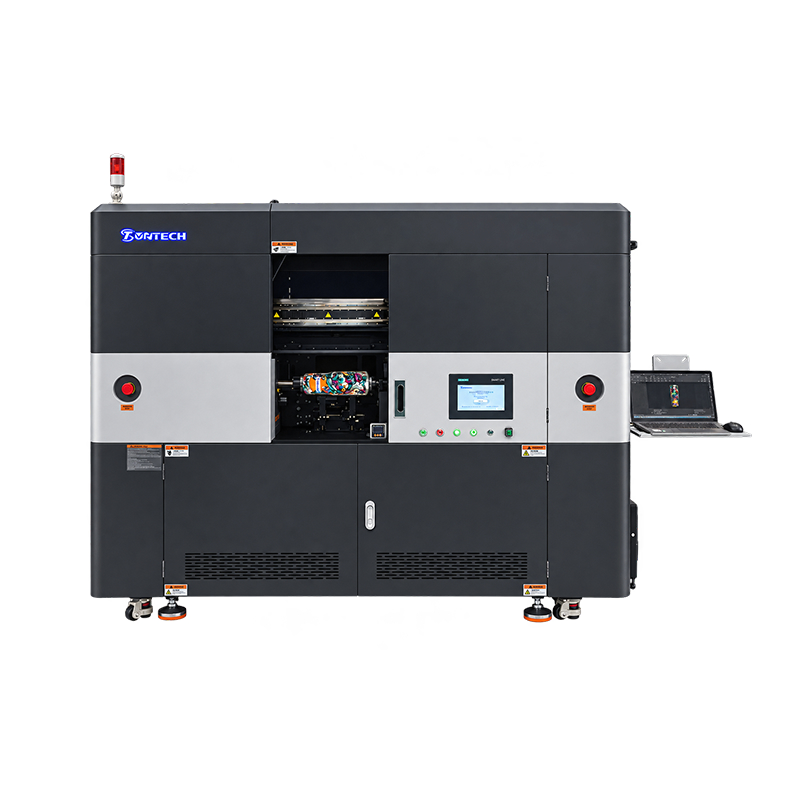
The cost of a طابعة UV varies substantially because the price depends on factors such as the substrate, printable area, ink coverage, white ink, varnish, resolution, production quantity, labour, finishing, and machine utilisation. As a practical industry reference, the cost of a basic UV printer is often quoted as being in the region of US$5–15 per square metre for production-related costs. However, jobs involving heavy ink coverage, white ink, clear varnish, premium materials, or multiple printer passes can cost considerably more. Therefore, these figures should be treated as reference ranges rather than fixed market prices.
The reason for this variation becomes clearer when the technology is examined as a complete production system. UV printer involves ink formulation, printheads, substrates, image processing, ink deposition, and ultraviolet curing. UV-curable ink itself contains components such as monomers, oligomers, photoinitiators, pigments, and additives. Wiley’s Handbook of Industrial Inkjet Printing takes a full-system approach to UV inkjet printing, rather than treating ink consumption as the only cost factor.
What Is a UV printer and Why Does It Have a Different Cost Structure?
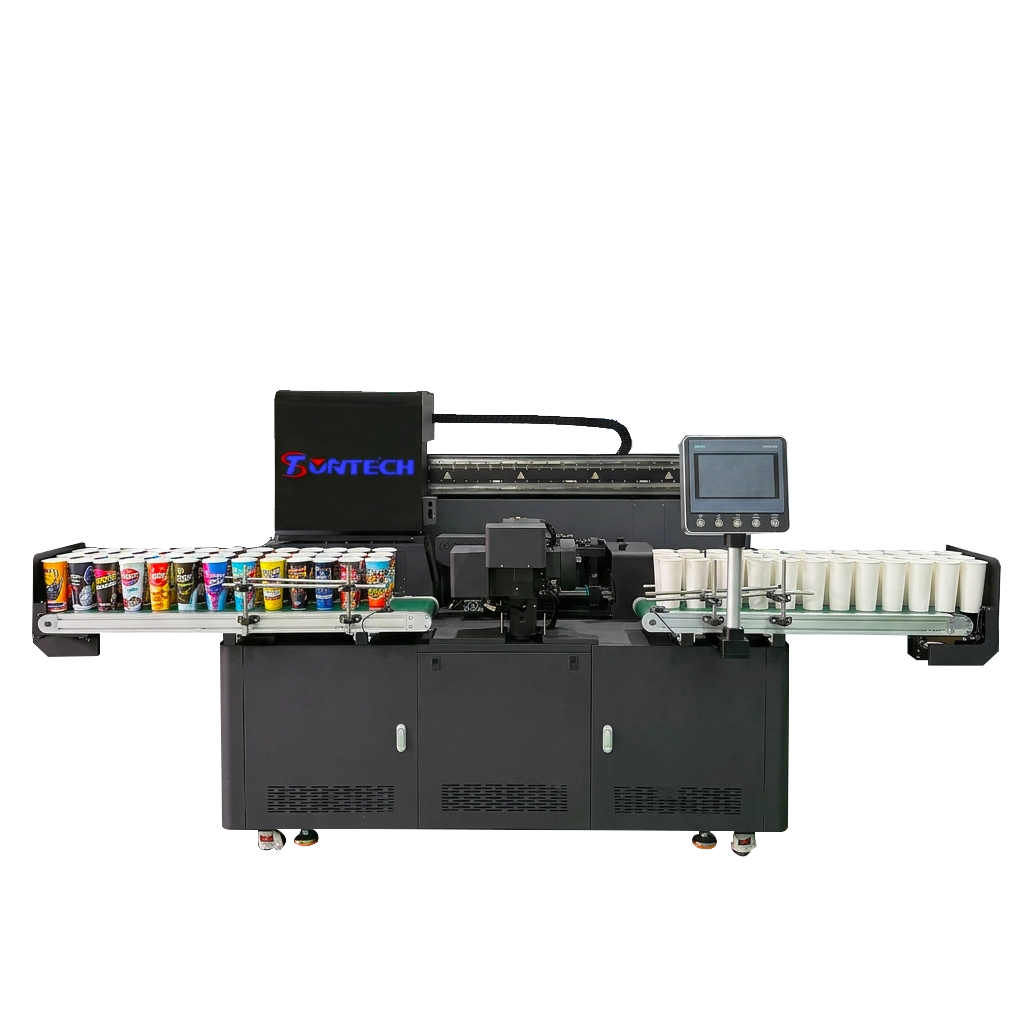
UV printer is a digital printing process in which a specially formulated, UV-curable ink is deposited onto a substrate and then exposed to ultraviolet light. This initiates a photochemical reaction that rapidly converts the liquid ink into a solid layer through polymerisation. Modern UV LED systems are widely used for inkjet curing because they deliver the energy required for rapid polymerisation, allowing the printed material to proceed directly to subsequent production operations.
This curing mechanism distinguishes UV printers from many conventional printer processes. Rather than waiting for solvent evaporation or absorption into a porous substrate, UV ink can be cured almost immediately after deposition. This is particularly valuable when printing on non-porous materials such as acrylic, glass, metal, plastics, coated boards, wood products, and speciality promotional items because the ink does not need to rely on the substrate absorbing the liquid carrier. Fujifilm’s technical explanation also identifies the basic sequence of a UV printer as ink deposition, UV exposure, photochemical curing, and immediate post-processing.
The ink itself is another key economic factor. UV-curable inkjet formulations typically comprise monomers and oligomers that form the cured polymer network, photoinitiators that respond to UV energy, pigments that create the image, and additives that influence properties such as adhesion, wetting, stability, and printerability. Wiley’s technical literature specifically identifies monomers and photoinitiators as the components that control the efficiency of UV curing.
For this reason, asking only “How much does a UV printer cost per square meter?” can produce a misleading answer. A square meter printed with relatively light CMYK coverage is not economically equivalent to a square meter containing dense photographic graphics, a white underlayer, and a clear gloss layer. The physical area is identical, but the ink volume, number of passes, curing requirements, machine time, and finishing work can be very different.
The Main Factors That Determine UV Printer Cost
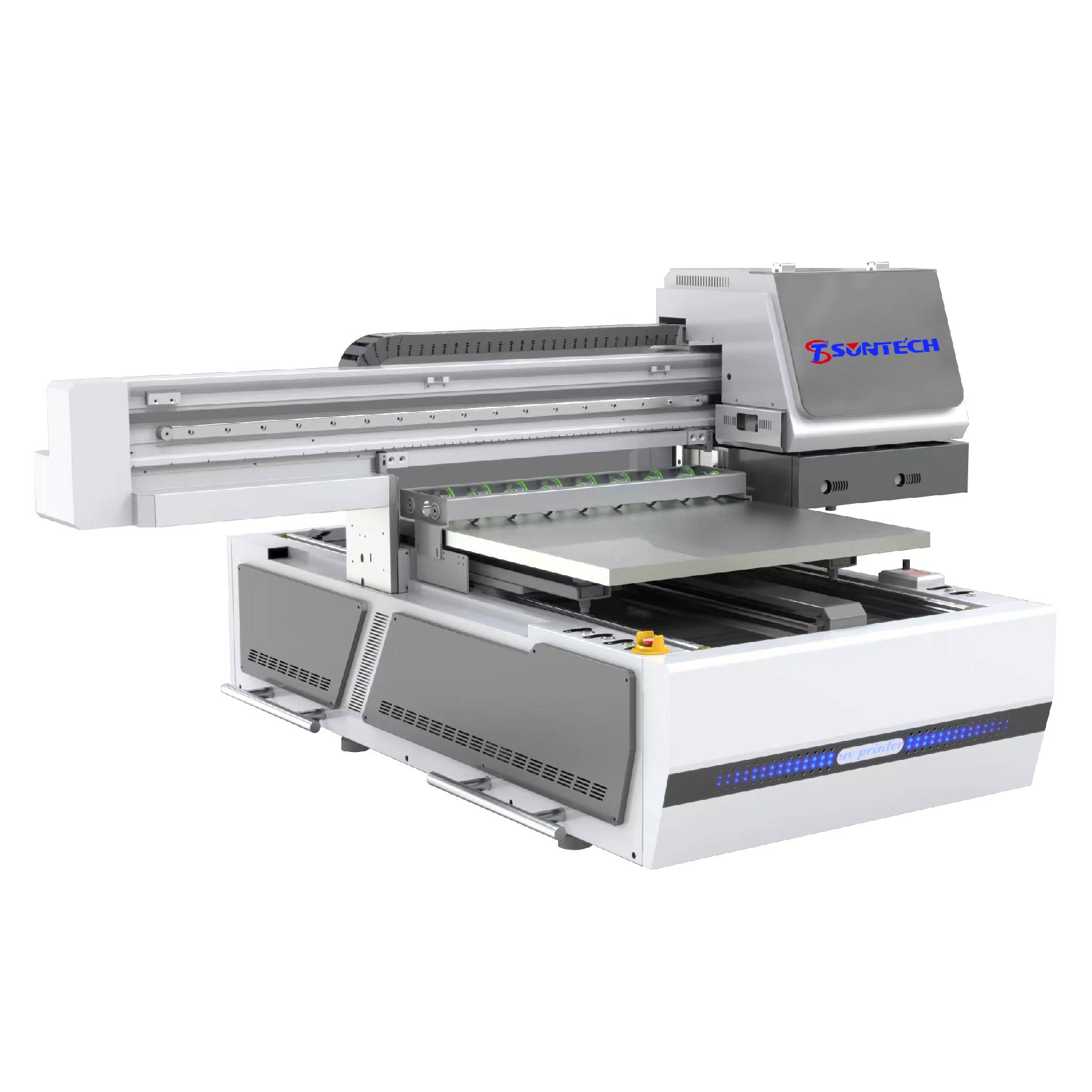
A professional UV printer quotation normally begins with the actual production specification rather than a generic price per square meter. The following factors usually have the greatest effect on the final cost.
- Ink Consumption
Ink consumption is one of the most direct variables. A simple image with moderate CMYK coverage may use considerably less ink than a solid colour background or a high-density photographic image. White ink can further increase consumption because it is often used as a base layer on transparent or dark substrates, while clear ink or varnish can add a step to the production process.
Therefore, it is useful to distinguish between ink cost per litre and ink cost per finished square metre. The former describes the price of the consumable, while the latter depends on the actual volume deposited by the printer. The amount of ink used can be affected by printer mode, resolution, number of passes, colour density, and RIP settings.
- Substrate Cost
Sometimes, the substrate can represent a larger portion of the final quotation than the ink itself. The cost of printing directly onto inexpensive PVC boards differs greatly from that of printing onto premium acrylic, treated aluminium, glass, engineered wood, leather products, or speciality packaging materials.
Material preparation also matters. Some substrates require cleaning, surface treatment, priming, corona treatment, flame treatment, or adhesion testing before printing. If a material has poor ink adhesion, the printer may require additional preparation or recommend a different substrate altogether.
- White Ink and Clear Varnish
White ink is one of the most important factors that distinguish an ordinary UV printer from more specialised work. When printing on transparent, coloured or dark materials, white ink can be used beneath the CMYK image to improve opacity and colour appearance. Depending on the artwork, the printer may use a white flood layer, selective white, or a combination of white and colour passes.
Similarly, clear varnish can increase the price if the customer wants gloss highlights, tactile effects, textures, or selective surface enhancement. While these effects can make a product visually distinctive, they also introduce additional ink consumption and production steps.
- Printer Resolution and Production Speed
Higher image quality typically necessitates more precise ink deposition and, depending on the printer and RIP configuration, extra passes. While a production-oriented printer mode may prioritise throughput, a high-quality mode may slow the machine to improve detail, smooth gradients, or reduce visible dot patterns.
For commercial work, the cheapest printer mode is not necessarily the most economical choice. If poor quality results in reprints, customer complaints, or excessive waste, the initial saving can quickly disappear. Therefore, the appropriate comparison is cost per finished product accepted, not simply machine cost per hour.
Typical UV Printer Cost Structure
The following table provides a practical framework for estimating the components that can contribute to a UV printer quotation. The percentages are not universal industry standards; they are useful for understanding how a quotation should be constructed rather than as fixed market shares.
| Cost Component | What It Includes | Typical Cost Impact |
| حبر الأشعة فوق البنفسجية | CMYK, white ink, clear ink, specialty colors | Medium to high |
| Substrate | Acrylic, PVC, aluminum, glass, wood, board, etc. | Low to very high |
| Machine operation | Printer time, electricity, operator time | Medium |
| Equipment depreciation | Printer, printer heads, curing system and related equipment | Medium |
| Prepress | Artwork checking, RIP processing, color preparation | Low to medium |
| Surface preparation | Cleaning, primer, coating or treatment | Low to medium |
| Finishing | Cutting, trimming, drilling, laminating, assembly | Medium to high |
| Waste and reprints | Test printers, setup sheets and rejected pieces | Variable |
| التعبئة والتغليف | Protective film, cartons, crates and handling | Low to medium |
| Overhead and margin | Facility, maintenance, administration and profit | Variable |
The most important point is that UV printer cost is a production calculation, not simply an ink calculation. Wiley’s industrial inkjet literature emphasizes that a reliable industrial printer requires coordinated consideration of inks, printerheads, substrates, metrology, data handling, and machine integration.
How Much Does a UV Printer Cost Per Square Meter?
For buyers looking for a quick reference, a reasonable starting point is to distinguish between direct production costs and the finished commercial price. Direct production costs may include ink, electricity, machine depreciation, maintenance and operator time, whereas customer quotations can include additional costs such as substrate, prepress, finishing, packaging, waste allowance, overheads and profit.
A basic UV printer on a prepared, flat substrate with moderate CMYK coverage would be towards the lower end of the production cost range. However, more demanding work can quickly become more expensive when the printer has to use high-density ink coverage, white ink, clear varnish, multiple passes, special materials, or slower quality modes.
For example, consider two hypothetical 1 m² orders. Job A consists of a relatively simple CMYK graphic printed on a white rigid board. Job B uses a transparent acrylic panel, a white underbase, high-density colour, selective clear varnish, precision cutting, and protective packaging. Although both jobs involve one square metre of printed area, treating them as the same ‘UV printer price per square metre’ would ignore the significant differences in production.
The table below illustrates why the final quotation can vary considerably.
| UV printer Job Type | Typical Characteristics | Relative Cost Level |
| Basic CMYK printer | White substrate, moderate coverage, standard quality | Low |
| High-density CMYK | Large solid areas or saturated graphics | Low to medium |
| CMYK + white | Dark or transparent substrate with white underlayer | Medium |
| CMYK + white + clear | Decorative or specialty surface effects | Medium to high |
| Premium rigid substrate | Acrylic, glass, metal, or specialty material | High |
| Multi-pass high-resolution printer | Fine details, photographic output, demanding color reproduction | Medium to high |
| Printed and finished product | Printer plus cutting, drilling, assembly, or lamination | High |
| Customized short-run production | Setup and handling spread over a small quantity | Often high per piece |
These categories are more useful for purchasing decisions than a single universal price because they connect the quotation to measurable production conditions.
Why Short-Run UV printer Can Have a Higher Unit Price?
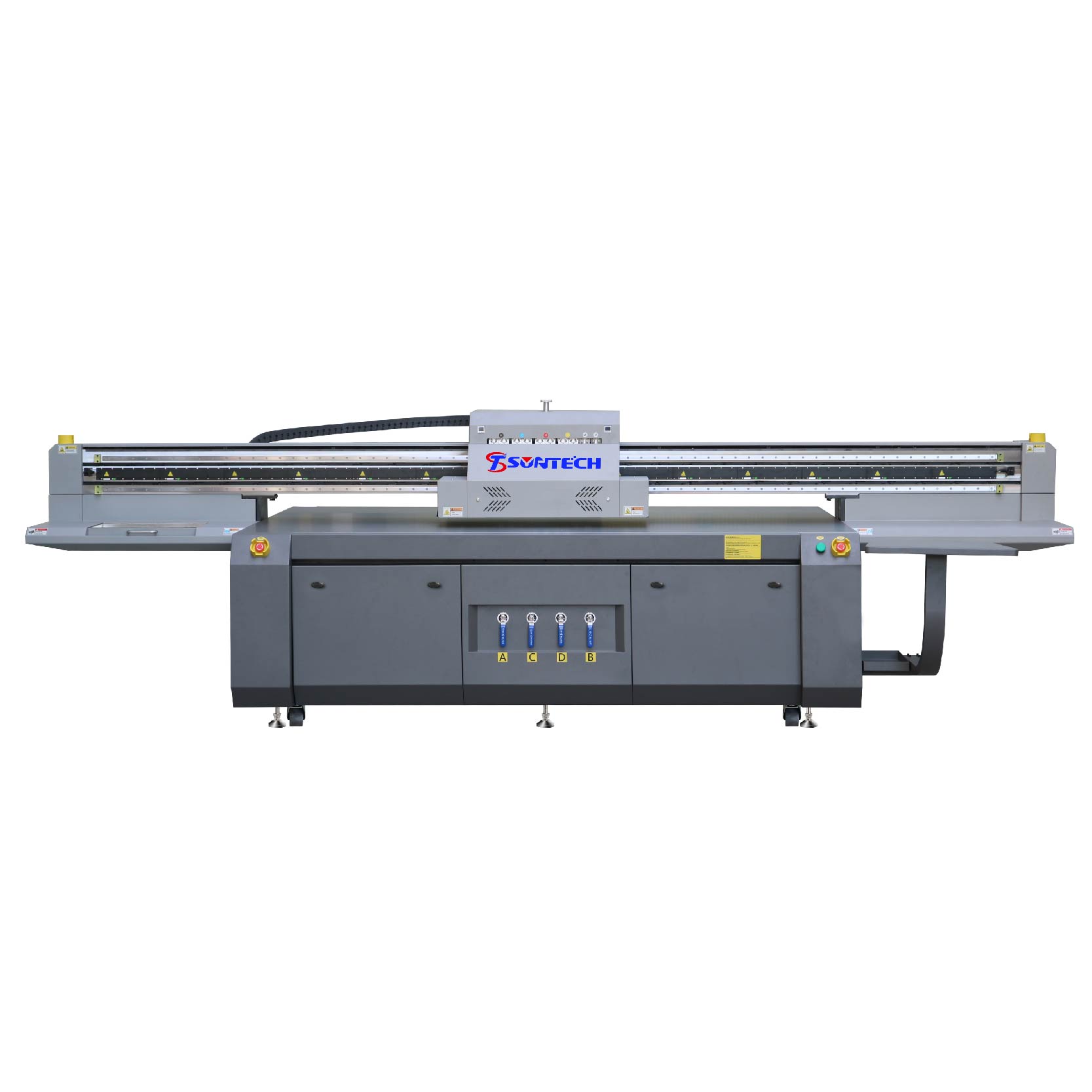
One of the key advantages of a UV printer is its suitability for customised and short-run production. Unlike traditional processes, which may require dedicated plates, screens or cylinders, or extensive setup, digital UV systems can switch between different pieces of artwork through digital file preparation and RIP processing.
However, this flexibility does not mean that a one-piece order is automatically inexpensive. Every job still requires artwork inspection, machine setup, handling of the substrate, test verification, colour management, cleaning, and operator attention. When only one or two products are produced, these fixed costs are divided across very few items, so the unit price can be relatively high.
However, as the quantity increases, these costs can be distributed across more products. However, this relationship is not perfectly linear, as production speed, material purchasing, operator availability, finishing requirements, and machine capacity also change with order volume.
Therefore, the better question for B2B buyers is not simply ‘What is the price per piece?’, but ‘At what quantity does the total production cost become most efficient?’ A supplier that provides a slightly higher unit quotation but produces fewer defects and has a faster turnaround time may ultimately provide a lower total cost.
How Substrate Changes the Price of a UV Printer?
The selection of the substrate has a direct economic and technical impact on a UV printer. Different materials, such as acrylic, glass, aluminium, PVC, wood, coated metal, corrugated board, and others, behave differently when ink droplets reach their surfaces. Factors such as surface energy, smoothness, porosity, cleanliness, coating, and chemical compatibility all influence adhesion and image quality.
For non-porous materials in particular, adhesion is important because the ink cannot simply penetrate the substrate. While a print may appear excellent immediately after curing, it may still have inadequate mechanical adhesion if the substrate and ink system are poorly matched. Suppliers often perform adhesion tests before approving a new material for commercial production.
The choice of primer, ink formulation, curing conditions, and handling procedure can also be affected by the substrate. This is why a technically experienced UV printer will usually request the exact material before providing a quotation, rather than offering a universal price for ‘UV printer’.
White Ink, Clear Ink and Special Effects: Where Costs Rise Quickly
White ink requires special consideration as it alters both the appearance and the production sequence. For example, on a transparent acrylic panel, the printer may first apply a white layer and then print the CMYK image over it. Without this base layer, colours may appear translucent or significantly different to the intended design.
Clear ink introduces another pricing variable. It can be used selectively to produce gloss effects, texture, raised details or contrast between matte and glossy areas. These effects are often used for retail displays, packaging, signage, decorative panels and premium promotional products, but the additional printer pass and ink consumption must be factored into the quotation.
Some advanced UV systems also support special effects by combining white, clear, primer, and multiple ink layers. From a cost perspective, every additional layer should be considered part of the production specification rather than a minor optional detail.
How to Calculate the Real Cost of a UV printer?
For manufacturers and printer service providers, a practical calculation can be structured as follows:
UV printer cost = ink cost + substrate cost + machine cost + labour + prepress + finishing + waste + overheads
The ink cost can be estimated by multiplying the actual ink consumption by the ink price. Machine costs should include electricity, depreciation, maintenance, printerhead replacement, curing system maintenance, and other equipment-related expenses. Labour costs should cover artwork preparation, machine operation, loading and unloading, inspection and finishing.
Waste should not be ignored. Test printers, alignment adjustments, damaged substrates, nozzle problems, colour corrections, and customer-approved samples can all consume material and machine time. A supplier who excludes waste from internal calculations may underestimate true production costs.
For a finished product, the calculation should go one step further:
Final selling price = total production cost + overhead allocation + desired profit margin.
It is essential to make this distinction when comparing quotations from different suppliers. One company may only quote for the printer operation, while another may include the substrate, cutting, protective film, packaging, and delivery. Even though the underlying production economics are similar, the numbers can look dramatically different.
How Buyers Can Reduce UV Printer Costs Without Sacrificing Quality
The most effective way to reduce the cost of a UV printer is not necessarily to demand cheaper ink or the fastest printer mode. Better results often come from designing the job around the production process.
First, confirm the substrate before finalising the artwork. Using the correct material for the printer can reduce adhesion problems and the need for reprints. Secondly, avoid adding white or clear layers if they do not contribute any meaningful visual value. Thirdly, consolidate small orders where possible, so that setup and handling costs are distributed over more pieces.
Artwork preparation also matters. Excessive full-coverage backgrounds can consume large quantities of ink, while unnecessary high-resolution settings can increase production time without improving the appearance at the intended viewing distance. For signage and display products, select the appropriate resolution based on viewing distance and image requirements, rather than simply choosing the maximum printer setting.
Finally, ask suppliers to provide a quotation based on the complete finished specification. This should include details of the substrate, dimensions, ink configuration, finishing, quantity, packaging, and whether setup or artwork preparation is included. This creates a much more reliable basis for comparing suppliers.
UV printer vs. Conventional printer: When Is a UV printer More Economical?
UV printer is not necessarily the cheapest printing method for every job. However, it becomes more economical when customisation, short runs, rapid turnaround, variable data, direct-to-substrate printing, or unusual materials are important factors.
Traditional processes remain highly competitive for large quantities of identical graphics because their setup costs can be spread across a high production volume. UV digital printer, by contrast, eliminates or reduces some traditional tooling requirements, making highly customised jobs commercially practical.
The key economic difference is therefore often the relationship between fixed setup costs and variable production costs. For small and medium quantities, a digital UV process can be attractive because it avoids some tooling expenses. For extremely large volumes, however, another technology may be more cost-effective per unit, depending on the application.
Common Mistakes When Estimating UV Printer Cost
A common mistake is to compare suppliers based solely on price per square metre. This approach ignores differences in ink coverage, printer mode, substrate quality, white ink usage, finishing, and the scope of the service. A low price may simply mean that fewer items are included in the quotation.
Another mistake is assuming that printer speed equals actual production capacity. Rated machine speed is often measured under specific printer conditions, whereas real production involves loading, positioning, RIP processing, curing, inspection, cleaning, and finishing. Therefore, actual daily output can be lower than the headline speed suggests.
A third mistake is overlooking maintenance and printerhead costs. UV inkjet equipment relies on precise ink delivery, and printheads are critical components. The cost of maintaining stable nozzle performance should be factored into long-term production costs rather than being treated as an unexpected expense.
A final mistake is ignoring the application itself. A low-cost UV printer that fails to adhere properly, scratches easily, has poor colour consistency, or requires a reprinter is not actually inexpensive. In commercial production, durability and first-pass yield must be factored into the cost calculation.
FAQ: UV printer Cost
- How much does a UV printer cost per square meter?
A basic production estimate may fall around US$5–15 per square meter, but actual costs vary with ink coverage, substrate, white ink, varnish, resolution, and finishing. A finished customer quotation can be considerably higher because it may include materials, labor, overhead, waste, and profit.
- Is a UV printer expensive?
UV printer can be more expensive than some conventional methods for very large standardized production runs, but it can be cost-effective for short runs, customization, and direct-to-substrate applications. Its rapid curing and digital workflow can also reduce setup and turnaround time.
- Why is white ink more expensive in a UV printer?
White ink can require substantial ink coverage, particularly when used as a full underbase on dark or transparent substrates. It may also require additional printer passes and careful curing control.
- Is a UV printer cheaper than a screen printer?
There is no universal winner because the economical option depends strongly on quantity and application. A screen printer can become highly competitive for large quantities of the same design, while a UV printer is often attractive for short runs and variable or customized graphics.
- How much does a UV printer cost on acrylic?
The price depends on acrylic thickness, size, color, transparency, printer area, white ink, clear effects, cutting, and finishing. Transparent acrylic commonly requires additional consideration because white ink may be needed to achieve the desired opacity and color appearance.
- Does a UV printer use a lot of ink?
Ink consumption varies considerably with image density and printer configuration. Large solid areas, white underbases, and clear decorative layers generally consume more ink than light CMYK graphics.
Conclusion: What Is a Realistic UV printer Price?
There is no single price that can accurately represent every UV printer, because a UV printer is a production system rather than a commodity that is sold by the square metre. While a useful estimate can be made based on the direct printer cost, a realistic commercial quotation must also account for the cost of the substrate, ink coverage, white and clear layers, machine time, labour, maintenance, waste, finishing, packaging, overheads and margin.
The most reliable approach for buyers is to provide the printer with the exact dimensions, substrate, artwork, quantity, colour requirements, white ink requirements, finishing specifications and delivery expectations. For manufacturers and printer service providers, a better internal metric is total cost per finished product accepted, rather than simply ink cost or advertised machine speed.
The technology itself continues to benefit from improvements in UV LED curing, ink formulation, printerhead technology, software and machine integration. Current industrial printer references treat these elements as interconnected parts of a complete system. This is why a well-designed UV printer workflow can deliver high-quality graphics, fast curing, immediate handling, and efficient customised production.