
Introduction: Why the Distinction Matters
In the ever-evolving world of custom printing, this is especially true of apparel, merchandise, gifts, and promotional items. It’s simple to encounter multiple abbreviations. Among the most controversial are the methods of printing in DTF and the UV version of DTF printing (also known as UV DTF). For businesses, the choice between DTF und UV DTF printers can have major implications: affecting what materials you can print on (fabric or hard surfaces), what kind of finish you achieve (soft/cloth-like or glossy/durable), operational workflow (heat-press vs UV cure), equipment costs, and ultimately profitability.
This article will discuss in detail the specifics of each technology, how they function, and will help you decide which is most appropriate for your situation, especially regarding the role of the UV-based DTF printer.
What Is DTF Printing?
-
Definition and Essential Workflow
DTF (Direct-to-Film) printing is a digital printing method that is commonly used to decorate fabric, clothing, and soft goods. The primary workflow is:
A design is transferred to a special PET substrate using a DTF copier — typically, this is accomplished using CMYK inks plus white ink for the base, which enables vibrant, opaque colors to be printed on dark fabric.
After printing, a warm, adhesive powder is added to the printed ink that is still wet.
The movie is then subjected to a unit that melts and binds the powder to the ink (or vice versa).
For the final application, the cured transfer film is placed onto the fabric, and a heat press is employed to transfer the design pressure and heat-activate the adhesive to bond the ink to the fabric’s fibers.
Once the temperature of the PET is decreased, the film is peeled from the fabric, and the printed design is revealed.
Because the process is independent of the printing process, DTF provides an advantage over other methods in regard to flexibility.
-
What Is The Benefit Of A DTF?
Garments and fabric-based products: T-shirts, hoodies, sweatshirts, bags, cotton or polyester fibers, almost any textile material.
Dark fabric harmony: Because of the white base layer, DTF has a bright, colorful print that is still visible on dark clothing. This is a significant advantage over many direct-to-fabric inks.
Small to medium-sized runs, on-demand printing, customization: Because the setup is minimal, DTF is popular for apparel that is printed on demand, custom orders, or small batch sizes, where screen-printing is not practical.
Design flexibility: Full-color prints, slopes, and complex graphics are all easily accommodated by DTF.
However, DTF also has negative aspects that result in the creation of UV-based substitutes for other applications.
What Is UV DTF Printing?
-
Definition & Distinctive Attributes
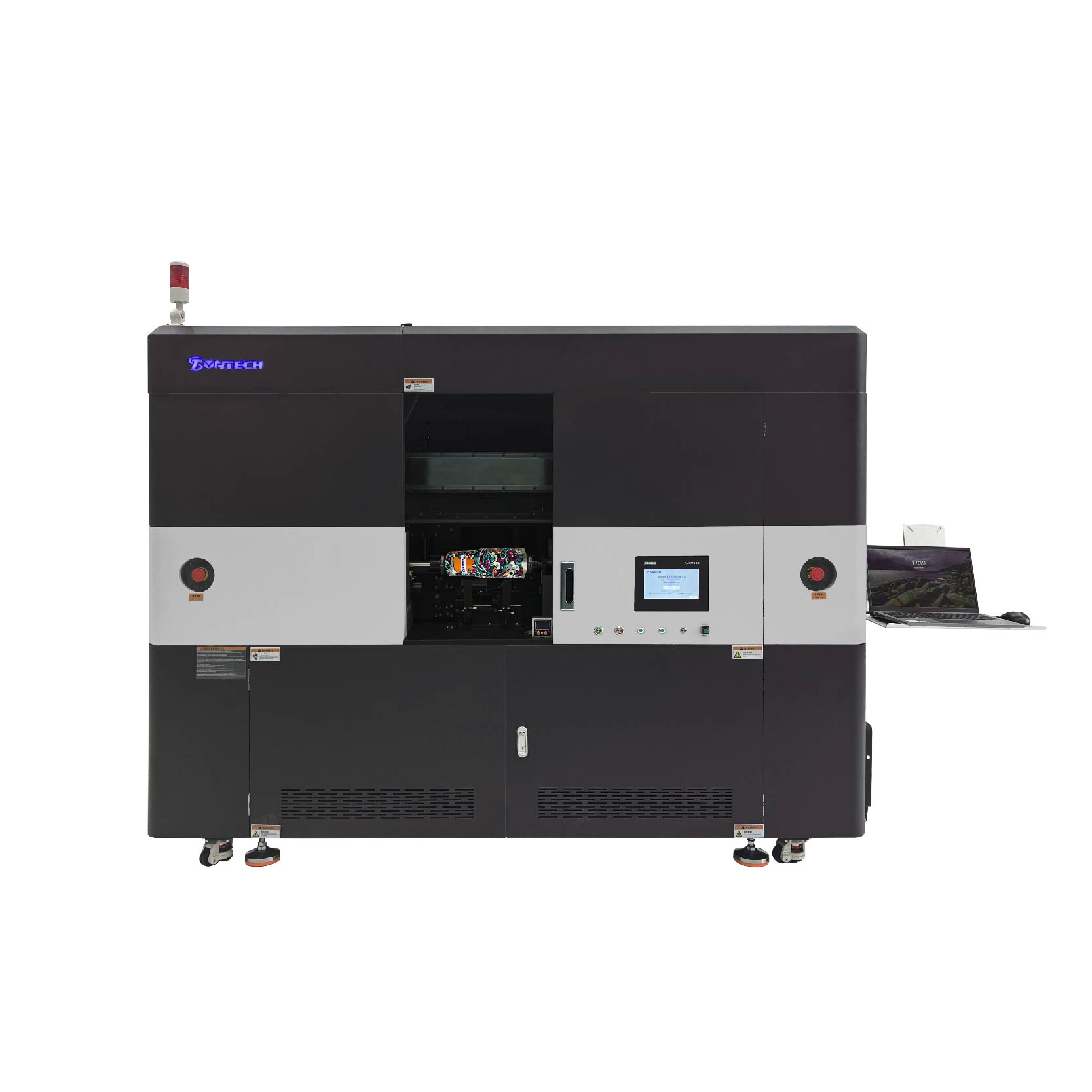
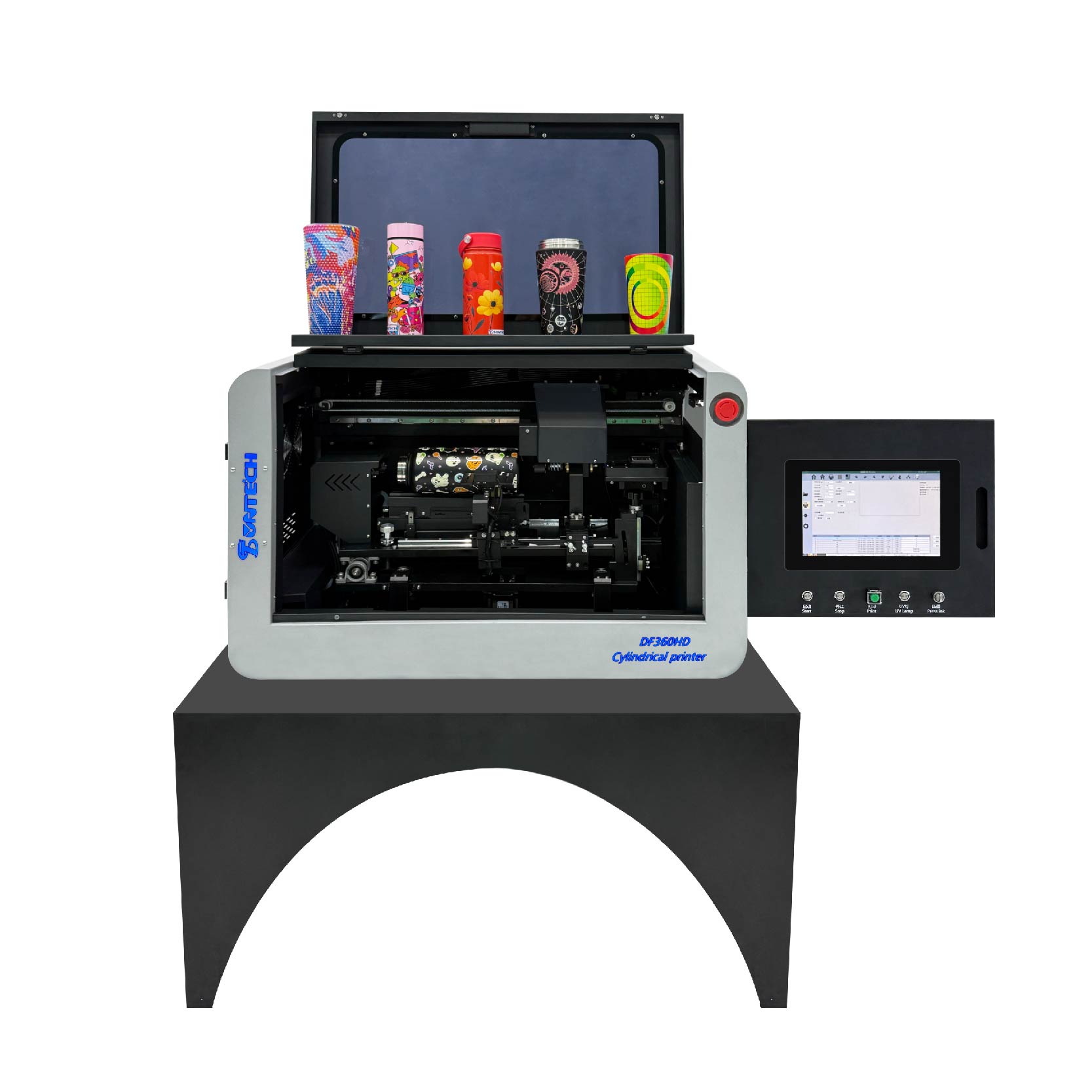
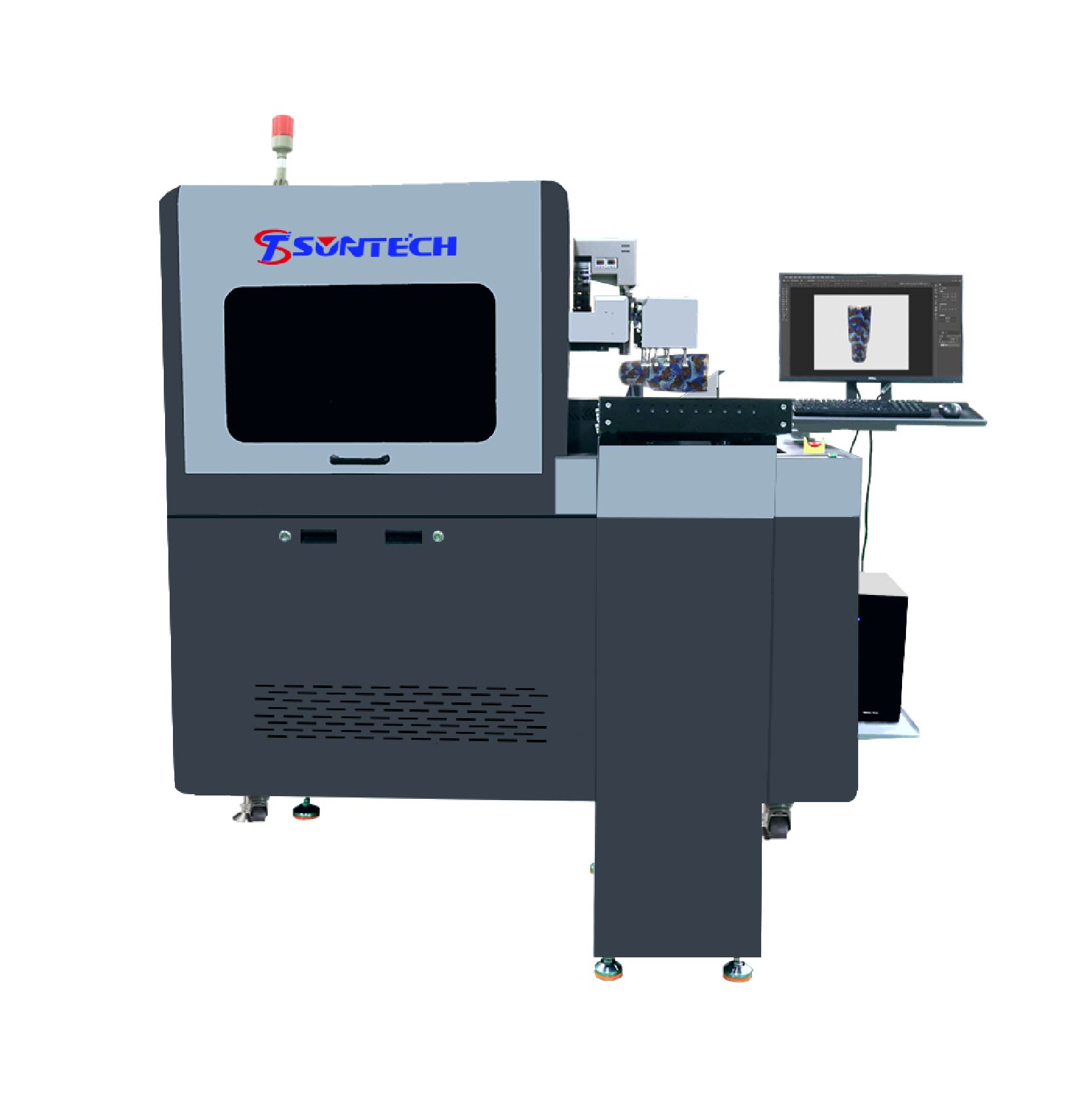
The ultraviolet printing method is a new variant that is primarily intended for use on hard, non-porous surfaces, such as metal, plastic, wood, glass, ceramic, or coated surfaces. Here, the traditional method of transferring heat to fabric is not practical or possible. The primary difference is the ink type and mechanism of curing: instead of hot-melt powder or pigment-based inks, UV DTF employs UV-curable inks and a laminated film that is transferred by means of ultraviolet light.
Common process:
The design is transferred onto an “A-film” by way of a UV-DTF printer that utilizes ultraviolet-curable ink (CMYK + white).
A “B-film” (laminated over the printed film) is added to the stack. This dual-film system facilitates the transfer of adhesion.
Once the laminate has been cured via ultraviolet exposure ( Instant Curing), the film can be applied to the intended hard substrate (flatted or curbed), the substrate can be pressed or adhered without heat, and then peeled away – similar to the application of a sticker or decal.
The printed image is still durable, the UV-curable ink produced a hard, scratch-resistant, water- and UV-resistant surface that is suitable for items that should last.
Because there is no need for a heat press or oven, the process is simplified and primarily used for substrates that would be adversely affected by heat or that are difficult to press (e.g., bottles, cans, metal panels, plastic signs).
-
What is the benefit of the UVDTF?
Hard surfaces and promotional goods: Glassware, drinkware (tumblers, mugs), phone cases, metal/plastic signs or plaques, wood products, ceramic tiles, decorative objects, packaging boxes — any non-porous, solid materials.
Short distances, customization, and small-batch production: Because the transfer process is fast and does not require a heat press or an oven, UV DTF is particularly suited for one-off orders or small-batch production that are ideal for gift shops, custom services, corporate merchandising, and print-on-demand vendors.
High-quality, glossy or raised borders: UV-curable inks offer a sharp perception, precise cut, bright color, and often a glossy / 3D / raised appearance that is beneficial for premium products or decoration.
Heat-sensitive substrates: Because there is no heat-induced pressing, UV DTF is appropriate for use on heat-sensitive materials, including plastics, wood, coated metal, and so on.
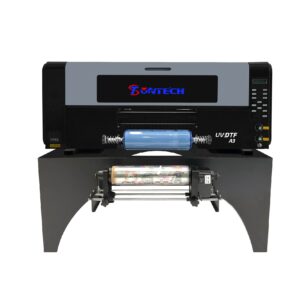
DTF vs UV DTF: Key Differences at a Glance
Let’s summarize the fundamental differences between DTF and UV DTF — especially in terms of process, consumables, suitable substrates, output, and trade-offs:
| Feature / Attribute | DTF Printing | UV DTF Printing |
| Ink & consumables | Pigment/water-based DTF ink + adhesive powder + PET film | UV-curable ink + dual-film (A-film + B-film, adhesive) |
| Curing / Transfer method | Heat press (after oven/powder curing) | UV light curing + lamination/adhesion |
| Suitable substrates | Fabrics/textiles (cotton, polyester, blends) | Hard, non-porous surfaces (plastic, metal, glass, wood, ceramic, etc.) |
| Finish feel / texture | Soft, fabric-like, flexible print on apparel | Glossy or matte hard finish; often raised/embossed feel, rigid |
| Dauerhaftigkeit | Wash-resistant prints on clothing (good wash life if applied properly) | Scratch-resistant, water/UV-resistant, more resilient on hard goods |
| Workflow complexity | Requires powder application, curing oven/shaker, heat press; multiple steps | Fewer steps: print, UV cure, laminate, transfer — no heat press or oven needed |
| Equipment & operational cost | Lower initial printer cost (entry-level DTF ~$3,000–5,000) but needs auxiliary equipment (powder shaker, oven, heat press) | Higher printer cost ($4,500–8,000 or more) but simpler setup, lower consumable/ancillary needs |
| Best for production volume & product type | Apparel, soft goods, bulk textile orders, customizable garments | Custom hard goods, small/batch orders, promotional items, rigid substrates |
Advantages and Limitations: When to Choose Which
-
DTF Printing — Benefits and Drawbacks
Pros
Versatile for textiles and soft materials— it is appropriate for a variety of fabrics (cotton, polyester, blends).
opaque, full-color prints on dark fabrics caused by the white underneath.
Established, consistent procedure that is proven to be wash-friendly and long-lasting when implemented correctly.
Effective for large quantities of fabric or garments (primarily if you already have a heat-press method).
Concerns / Barriers
Requires multiple steps: powdering, curing, and heat-press — this increases the time, labor, and setup costs.
Not appropriate for substrates that are hard or non-porous — they are limited to textiles or materials that can withstand the heat of transfer.
Prints may have a decreased perceived quality (e.g., the surface is directly over the fabric, which may affect the breathability). Some wearers may perceive the print as a supplement to the surface instead of an additional layer.
Space requirements (printer + powder shaker + oven + heat press) — more intricate setup.
-
UV DTF Pricing — Benefits and drawbacks
Pros
Can be printed on any hard, non-porous surface — plastic, metal, glass, ceramic, wood, or composite materials. Good for use in mugs, tumblers, phone cases, plaques, signs, packaging, decor, etc.
Faster and simpler process flow, no heat press, no adhesive powder, no oven curing, print → UV cure → laminate → transfer — this is ideal for quick turnarounds and short runs.
Durable product: UV-cured inks have a tendency to be scratch-resistant, water-resistant, UV-resistant, and produce a hard, long-lasting surface that is good for items that need to be handled, washed (e.g., mugs), or outdoor conditions.
Capability for superior visual effects: glossy or matte, sharp graphics, vibrant colors, exact detail that often results in a more “3D-like” or “plaque” feel than fabric printing.
Compact equipment footprint: no need for an oven or powder shaker; this is attractive to small studios, workshops, or businesses that have a variety of products.
Concerns / Barriers
Usually higher initial cost of equipment — UV-DTF printers are typically more expensive than low-level DTF printers.
Not appropriate for fabric or textile — UV DTF adhesive doesn’t bond to soft, porous surfaces well, prints may peel or break under the influence of flex or during laundering.
Transfer process sensitivity: alignment, adhesion pressure, and film handling require care; misapplication may result in poor adhesion or defects.
For apparel or textile projects that are large, less effective than heat-press DTF, or other projects that focus on apparel, UV DTF is appropriate for use in hard goods, not for bulk apparel.
Choosing Between DTF and UV DTF: What You Should Consider
Deciding between using DTF or UV DTF printing (or both) is based on several criteria: the business model, the product mix, the substrate material, the batch size, and the final goal. Below is a protocol that may serve to assist in the choice:
-
Substrate type
Soft goods/textiles (T-shirts, hoodies, bags, clothing) → utilize the DTF.
Rigid, hard, porous surfaces (bottles, phones, cases, metal plates, glass, plastic, and wood)
-
Volume of Production and Order Type
Large volume apparel orders, frequent production of clothing, and garment-heavy business situations are more effective with DTF.
Small series, custom gifts, promotional products, hard goods catalogs, and print-on-demand products are all examples of items that are typically produced with a batch size of 1,000 to 10,000.
-
End & Aesthetic Considerations
If you want a soft, fabric-based appearance, a breathable feel, and a typical fashion aesthetic, then DTF is for you.
If you want a tough, glossy, high-resolution, durable surface with scratches, UVs, or water resistance, then it’s called UV DTF.
-
Initial investment and operating expenses
For startups or those who only focus on apparel, DTF has a lower cost of entry (printer + heat press) but requires the handling of adhesive substances and space for the curing and pressing of textiles.
For companies that deal with difficult goods or want to diversify their product range, UV DTF may be more expensive upfront because of its larger application scope and simpler process (no oven or powder).
-
Flexibility and versatility
If you intend to sell both clothing and goods, maintaining both DFT and UV DFT processes may grant the greatest degree of flexibility. Many custom-print companies take a hybrid approach.
If your primary concern is specialized (e.g., T-shirts, phone cases, promotional products), UV printing may be sufficient. If clothing is completely made of fabric, DTF is still important.
Practical Considerations When Investing in a UV DTF Printer
If you choose to pursue the UV DTF method, here are the practical aspects and potential conflicts of interest to be aware of:
Ink conservation and printer head care: UV-curable inks may need to be consistently employed; long periods of inactivity can lead to a clogged or degrading nozzle. Some documents indicate that the UV DTF printer can become jammed if the ink is not used frequently.
Film quality (A-film and B-film): The success of the transfer is primarily based on the quality of the dual film. Poorly laid or film that is of low quality can lead to failure of adhesion or defects – not all films are equal.
Substrate preparation and post-processing: Hard surfaces are often cleaned, degreased, or pretreated to ensure the greatest possible adhesion. For some products, extra ultraviolet curing, varnishing, or protective coating is necessary to have the greatest possible durability.
Safety and environmental aspects: UV-curable inks may contain chemicals that require ventilation, protective equipment, and proper disposal. Ensure the implementation of local laws. Some documents indicate that the UV-DTF ink is toxic to humans or poses environmental concerns.
Training and handling precision: Because adhesion is based on the correct pressure, alignment, and lamination, operators need to be trained specifically for complicated shapes or surfaces that have a curve.
Real-World Use Cases & Business Scenarios
-
Fashion and Accessories Brands
For T-shirts, hoodies, tote bags, caps, and especially those that require small batch orders, custom prints, seasonal design, and DTF are still the most popular. Its capacity to produce complex graphics, maintain color consistency, and produce long-lasting washes makes it ideal for fashion-based apparel.
-
Custom Gift and Promo Products stores
Shops that sell phone cases, mugs, drinkware, promotional bottles, corporate gifts, personalized items, and more, all of which are made of UV-DTF, can provide top-notch, full-color, durable prints on a variety of materials besides textiles. It facilitates additional diversification beyond the garments.
-
E-commerce and Customers who want to order products immediately, but don’t know how to do so.
Online retailers that want to sell both apparel and goods that are hard to find, for example, custom bundles of gifts and T-shirts, have the option of combining the capabilities of DTF and UV DTF. This combination provides flexibility and a broad product range without necessitating separate manufacturing facilities.
-
Small studios and home laboratories
Because of its simpler setup (no need for an oven or heat press), UV DTF printers are ideal for small studios or individual businesses that want to produce goods that are hard goods or custom items without taking up too much space or having to dedicate multiple machines.
-
Volume/ Batch Considerations
For the high volume, bulk production of apparel, DTF is still typically more cost-effective and efficient as a whole.
For medium-to-long-term, diversified product offerings, testimonials, novelty items, or seasonal promotions, UV DTF provides speed, lower waste, and versatility.
Summary & Key Takeaways
The DTF method of printing is still the most popular method of textile and garment design: it’s versatile, cost-effective, and commonly supported. It employs pigment-based inks, water, and heat-press transfer, which produces textured, wearable patterns.
The ultraviolet printing method is a new, complementary technology that is specifically designed to be used on hard, non-porous surfaces. It employs ultraviolet-curable inks and dual-film transfer, producing sharp, long-lasting prints that do not require a heat press.
The distinction between DTF and UV DTF is primarily based on the substrate material, the product type, the print volume, the desired finish, and the business model. For clothing and accessories: DTF, for bottles, cans, and other goods made of metal or plastic, and home décor items such as UV DTF.
For companies that want a broad range of products (both apparel and hard goods), combining both technologies may lead to the greatest degree of flexibility and a broad market.
When utilizing UV-DTF, pay attention to the quality of the ink and the film, the substrate’s preparation, the operator’s training, and safety/ environmental compliance. These factors have a significant impact on the final quality of the print and the longevity of the substrate.
Conclusion
Ultimately, DTF printing over UV is not considered a “one size fits all” option, but rather a matter of finding the appropriate tool for the appropriate job. As the field of printing diversifies ( Apparel, Custom Merch, promotional goods, gift items, and home décor), understanding the distinction is crucial.
A UV DTF printer provides a new dimension: the ability to print on hard surfaces. This is simple and fast, and it is capable of producing durable, high-quality results that are ideal for companies that specialize in hard goods, personalized gifts, corporate branding, or diverse product lines.
Conversely, for those who primarily print textiles and clothing, DTF printing is still a powerful, established, and cost-effective method.
Many modern print companies today choose to combine both strategies, instead of choosing one over the other. This will allow you to expand your product line, respond to different orders with flexibility, and maximize the revenue potential of different materials and markets.
