
Abstract:
In the fast-changing digital printing sector, Direct-to-Film (DTF) and UV Direct-to-Film (UV DTF) technologies have become two pioneering methods for applying high-resolution images onto a diverse range of materials.
Research in digital printing technology published by the Printing Industries of America and studies in technical material science from the American Chemical Society show that film-transfer printing systems have greatly enhanced efficiency, durability, and customization options in textile and product decoration manufacturing. These technologies enable manufacturers to create intricate designs with bright colors while ensuring strong adhesion and lasting durability.
DTF printing is mainly utilized for decorating textiles and customizing apparel, allowing images to be printed onto PET transfer films and subsequently heat-pressed onto fabrics. Conversely, UV DTF printing is intended for rigid surfaces like glass, plastic, metal, and ceramics, employing UV-curable inks and adhesive transfer films. Although both methods depend on film-based transfer processes, they vary in their printing techniques, curing technologies, material compatibility, and industrial uses.
This comprehensive guide examines the fundamental differences between DTF and UV DTF printing, covering their working principles, production methods, equipment needs, performance benefits, and industrial uses. The article also reviews current market trends, technological advancements, and business opportunities related to these two quickly expanding printing technologies.
By understanding the advantages and limitations of each system, manufacturers, printing service providers, and entrepreneurs can identify the most suitable solution for their production requirements.
Understanding DTF Printing
What Is DTF Printing?
DTF (Direct-to-Film) printing is a digital transfer printing technology that allows designs to be printed onto a special PET film and then transferred onto fabric using heat and pressure.
DTF printing does not need pre-treatment of fabrics, unlike traditional screen printing or direct-to-garment printing. The process includes printing ink onto film, applying adhesive powder, curing the design, and transferring it to textiles with a heat press.
This technology has gained popularity due to its versatility and ability to print on various fabrics, including cotton, polyester, and blended textiles.
How DTF Printing Works?
Basic DTF printing process:
- Design Preparation
The design is created using graphic software and prepared for printing with color management and white ink layers.
- Printing on PET Film
A PET Transfer Film is loaded into a DTF printer, where the design is printed in layers. Typically, colored inks are printed first, followed by a white ink layer to improve opacity.
- Powder Adhesive Application
A special hot-melt adhesive powder is evenly applied to the wet ink surface after printing to prepare the design for transfer.
- Heat Curing
The printed film with adhesive powder is heated to melt and activate the adhesive, creating a transferable print layer.
- Heat Transfer to Fabric
The cured film is positioned on the fabric and pressed with a **Heat Press Machine. Heat and pressure move the design from the film onto the surface of the garment.
- Film Removal
Once cooled, the film is peeled off, leaving the printed design securely attached to the fabric.
DTF printing is appreciated for its capacity to print on cotton, polyester, blends, and numerous other fabrics without requiring complicated pre-treatment.
Understanding UV DTF Printing
What Is UV DTF?
UV DTF (Ultraviolet Direct-to-Film) is a printing method mainly created for transferring images onto solid surfaces like glass, metal, wood, and plastic.
In contrast to conventional DTF printing, UV DTF employs UV-curable inks that quickly solidify when exposed to ultraviolet light.
The printed design is created on a specialized film system consisting of adhesive layers that allow the image to be transferred directly onto objects without heat pressing.
How UV DTF Printing Works?
Basic UV DTF printing process:
- Design Printing on Release Film
The printer prints the design onto a special release film using **UV Curable Ink. These inks instantly cure when exposed to ultraviolet light.
- UV Curing Process
Integrated UV lamps in the printer cure the ink immediately after printing, forming a durable and high-resolution image layer.
- Laminating with Transfer Film
A clear adhesive film is applied over the printed layer to form a transfer sticker.
- Transfer to the Target Surface
The laminated sticker is placed directly onto the object’s surface. The backing film is peeled off, leaving the printed design adhered to the material.
- Final Adhesion
The transferred graphic bonds firmly to the object, producing a durable and scratch-resistant print.
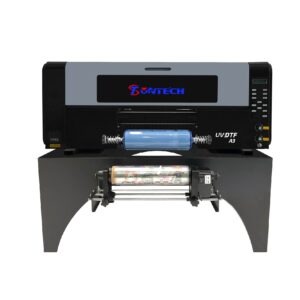
Key Differences Between DTF and UV DTF
Although both technologies use transfer films, their printing processes and applications differ significantly.
Comparison of DTF and UV DTF Technologies
| Caraterística | DTF | UV DTF |
| Primary materials | Fabric and textiles | Hard surfaces |
| Tipo de tinta | Water-based pigment ink | UV-curable ink |
| Transfer method | Heat press | Peel-and-stick transfer |
| Surface compatibility | Cotton, polyester, blends | Glass, metal, plastic |
| Typical use | Apparel printing | Product decoration |
These differences make each technology suitable for different industries.
Equipment Required for DTF Printing
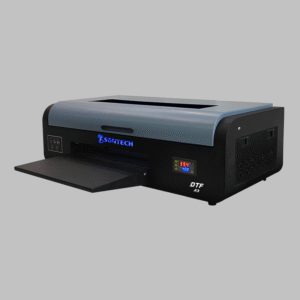
DTF printing systems consist of several key components.
Typical equipment includes:
- Impressora DTF
- PET transfer film
- Adhesive powder shaker
- Curing oven
- Heat press machine
These components work together to produce durable textile prints.
Equipment Required for UV DTF Printing
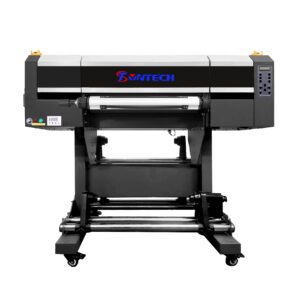
UV DTF printing requires different equipment due to its UV curing process.
Common equipment includes:
- Impressora DTF UV
- UV curing lamps
- Laminating system
- Transfer films (A film and B film)
These systems allow high-resolution printing on rigid surfaces.
Advantages of DTF Printing
DTF printing provides multiple benefits for textile printing companies.
- Compatibility with a variety of fabrics
DTF printing can be used on numerous fabrics such as cotton, polyester, denim, and blends.
- Bright and intense colors
DTF inks deliver vibrant and vivid hues with superb detail reproduction.
- No need for fabric pre-treatment
In contrast to other textile printing techniques, DTF printing does not need chemical pre-treatment.
- Long-lasting wash durability
DTF prints maintain color integrity after repeated washing.
Advantages of UV DTF Printing
UV DTF printing offers numerous advantages for customizing and decorating products.
- Multi-Surface Compatibility
UV DTF transfers can be used on glass, ceramics, plastic, metal, and wood.
- Instant UV Curing
UV lamps quickly cure inks, decreasing production time.
- High Gloss and Texture Effects
UV inks are capable of producing raised or textured printing effects.
- Heat-Free Transfer
In contrast to textile printing, UV DTF does not need heat pressing.
Industrial Applications of DTF Printing
- Apparel Manufacturing
DTF printing is frequently utilized for decorating T-shirts, hoodies, sportswear, and uniforms. It allows for high-resolution graphics and bright colors, making it ideal for fashion brands and custom clothing producers.
- Promotional and Custom Merchandise
Numerous companies employ DTF printing to create personalized promotional items like branded shirts, event clothing, and corporate merchandise.
- Small-Batch and On-Demand Production
DTF technology is perfect for small production runs and customized items, enabling businesses to create personalized garments without requiring large minimum orders.
- Workwear and Industrial Uniforms
Industries like logistics, construction, and manufacturing utilize DTF printing to add long-lasting logos and identification graphics to workwear.
- Textile Decoration for Retail Brands
Retail clothing brands frequently employ DTF printing for seasonal collections, graphic apparel, and limited-edition designs because of its versatility and quick production speed.
Industrial Applications of UV DTF Printing
- Consumer Product Decoration
UV DTF printing is commonly employed to embellish items like phone cases, drinkware, cosmetic containers, and electronic accessories.
- Industrial Labeling and Branding
UV DTF transfers are utilized by manufacturers to add logos, identification tags, and branding features to machinery, packaging, and product enclosures.
- Home Décor and Interior Products
The technology is applicable for decorating surfaces such as glass panels, ceramic tiles, acrylic signs, and metal plates, making it ideal for personalized home décor items
- Promotional and Gift Products
UV DTF printing enables high-quality graphics on promotional items like gift boxes, souvenirs, and customized accessories.
- Packaging Customization
More brands are adopting UV DTF technology to create visually unique packaging for cosmetics, luxury items, and consumer goods.
Market Trends in DTF and UV DTF Printing
The digital printing industry keeps expanding as companies look for quicker and more adaptable printing options.
Multiple trends are fueling the adoption of DTF and UV DTF technologies:
- The rise of on-demand customization
- The growth of e-commerce merchandise markets
- Progress in digital inkjet printing technology
- A higher demand for personalized products
These trends are anticipated to sustain long-term growth in the printing equipment sector.
DTF vs UV DTF Cost Considerations
Businesses evaluating printing technologies often consider cost factors.
Cost Comparison Between DTF and UV DTF
| Cost Factor | DTF | UV DTF |
| Equipment cost | Moderate | Higher |
| Consumables | Film and adhesive powder | UV inks and films |
| Manutenção | Moderate | Higher technical complexity |
| Production speed | Medium | Fast for rigid objects |
Choosing between the two technologies depends on production requirements and target markets.
Choosing Between DTF and UV DTF
Choosing between Direct-to-Film Printing (DTF) and UV DTF Printing mainly depends on the material being printed, the intended application, and production needs. Although both methods utilize transfer films, they cater to different industries and product categories.
- Printing Material Compatibility
DTF Printing: Mainly used for textiles, such as cotton, polyester, blends, and other fabrics.
UV DTF Printing: Created for hard or non-textile surfaces, like glass, metal, plastic, wood, and acrylic.
- Processo de impressão
DTF: Textile inks are printed onto transfer film, then adhesive powder is applied, and heat pressing is used to transfer the design onto fabric.
UV DTF: UV Curable Ink is instantly hardened by ultraviolet light before being transferred to the target surface.
- Cenários de aplicação
DTF: It is perfect for decorating garments, creating custom apparel, sportswear, and promotional clothing.
UV DTF: It is appropriate for product customization, decorative labeling, packaging design, and personalized consumer goods.
- Durability and Surface Performance
DTF prints are created to stay flexible and durable when applied to fabrics, offering good resistance to washing.
UV DTF prints produce a stiff, scratch-resistant graphic layer that sticks effectively to smooth surfaces.
- Production Flexibility
DTF systems are commonly employed in clothing industries that need quick customization and small-scale production.
UV DTF systems are frequently utilized in the production of gifts, promotional items, and industrial labels.
Summary:
The decision between DTF and UV DTF mainly hinges on the surface you intend to print on. If you aim to decorate garments or textiles, DTF printing is the better choice. For printing on rigid surfaces or product packaging, UV DTF provides improved compatibility and longevity. Choosing the appropriate technology for your application allows manufacturers to enhance production efficiency and improve product quality.
Future Development of DTF and UV DTF Technologies
Digital printing technology continues to evolve rapidly.
Future developments may include:
- Faster printing speeds
- Improved ink durability
- Automated transfer systems
- Environmentally friendly ink formulations
These innovations will continue expanding the capabilities of both DTF and UV DTF printing.
FAQ: DTF vs UV DTF
What is the main difference between DTF and UV DTF?
The main difference is the type of material they print on. DTF is used for textiles, while UV DTF is designed for hard surfaces.
Can UV DTF be used on fabrics?
No. UV DTF is generally not suitable for fabrics because the ink is designed for rigid surfaces.
Is DTF printing durable?
Yes. DTF prints are resistant to washing, stretching, and cracking when properly applied.
Do UV DTF prints require heat pressing?
No. UV DTF transfers are applied using a peel-and-stick method without heat.
Which printing method is better for custom merchandise?
Both methods have advantages. DTF is better for apparel, while UV DTF is ideal for product decoration.
Conclusão
Both DTF and UV DTF printing technologies are significant advancements in digital transfer printing, allowing businesses to efficiently create high-quality customized products. While DTF printing is tailored for textile applications and performs well in apparel decoration, UV DTF printing broadens customization options to rigid surfaces like glass, metal, plastic, and ceramics.
The decision between these technologies ultimately relies on the specific production applications planned. Apparel manufacturers and fashion brands frequently gain advantages from the versatility and robustness of DTF printing, whereas companies concentrating on promotional items, packaging, and decorative products might consider UV DTF printing to be more appropriate.
As digital printing technologies keep advancing, both DTF and UV DTF systems are anticipated to become quicker, more efficient, and more eco-friendly. Their capacity to enable on-demand production and product customization guarantees their continued significance in the future of digital printing and personalized manufacturing sectors.
