
Abstract
UV flatbed printers have become one of the most popular and profitable digital printing technologies in the signage, industrial design, packaging, and personalized manufacturing industries.
According to Smithers’ report on the future of digital printing, titled “The Future of Digital Printing to 2028,” and FESPA Industry Reports, the popularity of ultraviolet printing continues to be superior to traditional methods of printing on paper; the two reports state that the durability of the printed substrate is greater than that of the printed paper.
This article provides a comprehensive, industry-oriented description of what defines the best UV flatbed printer. It examines the technical specifications, application scenarios, cost-efficiency trade-offs, and market trends.
The discussion involves opinions from leading manufacturers, print providers, and technology researchers who are independent of the printing industry.
Introduction: Why UV Flatbed Printers Dominate Modern Printing
The worldwide printing industry has experienced a significant change in the last decade. Among all digital printing technologies, the UV flatbed printer has become a fundamental component of solutions that seek to have flexibility, speed, and superior print quality. Unlike systems that only allow for flexible media, UV flatbed printers can directly print onto solid and irregular substrates, which is essential for both industrial and creative endeavors.
The behavior of search reflects this transition. Questions like “What is the best UV flatbed printer?” “Which industrial UV flatbed printer is the most popular?” and “Which UV flatbed printer is most commonly used for signage?” consistently have the highest priority in the printing equipment sector. This implies that consumers no longer seek out the specifications of a UV-based flatbed printer- Instead, they are asking which device is most beneficial for their business.
What Is a UV Flatbed Printer?
A UV flatbed printer is an electronic inkjet printer that employs ultraviolet light to immediately cure specially formulated ultraviolet inks as they are deposited onto a substrate. The substrate is positioned on a flat, stationary bed that allows theprinter to deal with solid materials without problems or distortion.
Unlike other printers that use solvent or environmental solvents, UV flatbed printers do not require the absorption of ink or its evaporation. Instead, the polymeric ink will polymerize when exposed to ultraviolet light, which creates a durable, scratch-resistant coating that covers the material’s surface.
How UV Flatbed Printing Technology Works?
The printing process starts with inkjet printheads that produce microscopic drops of UV-curable ink. After being deposited, high-intensity ultraviolet lamps that are either made of mercury or LEDs release ultraviolet radiation that bonds the ink to the surface.
This rapid-curing procedure has three significant benefits:
No time for drying, allowing immediate processing and completion
superior attachment to non-porous surfaces
Constant placement of the dot, which produces sharp images and smooth elevations.
Modern ultraviolet flatbed printers also have advanced motion control systems that are advanced, tables that are vacuumed, and height-adjustment systems that can accommodate substrates of different thicknesses.
Key Advantages of UV Flatbed Printers
- Exceptional substrate diversity
One of the most popular features of a UV flatbedprinter is its capacity to print on a variety of substrates. These include glass, acrylic, aluminum, wood, ceramic, and stone.
This versatility enables print service providers to diversify their offerings without having to invest in multiple machines, which will significantly increase the return on their investment.
- Industrial-grade Resistance
Inks that are UV-cured create a solid layer that is resistant to wear, chemicals, moisture, and sunlight. This is beneficial to the UV printing method for its suitability for outside signage, architectural panels, and industrial design.
- High productivity and efficiency in the workflow
Because the prints are immediately cured, the processing time is greatly reduced. There is no obligation to utilize drying racks or lamination for protection, which reduces the production cycle length and increases the daily production volume.
Applications Driving Demand for UV Flatbed Printers
UV flatbed printers have become commonplace in multiple fields:
Signage and visual merchandising
The interior design and architectural printing.
Custom hardware and cabinets
Components and panels for industry
Marketing products and custom items.
In high-margin markets like interior design and custom signage, the capacity to print directly onto solid materials offers a distinct advantage that traditional methods of printing cannot match.
What Defines the Best UV Flatbed Printer?
The idea of the “most effective” UV flatbed printer is not singular. Instead, it’s based on how well a machine aligns with specific production goals, standards, and goals over the long term.
- The quality and resolution of prints
High-end ultraviolet printers typically have a resolution of 2400 DPI, combined with grayscale or variable droplet technology. This guarantees consistent, fine-grained text reproduction and superior photo quality.
- Technology of the Printhead
Top printers typically employ high-end printheads manufactured by manufacturers like Ricoh, Konica Minolta, or Kyocera that are intended for industrial use. These printheads are designed to have a high frequency of firing, a long lifespan, and consistent control over the droplet.
- The Ink System and the color range
A large color range, combined with white ink and additional varnish layers, increases the potential for creativity greatly. White ink is of paramount importance to the printing of transparent or dark substrates.
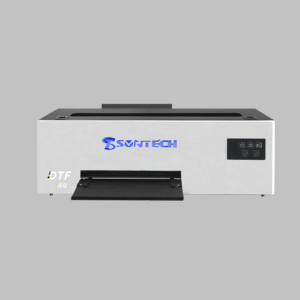
Comparison of Key UV Flatbed Printer Features
| Характеристика | Entry-Level Models | Mid-Range Industrial | High-End Industrial |
| Размер печати | Small to medium | Medium to large | Large-format |
| Printheads | Consumer / light industrial | Industrial-grade | Heavy-duty industrial |
| Белые чернила | Optional | Standard | Advanced multilayer |
| Automation | Manual loading | Semi-automatic | Full automation |
| Typical Use | Small shops | Growing businesses | High-volume factories |
Print Speed vs Print Quality: Finding the Right Balance
One common error that buyers make is to focus on speed over quality or the other way around. High-speed modes often sacrifice important details, while high-quality modes decrease the volume.
The most effective UV flatbed printer has a variety of print modes that are adjustable, the speed and resolution of which can be altered depending on the task. This flexibility is essential to businesses that serve diverse markets.
- The operating expenses and total cost of ownership are both considered
When considering which UV printers are best for flatbed design, the cost of the initial purchase should not be the sole concern. Long-term expenditures include the cost of ink, the maintenance of printheads, the consumption of energy, and the standstill.
For example, LED-based ultraviolet curing systems have a lower power consumption and produce less heat than traditional mercury lamps, which results in lower costs of operation and a longer lifespan for the component.
- Environmental and Regulatory Considerations
UV printing on flat beds is considered to be more environmentally friendly than solvent-based printing. UV inks have a low concentration of volatile organic compounds (VOCs), which is safety-critical in the workplace and promotes regulatory compliance.
As clients become more concerned with sustainability, this advantage directly benefits a printer’s market.
- Market Trends Directing the UV Flatbed Printer
Industry experts predict that demand for UV flatbed printers will increase over time, as a result of customization, short-term production, and on-demand manufacturing. Automation, color management via AI, and multiple-layer printing are all becoming more common in next-generation systems.
How to Choose the Best UV Flatbed Printer for Your Business?
Selecting the most appropriate ultraviolet flatbed printer for your business is based on understanding your specific production goals and material requirements.
- First, determine how large a print job you’re capable of doing and how fast it needs to be done; shops that have a high volume of prints benefit from faster machines with effective cooling and a variety of print heads.
- Consider the maximum size and thickness of media that you want to print on. Some media cannot be printed on certain substrates.
- Pay close attention to the print’s resolution and quality of the ink, the DPI, and ultraviolet-curable pigments, which affect the clarity of the image and the length of the print.
- Additionally, assess the compatibility of software and the integration of design flows to ensure a smooth transition into your design tools.
- Including the necessary maintenance tasks, service support, and a warranty, dependable technical assistance can reduce downtime and associated expenses.
- Ultimately, equalize the initial cost with the long-term value—a small increase in the cost upfront can lead to a greater degree of reliability, less waste, and higher customer satisfaction over time.
Common Mistakes to Avoid When Buying a UV Flatbed Printer
Purchasing a UV flatbed printer is significant, and the wrong choice can lead to high costs of operation, poor print quality, and production stops. Below, we have listed the most common errors that should be avoided when purchasing a UV-based flatbedprinter; these errors are especially pertinent to sign makers, industrial printers, and custom products businesses.
- Selecting the Best Price Over Performance
Mistake: Selecting the most affordable printer without considering long-term expenses.
The issue is why:
- Low-cost machines are often sold with:
- Low-income printers
- Unstable inks
- Higher rates of maintenance and failure.
What to do?
Total cost of ownership, including the cost of ink consumption, maintenance, spare parts, and service support, is considered.
- Disregarding the Print Quality of the Head and itscompatibility with other devices
Mistake: Ignoring the print head brand, resolution, and ink compatibility.
The issue is why:
Direct prints:
- Accuracy of printing
- Colour consistency
- Productivity speed
What to do?
Select printers that have proven industrial-quality print heads (e.g., Ricoh, Epson, Konica Minolta) and have verified that they are compatible with ultraviolet ink.
- Overestimating the Quality of Ink and the Performance of Curing
Mistake: Assuming that all ultraviolet inks have the same performance.
The issue is why:
Low-quality ink can cause:
- Adhesion failure
- Cracking or peeling
- Over time, the color fades
What to do?
Confirm the effectiveness of the ink in terms of adhesion, flexibility, color range, and the efficiency of ultraviolet curing on your intended materials.
- Not checking for compatibility of materials
Mistake: The purchase of aprinter that doesn’t test actual substrates.
The issue is why:
Not all of the UV printers that are available today have the same capabilities:
- Glass
- Wood
- Metal
- Acrylic
- Leather or plastic
What else to do?
Request samples of your printed materials before purchasing.
- Obtain a bird’s-eye view of the machine’s stability and quality
Mistake: focusing on the specs without taking into account the mechanical design.
The issue is why:
Frames that are weak and motionless causes of:
- Banding
- Misalignment
- Lowered print longevity
What else to do?
Look for solid frames, precise linear guides, and consistent tables of aspiration.
- Ignoring the Software and RIP’s compatibility
Mistake: Assuming all of the RIP software functions the same.
The issue is why:
Poor software quality:
- Colour management
- The efficiency of the workflow
- File compatibility
What else to do?
Ensure compatibility with professional RIP software (e.g., Caldera, Onyx, SAi) and verify if it has been updated.
- disregarding After-Sales Support and Warranty
Mistake: The selection of a supplier that lacks technical support.
The issue is why:
Downtime is revenue lost.
What else to do?
Confirm:
- Local or remote technical assistance
- Repair parts accessibility
- Explicate the terms of warranty
- Education and documentation
- Purchasing the Incorrect Size or configuration
Mistake: The purchase of a machine that doesn’t fit the production requirements.
The issue is why:
Oversized machines have a budget that’s too large, and undersized machines have a limited growth rate.
What else to do?
Combine the sizes of the printers, the number of channels for ink (CMYK + White + Varnish), and the speed at which they are currently utilized and projected to be utilized in the future.
- Overestimating the Maintenance Necessities
Mistake: disregarding daily and weekly maintenance obligations.
The issue is why:
UV printers are susceptible to the same care that is needed to avoid blockages in the head and the ink system.
What else to do?
Before purchasing, understand the cleaning rituals, the flow of ink, and the environmental requirements.
- Avoiding the ROI and Application Development
Mistake: The purchase of a clear strategy for application.
The issue is why:
Without specific products or markets, the return on investment is uncertain.
What else to do?
Programs that implement plans:
- Signage
- Promotional items
- Industrial printing
- Custom products
Estimate the ROI based on actual output and pricing.
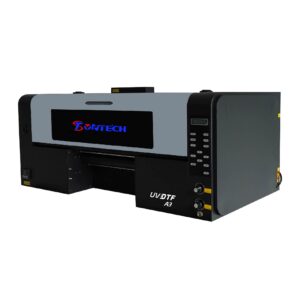
FAQ: UV Flatbed Printer
Q1: What is the best use of a UV flatbed printer?
A UV flatbed printer is most effective for printing directly onto solid materials, such as acrylic, wood, metal, and glass. This material is ideal for signs, decorations, and industrial applications.
Q2: How long do ultraviolet light-based flatbed printers last?
With the proper ink and substrate combination, UV-printed books can be expected to last for several years outdoors and longer than a couple of years indoors without noticeable fading.
Q3: Are ultraviolet flatbed printers costly to maintain?
Maintenance costs are different, but modern industrial UV printers are built to have long-term durability. LED-based lighting systems and industrial-grade printheads facilitate a decrease in ongoing costs.
Q4: Can ultraviolet (UV) flatbed printers produce white ink?
Yes, the majority of professional UV printers have a white ink system, which is crucial to the printing of transparent or dark materials.
Q5: Is a UV flatbed printer appropriate for startups and medium-sized companies?
Yes, low-level and mid-range UV flatbed printers are commonly utilized by small and mid-sized businesses because of their versatility and significant profit.
Заключение
There is not a single answer to “what is the best UV flatbed printer?” The most effective machine is the one that concords with your production needs, production scale, and long-term strategy. By understanding the fundamental technologies, cost structures, and industry trends, businesses can be sure to invest in a UV flatbed printer that consistently produces quality paper, has a high degree of operational efficiency, and is sustainable for growth.
