
Abstract:
Today’s digital printing technologies have changed the way modern manufacturing, advertising, packaging, and decoration processes are conducted.
The Handbook of Industrial Inkjet Printing (Wiley, 2012) and research in the Journal of Imaging Science and Technology indicate that ultraviolet (UV)-based inkjet systems can instantaneously produce polymeric ink, have high-resolution imaging, and can adhere to a variety of solid and flexible substrates.
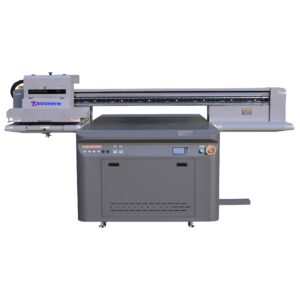
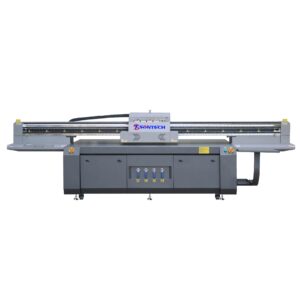
A UV flatbed printer is one of the most versatile configurations in UV inkjet technology, which can be used to print directly onto materials like glass, metal, acrylic, wood, ceramic, and composite panels that don’t require a transfer film or additional processing.
This article describes the technical and commercial aspects of what a UV flatbed printer can do, including the principles behind its operation, substrate compatibility, industrial applications, value-added features, limitations, and emerging trends in 2026.
Introduction: Why the UV Flatbed Printer Is Transforming Modern Manufacturing?
The increasing popularity of customization, short production cycles, and on-demand manufacturing has led to a decrease in traditional screen printing and offset methods for many companies. Walk into the UV flatbed printer, a digital printing system that combines the precision of inkjet with the ultraviolet technology of curing to produce durable, high-resolution prints that can be applied to a variety of flat surfaces.
Unlike other printers that are primarily designed for flexible materials, such as banners or vinyl, a UV flatbed printer is intended for use on solid substrates. The substance remains stationary on a table that has a vacuum, while the print carriage moves across it, depositing UV-curable materials that are immediately hardened by the use of UV LEDs.
This direct-to-substrate ability has led to new revenue sources in fields including interior design, manufacturing, and electronics.
How Does a UV Flatbed Printer Work?
To understand what a UV flatbed printer can do, we must understand its mechanism of operation first.
- Inkjet Imposition
The printer employs piezoelectric printheads to project microscopic drops of ultraviolet-curable ink onto the surface of a material. These droplets are intentionally designed to produce high-resolution prints, which are often of a resolution of 720-2400 DPI, depending on the configuration.
- Ultraviolet curing process
After the ink is deposited, ultraviolet light from the LEDs that are emitting ultraviolet radiation triggers a chemical reaction. The monomers and oligomers in the ink polymerize almost immediately, forming a solid coating.
This procedure is different from the solvent-based method because:
- No water is needed to evaporate
- No long drying periods
- Low levels of VOC emissions
- Increased environmental efficiency
- Capability for Layering and White Ink
Many of the ultraviolet (UV) flatbed printers include:
- CMYK colors
- White ink corridors
- Extra layers of varnish are optional
White ink is ideal for printing on materials that are transparent or have a dark color, while varnish is beneficial for creating three-dimensional or embossed effects.
What Materials Can a UV Flatbed Printer Print On?
One of the defining strengths of a UV flatbed printer is substrate versatility.
| Material Type | Examples | Common Applications |
| Glass | Tempered glass, mirrors | Interior décor, partitions |
| Acrylic | PMMA sheets | Signage, lightboxes |
| Metal | Aluminum, steel panels | Industrial labeling |
| Wood | MDF, plywood | Furniture decoration |
| Ceramic | Tiles | Architectural printing |
| Plastic | PVC, ABS | Promotional displays |
| Composite Panels | ACP boards | Outdoor signage |
Because UV ink adheres to non-porous surfaces, priming is often unnecessary, although some materials benefit from surface treatment for maximum adhesion.
Core Applications of a UV Flatbed Printer
- Signage and Advertising
The signage industry is one of the most significant adopters of ultraviolet printing. Businesses utilize it to create:
- Small retail displays
- Business exhibition stands
- Signage at the front of the store
- Wayfinding devices
Unlike previous methods, the UV printing method eliminates the need for lamination, which reduces the production time.
- Personalized interior decoration
Today, interior design professionals are increasingly using ultraviolet flatbed printers to create:
- Hand-painted glass windows
- Adornative wall paintings
- Custom surfaces for furniture
- Customized doors and cabinets
The capability to print directly onto solid decorative materials decreases the complexity of manufacturing and increases the flexibility of design.
- Industrial manufacturing and product identification
Manufacturers utilize ultraviolet flatbed printers for:
- Handling numbers
- Safety symbols
- Mechanized panels
- Controllers
The long life of the UV-cured ink enables it to withstand abrasion, chemicals, and sunlight exposure.
- Packaging and Prototyping
Short-run prototype packs can be created quickly using a UV flatbedprinter. This ability is crucial to:
- Product mockups
- Limitations on the edition number
- Personal branding
- Customized Products and Gifts for Personal Use
UV flatbed printers include:
- Personalized phone cases
- Award and plaque
- Marketing merchandise
- The printing of photos on wood or metal
The customization market is still expanding as a result of the increasing popularity of e-commerce.
Key Functional Capabilities Beyond Basic Printing
A UV flatbed printer is capable of more than spray ink.
- Raised-printed texture
By repeatedly applying Ink’s layers, operators can create three-dimensional textured surfaces. This is commonly employed in the design of braille lettering and superior packaging.
- Spot Varnish Disposition
Selective coating that enhances the contrast of the visual field and the perceived value of the object.
- Reverse printing on transparent materials
The printing of documents in reverse order is beneficial for viewing through a glass or acrylic window.
- White Ink Below the Base
White ink increases the transparency of dark substrates and enables the accurate coloring of all colors.
UV Flatbed Printer vs Other Printing Technologies
| Feature | UV Flatbed Printer | Solvent Printer | Screen Printing |
| Direct-to-Rigid Printing | Yes | Limited | Yes |
| Drying Time | Instant | Requires evaporation | Moderate |
| VOC Emissions | Low | High | Moderate |
| Short-Run Efficiency | Excellent | Good | Poor |
| Setup Cost | Moderate | Moderate | High |
The UV flatbed printer excels in customization, rapid turnaround, and environmental compliance.
Production Efficiency and ROI Analysis
The return on investment (ROI) for a UV flatbed printer depends on:
- Production volume
- Material costs
- Labor savings
- Reduced outsourcing
Cost Structure Overview
| Cost Factor | Impact Level | Notes |
| Equipment Investment | High (initial) | Long-term asset |
| Ink Cost | Moderate | UV inks are premium |
| Labor | Lower over time | Automation reduces manual processes |
| Maintenance | Moderate | Regular head cleaning is required |
For many businesses, the ability to handle diverse projects internally significantly improves profit margins.
Environmental Advantages
As environmental regulations become more stringent and sustainability is now a significant purchasing decision, UV printers that are flatbed-based are increasingly popular as an environmentally friendly alternative to traditional methods of printing. Their benefits are more extensive than simply productivity and quality of print; they provide a direct environmental benefit throughout the entire printing process.
- Low emissions of VOCs and enhanced air quality
UV printed books utilize ultraviolet-curable inks that become instantly hardened in the presence of ultraviolet light instead of evaporating solvents.
Environmental benefits:
Low concentrations of volatile organic compounds (VOCs) are near zero.
No evaporation of solvent during the curing process.
More effective air quality management for operators.
This promotes the use of ultraviolet light in the printing of flatbeds for factories, workshops, and commercial spaces that have a high degree of environmental and occupational health concerns.
- Energy-Efficient Instantaneous Curing
Unlike traditional printers that utilize heat to dry ink, UV-based flatbed printers utilize ultraviolet light to instantaneously cure ink.
Key benefits:
Lower consumption of energy compared to other thermal drying methods.
No long drying periods or heated air flow
Lowered the total carbon footprint of every printed thing
Modern ultraviolet light-emitting systems are particularly energy-efficient and have a long lifespan.
- Minimal Ink Debts and Precise Submitting
The ultraviolet inks that are deposited in the intended location will not spread or take inks from the substrates.
Environmental impact:
Reduced expenditure on ink
Less of the overdoing it and wasteful behavior
Increased efficiency in utilizing resources.
This exactness is responsible for both cost savings and reduced resource consumption.
- Compatibility with Sustainable and Rigid Substances
UV flatbed printers can print directly onto a variety of substrates without prior treatment, including:
Glass
Wood
Metal
Porcelain tiles
Acrylic
Recycled and combined panels
This allowance:
Reduces the necessity of additional glues or laminates.
Facilitates the use of environmentally friendly and reusable substrates.
Reduces the number of secondary processes and waste products.
- No Safe solvent disposal
Traditional printing methods require careful attention and disposal of chemical byproducts.
UV printing on flatbed:
Suppresses the need for cleaning solvents
Reduces the generation of hazardous waste.
Facilitates compliance with environmental laws
This diminishes the environmental risk and expense associated with disposal.
- Lowered Repeints and Discarded materiel
High print resolution, strong ink affinity, and long-lasting color are all attributes of the CPC6128 that contribute to a lower percentage of rejected prints.
Sustainability benefit:
Less detrimental waste products
Lower rates of material waste disposal
Reduced energy and resource utilization over the long haul
Constant quality of output directly facilitates the goal of reducing waste.
- Increased Product Lifespan and Longer Durability
UV-cured prints have:
Excellent ability to scratch
Extremely strong chemical resistance
superior ultraviolet and weather-proofing capabilities
More durable prints are:
Less frequent substitutes
Lower material consumption
Lower environmental impact during the lifecycle
This is of special importance to outdoor advertising and industrial design.
Emerging Trends in UV Flatbed Printing (2026 Outlook)
- Recent Advances in LEDs for the UV spectrum
New LED lighting systems increase the efficiency of curing and reduce the heat associated with it.
- Combined-printing systems that are hybridized
Combining the flatbed’s and roll-to-roll’s capabilities increases versatility.
- Automationintegration
Automated loading and unloading systems increase the efficiency of industrial processes.
- Eco-Friendly Ink Designs
manufacturers are attempting to develop bio-based ultraviolet inks that will further reduce environmental impact.
Frequently Asked Questions (FAQ)
Q1: What is a UV flatbed printer mainly used for?
A UV flatbed printer is primarily used for printing directly onto rigid substrates such as glass, acrylic, metal, wood, and plastic for signage, décor, and industrial applications.
Q2: Can a UV flatbed printer print on uneven surfaces?
It performs best on flat surfaces, but minor surface texture variations are acceptable.
Q3: Is UV printing waterproof?
Yes, UV-cured ink forms a durable, water-resistant layer.
Q4: How long do UV prints last outdoors?
With proper ink and substrate selection, outdoor durability can exceed several years.
Q5: Is a UV flatbed printer suitable for small businesses?
Yes, particularly for custom signage, promotional products, and interior décor applications.
Conclusion
A UV flatbed printer is part of the most extensive digital printing system available in 2026. Its capacity to directly print onto solid materials, immediately cure the ink, produce textured effects, and support short-term customization makes it important in multiple industries.
From the signage and interior design of the UV printer to the manufacturing of industrial goods and personalized products, the UV flatbedprinter has had a significant impact on the way businesses approach surface decoration and product design. While the initial investment may be higher than that of other conventional systems, the long-term benefits of flexibility, speed, and quality often compensate for the cost.
As ultraviolet curing technology has continued to evolve, the capabilities of ultraviolet printers have increased significantly; their importance to digital manufacturing and general printing has continued to grow.
