
Article Summary:
UV DTF (Ultraviolet Direct-to-Film) is a digital printing process that combines ultraviolet-curable ink technology with the transfer of images to surfaces that are solid or have a pattern. This enables high-resolution, long-lasting, and adhesive-based graphics to be applied to a variety of solid and irregular surfaces.
The digital printing technology of Kipphan and the technical documentation from leading manufacturers of ultraviolet inks suggest that ultraviolet-curable inks have a superior bond, immediate cure, and chemical resistance that is superior to solvent-based systems.
Conversely, industry analyses from SGIA (Specialty Graphic Imaging Association) have noted that DTF-based processes are responsible for the majority of the innovation in short term customization and on-demand manufacturing.
This article clarifies what UV DTF means, how a UV DTF printer functions, what benefits UV DTF has, and why it’s become one of the fastest-growing technologies in the signage, promotional, and industrial printing industries.
Introduction: Why UV DTF Is Rapidly Gaining Industry Attention
Recently, digital printing has become more popular for its short-run, high-mix, and customization-oriented production. Traditional methods of printing–such as screen printing, pad printing, and standard UV flatbed printing–often have a hard time balancing cost, efficiency, and surface versatility.
This discrepancy is the exact location of UV DTF printing in terms of a solution to existing problems. For companies that manufacture products, brand owners, signage companies, and promotional products, UV DTF provides a method of producing quality, long-lasting graphics that lack a direct substrate. As such, the interest in ultraviolet (UV)-based direct printing technology has increased all over the world.
Understanding what UV DTF means and the benefits of it is now crucial to anyone involved in modern printing, decoration, or customization of products.
What Does UV DTF Mean? A Clear Technical Definition
UV DTF is dedicated to the Ultraviolet Direct-to-Film method.
Technically, UV DTF is a two-step transfer printing process that utilizes ultraviolet-curable inks to be printed onto a special release film that is laminated with a separate adhesive film, and then the process is transferred onto the intended object by pressure instead of heat.
Unlike the traditional method of DTF, which is commonly employed in the textile industry, the UV method of DTF is used in the printing industry.
Employs ultraviolet-curable Ink instead of water-based Ink
It’s intended for use on both hard and soft substrates, not fibers.
Requires ultraviolet lamps that cure the plastic, not heat generators.
The finalized picture is essentially a self-adhesive ultraviolet printing layer, which can be applied to surfaces that are difficult or impossible to directly print on.
What Is a UV DTF Printer?
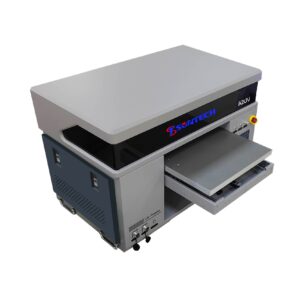
A UV DTF printer is a specialized computer system that executes the digital printing workflow of UV materials.
A typical ultraviolet (UV) printing device has the following components:
- ultraviolet inkjet print heads
- White ink processing and movement systems
- ultraviolet light-emitting units
- Film feeding and alignment mechanisms
- Online laminating (in many variations)
The printer produces a ready-to-use UV-DTF transfer that combines color layers, white ink, and adhesive backing in one manufacturing sequence.
How Does UV DTF Printing Work? Step-by-Step Process
Understanding the mechanism behind UV DTF’s action elucidates why it’s so diverse.
Step 1: The printing of the Release Film.
The ultraviolet DTF printer utilizes ultraviolet ink that is printed onto a transparent release film that is transparent (commonly called Film A). The ultraviolet lamps immediately mend each layer of ink, which creates sharp contrasts and textured elevations.
Step 2: Adhesive-Based Lamination
A stretchy adhesive film (Film B) is adhered to the printed surface. This adhesive layer facilitates the graphics card’s bond to the final substrate.
Step 3: Move the application to a new location
The entire movie is overlaid on the target surface using pressure. After the adhesive is applied, the release film is peeled away, leaving the UV-cured message permanently associated with the adhesive.
Step 4: Complete Bonding
No special treatment is necessary for the heat. The chemical stability and hardness of the UV ink are immediate benefits.
What Is UV DTF Good For? Core Applications Explained
The primary advantage of UV DTF is its exceptional capacity to accommodate substrates.
- Rigid and Irregular Terrain
UV DTF is superior to conventional methods in areas of flatbed printing:
Cylindrical bottles
Cylindrical containers
Polyethylene plastic with texturing
Non-conventional product forms
- Marketing Products and Personal Branding
UV DTF is typically employed for:
Significant logo design
Personalized gifts
Branded packaging
Limited-access merchandise
- Industrial Marking and Labels
Because ultraviolet ink is resistant to wear, chemicals, and moisture, ultraviolet DTF transfers are appropriate for:
Controls
Device housings
Easy to remember product names
- Signage and Adornment Graphics
UV DTF enables companies that use signage to utilize graphics on substances like:
Glass
Acrylic
Metal
Wood
without necessitating a flatbed ultraviolet (UV) printer for every endeavor.
Why UV DTF Is Different from Traditional UV Printing?
Traditional ultraviolet printing is accomplished by directing the printing material onto the substrate, which imposes limitations on size, shape, and surface area.
UV DTF overcomes these limitations by dissociating the printing process from the application process.
Main differences include:
- No need for a flat or negative surface.
- Increased productivity
- Lower probability of substrate failure
- Increased flexibility for smaller batches
UV DTF vs Traditional DTF Printing
Although both use “DTF” terminology, their purposes differ significantly.
| Feature | UV DTF Printer | Traditional DTF Printer |
| Ink Type | UV-curable ink | Water-based pigment ink |
| Target Substrates | Rigid & hard surfaces | Textiles |
| Curing Method | UV LED curing | Heat press |
| Durability | Very high | Medium |
| Typical Applications | Hard goods, signage | Apparel |
This distinction is critical when selecting equipment.
Advantages of Using a UV DTF Printer
- High print resistance
UV inks become solid polymers that have a high resistance to scratching, chemicals, and ultraviolet exposure.
- Wide material compatibility
UV DTF is capable of working on plastics, glass, ceramic, metals, and coated trees.
- No additional heat necessary
This causes UV DTF to be ideal for materials that are sensitive to heat.
- Rapid Production Schedules
Instant curing eliminates the need for a drying period, which improves productivity.
Key Technical Specifications of UV DTF Printers
UV DTF (Direct to Film) printers utilize UV curing technology along with a transfer film to produce durable, high-quality graphics that are printed on a variety of substrates. Understanding their primary technical specifications is crucial in the selection of the appropriate machine for your production goals.
- Print Resolution
Typically between 600 × 600 and 2400 × 2400 dpi.
Higher resolution promotes more detailed information, flattering slopes, and more accurate writing.
Influenced by the type of printhead and the size of the ink droplet.
- The configuration and type of printhead
Common printheads: The Epson i1600, i3200, and Ricoh Gen series are examples of common printheads.
Determines:
Print speed
Image fidelity
Ink compatibility
Multiple-headed configurations have a higher productivity and a higher color density.
- The speed of printing
Estimated in square meters or linear meters per hour.
Speed is different depending on:
Resolution of the issue
Number of printers
Colored layers (CMYK + White + Varnish)
Higher speeds facilitate the production of large quantities of products.
- Ink System (UV Ink)
Inks that are UV-curable include:
CMYK + White + Varnish (recommended)
High bonding and scratch resistance
Require stable ink flow and rotation to prevent sedimentation.
The consistency of the print and the response of the ink are both critical to the consistency of the print.
- Ultraviolet Curing System
LED ultraviolet lamps with variable power levels.
Provides instant ink drying and superior hold.
Effective curing prevents breakage, peeling, and the odor of ink.
Lower heat production helps films and adhesives.
- The maximum width of prints
Common lengths: 300 mm, 600 mm, 900 mm
Determines the maximum size of the application and the compatibility of materials.
Wider formats are appropriate for industrial and advertising purposes.
- Film Handling and Laminating System
Provides specialized assistance with UV printing transfer films (A/B movie)
Integrated laminating machines have a series of features that include:
Precise film position
Bubbly-free transfer
Constant and stable coating application
The control of film tension is essential for obtaining consistent results.
- White Ink and Varnish Reduction
White ink density control that is independent of the volume.
Provides a means to layer textured or embossed content.
Varnish increases gloss, longevity, and visual complexity.
- RIP Software Facilidad
Supported by RIP software like Maintop, PrintFactory, Caldera
Provides support for color management, ICC discrimination, and variable data printing
Advanced RIP increases the accuracy of colorimetry and increases the efficiency of the workflow.
- Compatibility with the material
Ultimates can be incorporated into:
Glass
Metal
Plastic
Wood
Ceramics
Leather
No pre-treatment is necessary for most substrates.
- Electrical and Environmental Conditions
The power supply is typically 110V/ 220V.
Maintained temperature and humidity levels are necessary for consistent ink performance.
Induction heaters that are built in may be employed to maintain film consistency.
- Maintenance and Reliability Benefits
Mechanical cleaning of the printhead
Ink flow and drainage systems
Nozzle detection and preventative action functions
Modular design that is easier to service.
Industries Adopting UV DTF Technology
The use of ultraviolet (UV)-curable inks to combine with fast-curing and flexible film transfers has increased in popularity due to their versatility, stability, and low barrier to substrate type. Below are the major industries that are involved with it.
- Signage & Graphics
The reason for them to take the UVDTF route
High-quality, dramatic visuals
The weathering and resistance to ultraviolet light of the outdoor surface.
Fast response for personalized messages
Common outputs
Signage at the retail level
Advertisements that promote the product.
Point-of-sale advertising
- Fashion and Appearance
The reason for them to take the UVDTF route
A softly textured feel on the fabric
Small details regarding cotton, polyester, leather, and blends.
Short sequences and seasonal endeavors
Common outputs
Custom T-shirts
Hoodies and dresses
Customized clothing items
- Custom Products and Personalized Gifts
The reason for them to take the UVDTF route
Distinctive, personalized graphics
The capacity to print on objects that are curled or non-flat.
Elevated perceived value
Common outputs
Mugs, Mugs, Tumblers
Cases and accessories
Nameplates and collectibles
- Home Decorations and Interior Decorations
The reason for them to take the UVDTF route
Personalized patterns that imitate patterns
Durable prints that resist scratching.
Composites, MDF, glass, and ceramic tiles.
Common outputs
Walls and paintings
Personalized patterns and colors
Providing details
- Automotive and Transportation
The reason for them to take the UVDTF route
High erosion and chemical resilience
The capacity to print on plastics and composite materials
Fast updates for fleet
Common outputs
Dashboard tones
Indoor trim design
Fleet identification decals
- Business & Marketing
The reason for them to take the UVDTF route
Precision graphics for the labeling and branding of products.
Maintainable codes and protocols
The manipulation of substrates that are rigid or flexible.
Common outputs
Business labels
Decorations for packaging
Educational graphics
- Marketing and Merchandising Printing
The reason for them to take the UVDTF route
Near-term customization that is low in cost.
Fast production response
High-quality, long-lasting print
Common outputs
Corporate presents
merchandise for an event
Limited-printings
- Consumer Goods and Electronics
The reason for them to take the UVDTF route
Small, intricate drawings with high precision.
The bond to plastics and metal is strong
Clean, scratch-resistant outcomes
Common outputs
Gadget branding
The control panel’s graphics
Adorned surfaces
UV DTF and Sustainability Considerations
As the sustainability of the industry becomes paramount to decisions about manufacturing and printing, the UV DTF (Direct-to-Film) technology is increasingly considered not only for its performance, but also its environmental impact. Despite the lack of impact, UV DTF has several advantages over traditional methods of printing that are sustainability-based.
- Reduced Ink disposal and more specific material utilization
The ultraviolet printing method DTF uses a computerized system that controls the amount of ink deposited on the sheet. Only those areas that are necessary are covered.
Sustainability’s benefits
Minimal overspray or surplus consumption of ink.
No surfaces or films that require chemical cleaning.
Constant output decreases the frequency of reprints and wasted material.
Compared to screen printing or chemical solvents, this method produces less waste per unit produced.
- Energy efficiency through ultraviolet curing
UV DTF is based on the use of ultraviolet light to cure the material; this is different from the heat-based method of drying.
Key benefits
Instant hardening (no long hardening processes)
Lower temperatures operate the system.
Reduced overall consumption of energy
Modern ultraviolet LED systems use less electricity and have a longer lifespan than traditional mercury lamps, which contributes to a lower overall operational carbon footprint.
- Low-VOC and Emissions Reduced
UV-curable inks are typically low-VOC or free of VOC, as they are polymerized via photopolymerization instead of being evaporated by solvent.
The environmental impact
Minimal amounts of airborne emissions.
Enhancement of workplace air quality.
More effective enforcement of environmental regulations.
This makes the UV DTF more suitable for urban classes and formal markets.
- Waterless printing method
Unlike the dye-sublimation process or water-based textile printing, UV DTF doesn’t require water to process or cure.
The reason is important.
Reduces the necessity of wastewater treatment.
Reduces the total volume of water consumed.
Avoids the spread of color and contamination.
Water conservation is a significant advantage in sustainability, particularly in areas with water shortages.
- Increases Product Lifespan, Increases Waste Reduction
UV DTF prints are renowned for their long lifespan.
Performance advantages
Scratch resistance
UV and weather resistance
Adhesion to various substrates is strong
Durable prints decrease:
The frequency of product change
Storing waste
The total environmental impact during the lifecycle.
Durability advocates a model of using longer products that have a lower discard rate.
- Adversities and Environmental Payments
Despite its benefits, UV DTF isn’t entirely environmentally friendly.
Key factors
PET films that are transferred are typically composed of plastic.
The adhesive layers may not be easily reusable.
A mixture of waste materials can impede the disposal process.
Accountable suppliers are attempting this by:
Making thin films
Investigating renewable or bio-based substrates
Reusing films and collecting waste effectively.
- Sustainability in the Use of UV-DTFs
Businesses can enhance the sustainability of outcomes by:
Selecting low-toxicity, officially approved ultraviolet inks
Using efficient light-emitting UV systems that are energy-efficient.
optimizing print configurations to minimize wasted film time
Alliances with providers of environmentally conscious consumables.
Adopting effective programs for waste separation and recycling.
- UV DTF vs Traditional Printing: Sustainability Snapshot
| Aspect | UV DTF | Solvent / Screen Printing |
| VOC emissions | Very low | Moderate to high |
| Water usage | None | Often required |
| Energy efficiency | High (UV LED) | Lower (heat drying) |
| Setup waste | Minimal | Screens, chemicals |
| Print durability | High | Medium |
FAQ: UV DTF Printer and UV DTF Technology
- What is the meaning of UV DTF in printing?
UV DTF is the process of printing UV ink directly onto film and then transferring the film to solid objects.
- What is the purpose of a UV DTF machine?
A UV DTF printer is employed to create sturdy, adhesive-based graphics that can be employed on hard surfaces like plastic, glass, and metal.
- Is the ultraviolet printing method better than the ultraviolet flatbed method?
The UV DTF is more adept at printing irregular objects, while the flatbed UV printing process is better for larger, flat panels.
- Is it possible to take away the UV printing?
UV DTF prints are partially permanent; removal may adversely affect the surface or leave residual adhesive.
- What components benefit from the UV-DTF?
Smooth, hygienic, and non-porous surfaces are best for adhering and maintaining.
Conclusion: Why UV DTF Printers Are Reshaping Digital Printing
So, what is the meaning of UV DTF, and what is beneficial about UV DTF? In practice, UV DTF is an evolution in digital printing that is powerful and has several implications: it differentiates the process of printing from the application of it, it increases the compatibility of materials, and it enables high-quality customization at a larger scale.
For companies that want versatility, consistency, and fast turnaround, the investment in a UV DTF printer is becoming more common as a strategic decision than as a test of popularity. As the demand for personalized products and short-term production continues to increase, UV DTF technology is expected to become the foundation of modern digital printing processes.
