
Quickly Answer:
The solvent used in UV inkjet flatbed printers is usually a specially formulated liquid that enables UV-curable inks to be deposited precisely onto substrates while maintaining stability and adhesion.
According to Inkjet Technology for Digital Fabrication (Derby, 2010) and studies in the Journal of Imaging Science and Technology (2019), UV ink solvents are designed to provide controlled viscosity, prevent nozzle blockages, and enable rapid curing under UV light. This makes them essential for achieving high-quality results in flatbed printing processes.
Introduction: UV Inkjet Flatbed Printing Overview
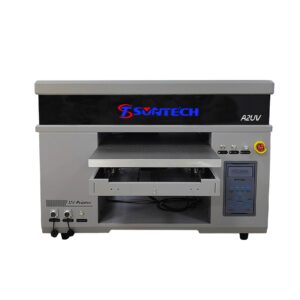
UV inkjet flatbed printers represent a revolutionary advancement in digital printing technology. Unlike traditional inkjet systems, they print directly onto rigid or flexible substrates such as acrylic, glass, metal, wood, and PVC boards. They use UV-curable inks that solidify instantly when exposed to ultraviolet light, enabling high-resolution, durable, and vibrant prints.
A critical component of this technology is the solvent system of the UV ink, as this affects ink flow, droplet formation, adhesion to substrates, and curing efficiency. Suppliers such as Suntech Digital have developed advanced UV ink formulations designed for their flatbed models, balancing the properties of the solvents, the dispersion of the pigments, and the curing behaviour.
Understanding UV Ink Solvents
UV ink solvents have multiple uses:
- Carrier medium: They transport pigments or dyes from the printer nozzle to the substrate.
- Viscosity control: The correct solvent composition ensures consistent droplet size and prevents nozzle blockages.
- Adhesion promotion: Solvents improve the wetting and binding of ink to different substrates.
- Curing optimisation: Solvent formulations are compatible with UV photoinitiators, ensuring rapid and complete curing.
Unlike with solvent- or water-based inks, UV ink solvents do not evaporate in order to dry the ink; rather, the ink cures when exposed to UV light. This eliminates VOC emissions and enables printing on heat-sensitive materials without warping.
Common Types of UV Ink Solvents
Monomer-based solvents
Monomers act as reactive carriers in UV inks. Common monomers include:
Acrylates: They provide low viscosity and high reactivity.
Oligoacrylates: They improve the flexibility and mechanical strength of the cured layer.
Monomer solvents are designed to polymerise under UV light to form a solid ink layer that adheres to the substrate.
Photoinitiator solvents
These solvents contain photoinitiators that trigger polymerisation when exposed to UV light. They ensure:
- Rapid curing speed
- Reduced print smear or tackiness
- Enhanced durability
Additive-based solvents
Additives such as surfactants, levelling agents, or adhesion promoters are often dissolved in the UV solvent system to optimise droplet formation and substrate wetting.
| Solvent Type | Function | Key Characteristics |
| Monomer | Carrier and polymerization | Low viscosity, UV-reactive |
| Photoinitiator Solvent | Curing agent carrier | Enhances curing speed and efficiency |
| Additive Solvent | Print quality enhancement | Improves wetting, droplet formation, and adhesion |
Factors Affecting UV Ink Solvent Selection
Substrate compatibility: Different materials, such as metal, glass, PVC, and acrylic, require tailored solvent properties to ensure adhesion and surface wetting.
Printer model specifications: The nozzle design, droplet size, and inkjet head temperature impact the required solvent viscosity.
Curing system: UV lamp intensity, wavelength, and exposure time influence solvent selection to achieve complete polymerisation.
Environmental conditions: Temperature, humidity, and airflow can affect ink spreading and curing, so solvent choice must compensate for these variations.
For example, Suntech Digital specifies compatible solvent-ink systems for its flatbed printers, optimising viscosity and pigment dispersion for droplet sizes of 10–50 µm, which is essential for high-resolution printing.
Advantages of Proper UV Ink Solvents
Fast curing: Reduces production time and enables immediate handling.
Durability: Solvent formulations enhance scratch, chemical, and weather resistance.
High print quality: Optimised solvents prevent nozzle clogging and enable fine line printing.
Environmental safety: UV ink solvents produce fewer VOC emissions than traditional solvent inks.
| Advantage | Impact on Printing |
| Fast Curing | Reduces production downtime |
| Durabilidad | Ensures long-lasting prints |
| Alta calidad de impresión | Maintains high resolution and color fidelity |
| Environmental Safety | Complies with VOC regulations |
Applications of UV Inkjet Flatbed Printing
UV inkjet flatbed printers are widely used across multiple industries.
Signage and display: Printing on acrylic, PVC, or aluminium panels for indoor and outdoor signage.
Packaging: Direct printing on corrugated cardboard, wood, and speciality packaging materials.
Decorative panels: Custom designs on glass, ceramic, and wooden surfaces.
Industrial printing: Printing functional patterns on electronic substrates or promotional items.
In each of these applications, the solvent system plays a vital role in ensuring adhesion, curing speed, and the durability of the final print.
UV Ink Solvent Performance Metrics
To evaluate the performance of UV ink solvents, several parameters are considered:
| Metric | Definition | Optimal Range |
| Viscosity | Resistance to flow at printing temperature | 15–40 cP (centipoise) |
| Surface Tension | Wetting capability on the substrate | 28–35 mN/m |
| Photoreactivity | Speed of UV curing | 20–60 seconds for full cure |
| Adhesion | Ink bonding to substrate | ASTM D3359 Class 5 (ideal) |
A proper balance of these metrics ensures high-quality output and minimizes production issues.
Common Issues with UV Ink Solvents
Although UV ink solvents offer many advantages, incorrect handling or formulation can cause printing issues. It is therefore essential to understand these issues to maintain print quality and reduce downtime.
Nozzle clogging
Nozzle clogging is one of the most common problems in UV flatbed printers.
High-viscosity or improperly mixed solvents can block fine nozzles.
Evaporation of the solvent at the nozzle tip can also lead to premature curing.
Contaminants or dust in the solvent can also cause blockages.
Solution: Regular cleaning, proper solvent selection, and temperature-controlled ink reservoirs minimise the risk of clogging.
Incomplete curing
Incomplete curing occurs when the solvent or ink does not fully polymerise under UV light.
This can lead to tacky or soft prints, caused by low photoreactivity or insufficient UV exposure.
Thick ink layers may require a longer exposure time or higher-intensity UV lamps.
Solution: Use solvents and inks that are compatible with the printer’s UV output, and adjust the layer thickness to the recommended level.
Print defects
Bleeding: Solvent spreads excessively on the substrate, causing blurred edges.
Poor adhesion: Incompatible solvents fail to bond the ink to the substrate, resulting in peeling.
Colour inconsistency: Uneven solvent evaporation or improper pigment dispersion can lead to colour shifts.
Solution: Optimise the composition of the solvent, the surface preparation, and the environmental conditions (temperature and humidity).
Best Practices for Handling and Storage of UV Ink Solvents
Proper handling and storage are essential for maintaining the performance of the solvent and ensuring safe operation.
Temperature control: Store solvents at 15–25°C to prevent changes in viscosity.
UV protection: Avoid direct sunlight or exposure to UV lamps to prevent premature curing.
Sealed containers: Use airtight containers to prevent solvent evaporation.
Agitation: Regularly mix inks containing solvents to maintain pigment dispersion.
Personal safety: Wear gloves and goggles and ensure there is proper ventilation to prevent skin contact or inhalation of aerosols.
Following these practices will extend the shelf life of solvents and maintain consistent print quality.
Comparison of UV Ink Solvent Formulations
Different suppliers provide tailored UV solvent formulations optimized for their printer models. Here’s a comparison of common solvent types:
| Supplier | Solvent Type | Viscosity (cP) | Curing Time | Substrate Compatibility | Special Features |
| Suntech Digital | Monomer-based | 20–30 | 20–30 sec | Acrylic, PVC, Metal | High pigment load, rapid curing |
| Suntech Digital | Photoinitiator solvent | 15–25 | 15–25 sec | Glass, Wood | Optimized for thin layers |
| Competitor A | Oligoacrylate solvent | 25–35 | 25–40 sec | Cardboard, Plastic | Low shrinkage, flexible print |
| Competitor B | Hybrid additive solvent | 18–28 | 20–35 sec | Multi-surface | Anti-clog additives, long-term stability |
Note: Suntech Digital’s solvents are engineered for their flatbed printers, ensuring optimal droplet formation, minimal nozzle wear, and precise color reproduction.
Advanced Formulations for High-Resolution Flatbed Printing
High-resolution UV flatbed printing requires solvents with precisely tuned properties.
Low viscosity: This enables droplets as small as 10 μm to be produced without clogging.
Surface energy control: Enhances wetting on low-energy substrates such as polypropylene.
Rapid polymerisation: Compatible with high-intensity UV LEDs for faster production speeds.
Additive Engineering: Surfactants and levelling agents improve edge sharpness and minimise satellite droplets.
Manufacturers such as Suntech Digital use these advancements to print fine details on a variety of materials, including promotional items, signage, and industrial components.
Environmental and Safety Considerations
UV ink solvents offer several environmental benefits compared to traditional solvent-based inks:
Low VOC Emissions: UV curing does not rely on solvent evaporation, thereby reducing VOC emissions.
Reduced Waste: Uncured ink can often be recycled or cured later without hazardous emissions.
Energy Efficiency: UV LED lamps require less energy than traditional thermal drying systems.
However, handling precautions are still necessary, including using gloves, ventilation, and avoiding direct skin contact with uncured inks.
FAQ: UV Inkjet Flatbed Printer Solvents
- What is the main solvent in UV inkjet flatbed printers?
UV inks primarily use monomer-based solvents combined with photoinitiators to facilitate droplet transport and rapid UV curing.
- Can UV inks be used on all materials?
While UV inks are versatile, substrate compatibility depends on solvent adhesion properties; primers or surface treatment may be required for low-energy plastics or metals.
- How do solvents affect nozzle performance?
Properly formulated solvents maintain viscosity and prevent clogging, ensuring consistent droplet formation and print quality.
- What is the difference between UV and solvent-based inks?
UV inks cure via photopolymerization under UV light, while traditional solvent-based inks dry through evaporation, producing VOC emissions and requiring longer drying times.
- How should UV ink solvents be stored?
Store in sealed containers at 15–25°C, away from UV light and direct sunlight, and gently agitate before use.
- Which suppliers provide reliable UV ink solvents for flatbed printers?
Suntech Digital offers high-quality monomer-based and photoinitiator solvents compatible with their UV flatbed printers, optimized for durability, curing speed, and high-resolution output.
Conclusión
In a UV inkjet flatbed printer, the solvent is a carefully engineered component that affects ink flow, droplet formation, substrate adhesion, and UV curing efficiency. Selecting the right solvent is essential for achieving high-quality prints, minimising maintenance requirements, and ensuring operational reliability.
Suppliers such as Suntech Digital offer advanced UV ink formulations that balance viscosity, photoreactivity, and pigment dispersion, enabling high-resolution printing on a variety of materials. With optimised solvent systems, flatbed printers can produce durable, vibrant prints for signage, industrial applications, decorative panels, and packaging while reducing volatile organic compound (VOC) emissions and improving production efficiency.
Understanding solvent properties, handling practices, and printer compatibility is key to achieving consistent quality, long-term durability, and environmental safety in UV flatbed printing.
