
Abstract
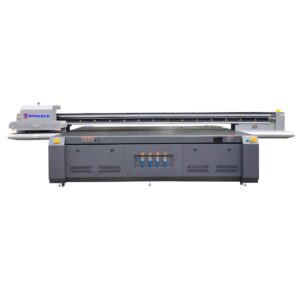
Thanks to its ability to print directly onto a wide range of substrates, eliminating the need for pretreatment or transfer processes, Impresora plana UV has emerged as one of the most versatile digital printing technologies.
Studies of UV inkjet technology have shown that UV-curable inks polymerise instantly under ultraviolet light, forming a durable layer that adheres strongly to both porous and nonporous surfaces. This significantly expands the range of materials that can be printed on compared to traditional methods.
Industry analyses confirm that UV flatbed printers can print on materials such as glass, metal, acrylic, wood, ceramic, plastic, and composite panels. This makes them highly suitable for signage, industrial manufacturing, interior decoration, and customised product production.
However, absolute material compatibility does not exist, and factors such as surface energy, flexibility, and ink type (rigid versus flexible UV ink) determine print quality and durability.
Understanding UV Flatbed Printing Technology
Before analysing materials, it is important to understand how a UV flatbed printer works.
This type of printer uses a digital inkjet system to print directly onto flat or slightly curved surfaces. Unlike solvent or water-based printing, UV printing uses inks that harden instantly when exposed to ultraviolet light.
Key technical advantages include:
- instant curing (no drying time);
- strong adhesion to nonporous surfaces;
- high-resolution output;
- layered printing (white ink + varnish effects).
As the ink sits on the surface rather than being absorbed, printing on materials previously considered ‘unprintable’ is possible.
Manufacturers such as Shenzhen Suntech Digital Equipment emphasise this direct-to-substrate capability as a key driver of industrial customisation and on-demand production.
Core Material Categories for UV Flatbed Printing
UV flatbed printers are renowned for their exceptional material compatibility. These materials can be broadly divided into three categories: rigid, semirigid, and flexible.¹
Rigid materials (the primary application segment)
Rigid substrates are the most common and reliable materials for UV flatbed printing.
Common examples include glass (tempered and laminated), metal (aluminium, stainless steel, and brass), wood (MDF, plywood, and solid wood), ceramic (tiles and porcelain), acrylic (PMMA), stone (marble and granite), and composite panels (ACP boards). UV ink bonds directly to smooth, nonabsorbent surfaces, which is why these materials are ideal for UV flatbed printing.
Rigid Materials and Applications
| Material | Printing Characteristics | Common Applications |
| Glass | High clarity, durable prints | Interior décor, partitions |
| Metal | Strong adhesion, scratch-resistant | Industrial labels, signage |
| Wood | Natural texture enhancement | Furniture, decorative panels |
| Ceramic | Heat-resistant prints | Tiles, wall art |
| Acrylic | Vibrant colors, glossy finish | Advertising displays |
| Stone | Premium textured effects | Luxury décor |
UV flatbed printers excel in these applications because the material remains stationary while the print head moves, ensuring precision and consistency.
Plastics and Polymers
Plastics are one of the most commercially important material categories.
Examples of compatible plastic materials include:
- PVC
- ABS
- Polycarbonate
- PETG
- Acrylic (Plexiglas)
UV printing on plastics is widely used for:
- Signage production
- Consumer electronics (e.g., phone cases and panels)
- Packaging and branding
UV inks form a durable layer on plastic surfaces that is often resistant to weather and UV exposure.
Semiflexible materials
Although UV flatbed printers are designed for rigid materials, they can also handle semiflexible substrates.
Examples include leather (natural and PU), canvas, coated fabrics, and vinyl sheets. However, material flexibility requires special UV inks.
Key insight: Rigid UV ink can crack on flexible materials, so flexible UV ink formulations must be used to maintain durability.
Paper and Packaging Materials
Although not the primary use case, UV flatbed printers can print on the following materials:
- Paper
- Cardboard
- Corrugated packaging
Applications include:
- Premium packaging
- Prototypes
- Short-run production
Speciality and industrial materials
UV flatbed printing can be used with a range of materials beyond conventional substrates.
Advanced materials, bamboo and cork, leather goods, 3D-printed objects and promotional products (e.g. pens, mugs, and cases) can all be printed on using this technology. This versatility enables mass customisation and product personalisation, a growing trend in manufacturing.
Materials That Are Difficult or Impossible to Print On
Despite its versatility, UV flatbed printing has its limitations.
- Highly elastic materials
Such as spandex and Lycra, which stretch significantly, causing UV ink to crack.
- Silicone
The nonstick surface prevents adhesion and requires special primers, which are often unreliable.
- Certain textiles
While some fabrics can be printed on, most are unsuitable due to:
- Ink rigidity
- Poor wash durability
- Low surface energy materials
Materials with poor surface energy may require:
- Plasma treatment
- Chemical primers
Failure to treat surfaces properly can lead to poor adhesion and peeling.
Key Factors Affecting Material Compatibility
Material compatibility is not just about the substrate—it depends on multiple technical variables.
Factors Influencing UV Printing Performance
| Factor | Impact on Printing |
| Surface Energy | Determines ink adhesion |
| Material Roughness | Affects print sharpness |
| Tipo de tinta | Rigid vs flexible |
| Tratamiento previo | Improves bonding |
| Thickness | Must fit printer height limits |
Understanding these factors is essential for achieving consistent results in industrial production.
Industrial Applications by Material Type
Different materials correspond to different industries.
Material vs Industry Applications
| Material Category | Industry | Typical Products |
| Glass | Interior design | Decorative panels |
| Metal | Manufacturing | Nameplates, control panels |
| Wood | Furniture | Custom décor |
| Acrylic | Publicidad | Lightboxes, signage |
| Plastic | Consumer goods | Phone cases |
| Ceramic | Construction | Printed tiles |
Manufacturers like Shenzhen Suntech Digital Equipment highlight how this material versatility enables businesses to diversify revenue streams across multiple industries.
Why Material Versatility Matters in B2B Procurement?
In B2B procurement, material selection is no longer just a technical decision; it has a direct impact on cost efficiency, supply chain resilience, product performance, and longterm competitiveness. Material versatility — the ability of a material to perform across multiple applications, environments, and specifications — has become a key strategic factor.
- Reduce supply chain complexity
Versatile materials can be used across multiple products or applications, enabling companies to:
- Consolidate suppliers
- Reduce SKU complexity
- Simplify inventory management
- Fewer material types = lower procurement risk and easier planning
- Improves cost efficiency
Using one material across different product lines enables:
- Bulk purchasing discounts
- Lower logistics and storage costs
- Reduced waste from unused inventory
- Versatility supports economies of scale
- Enhances production flexibility
Manufacturers benefit from materials that can adapt to:
- Different product specifications
- Multiple processing methods (cutting, moulding, extrusion, etc.)
This allows for a faster response to:
- Custom orders
- Market changes
- Supports multiindustry applications
Versatile materials can be applied across industries such as:
- Construction
- Automotive
- Consumer goods
- Medical or industrial sectors
This expands market opportunities and reduces dependency on a single industry.
- Improves product development efficiency
R&D teams can:
- prototype faster
- standardise materials across product lines
- reduce testing cycles
This leads to a shorter time to market.
- Enhances supply chain resilience
In times of disruption, such as raw material shortages or logistics issues, versatile materials allow for:
- Easier substitution
- Flexible sourcing strategies
- Reduced reliance on single-source materials
- Simplifies compliance and certification
Using fewer well-understood materials helps:
- Meet regulatory standards more easily
- Maintain consistent certification (e.g., safety and environmental compliance)
- This is especially important for global markets
- Supports sustainability goals
Versatile materials often contribute to:
- Reduced material waste
- Better recyclability
- Lower environmental footprint
- Alignment with ESG and green procurement strategies
- Improves longterm supplier relationships
When a supplier provides versatile materials:
- Buyers can consolidate orders
- Partnerships become more strategic
- Negotiation power improves
- Leads to more stable and scalable cooperation
- Increase competitive advantage
Companies that leverage versatile materials can:
- Launch products faster
- Adapt to different markets
- Reduce operational costs
This creates a strong competitive advantage in B2B environments.
Best Practices for Printing on Different Materials
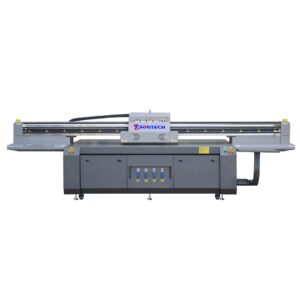
UV flatbed printing is widely used across industries thanks to its ability to print directly onto rigid and flexible materials. However, achieving optimal results requires an understanding of the specific requirements of each material.
- Printing on acrylic (PMMA)
Acrylic is one of the most common substrates for UV printing and is widely used in signage and display applications.
Best practices:
- Clean the surface thoroughly to remove dust and oil.
- Use an adhesion promoter or primer for better ink bonding.
- Adjust the UV curing intensity to avoid cracking.
Key tip: Reverse printing (printing on the back) improves durability and visual depth.
- Printing on glass
Glass offers a premium finish, but requires careful handling.
Best practices:
- Always apply a primer or coating.
- Use white ink layering for opacity.
- Control curing speed to prevent peeling.
Key challenge: Ink adhesion is weak without proper surface treatment.
- Printing on metal (aluminium, stainless steel)
Metal is widely used in industrial and decorative applications.
Best practices:
- Pretreat with a coating or primer.
- Ensure the surface is grease-free.
- Use high-density ink for strong colour contrast.
Key tip: Matte finishes often produce better adhesion than polished surfaces.
- Printing on wood
Wood provides a natural aesthetic, but its surface is uneven.
Best practices:
- Sand the surface to ensure smoothness.
- Apply a sealing layer to prevent ink absorption.
- Adjust the print height to accommodate the texture.
Key challenge:
Porosity can affect colour consistency.
- Printing on PVC and plastics
PVC and plastic sheets are common in advertising and packaging.
Best practices:
- Test material compatibility (not all plastics accept UV ink well).
- Use antistatic cleaning.
- Optimise curing to prevent warping.
Key tip: Flexible plastics require lower curing heat.
- Printing on leather and fabric
UV printing on flexible materials is becoming increasingly popular in customisation markets.
Best practices:
Use flexible UV inks.
- Avoid overcuring to maintain softness.
- Test ink adhesion on different coatings.
Key challenge:
Maintaining flexibility without cracking.
- Printing on ceramic and tiles is common in interior decoration and customised products.
Best practices:
- Clean and dry the surface thoroughly.
- Use high-adhesion primers.
- Apply multiple ink layers for durability.
Key tip: Postcuring (additional UV exposure) improves scratch resistance.
Future Trends in UV Flatbed Printing Materials
As UV printing technology evolves, innovation in materials is becoming a key competitive factor. The future is driven by sustainability, functionality and customisation.
- Growth of eco-friendly materials
Sustainability is changing the way materials are selected.
Trends:
- Recycled plastics (rPVC and PET)
- FSC-certified wood
- LowVOC coatings
Impact:
Brands are prioritising environmentally compliant substrates.
- Expansion of flexible and hybrid materials
The distinction between rigid and flexible materials is becoming increasingly blurred.
Trends:
- Flexible acrylic alternatives
- Hybrid composite panels
- Soft-touch coated materials
Impact:
Expands the range of applications (fashion, wearables, packaging).
- Smart and functional surfaces
Materials are becoming more than just printing substrates.
Trends:
- Antibacterial coatings
- UV-reactive surfaces
- Scratch-resistant finishes
Impact:
Adds value beyond visual design.
- Customisation-driven material demand
Personalisation continues to grow.
Trends:
- Smallbatch printable materials
- Precoated substrates for instant printing
- Ondemand production compatibility
Impact:
Supports e-commerce and mass customisation models.
- Improved ink material compatibility
Material innovation is increasingly aligned with ink technology.
Trends:
- UV inks optimised for specific substrates
- Better adhesion without primers
- Faster curing with lower energy consumption
Impact:
Reduces production costs and complexity.
- High-performance industrial materials
Industrial applications are expanding rapidly.
Trends:
- Heatresistant substrates
- Chemicalresistant materials
- Outdoor durability (weatherproof panels)
Impact:
UV printing is moving deeper into manufacturing sectors.
FAQ: UV Flatbed Printer Materials
- What materials can a UV flatbed printer print on?
It can print on glass, metal, wood, plastic, acrylic, ceramic, and many more rigid or semirigid materials.
- Can UV flatbed printers print on fabric?
Only limited fabrics like canvas or coated textiles; regular clothing is not suitable.
- Does UV printing require material pretreatment?
Some materials (glass, metal, ceramics) require primers for better adhesion.
- Can UV printers print on curved objects?
Primarily flat surfaces, but slight curvature is possible depending on machine design.
- What is the most common material used?
Acrylic, metal, and wood are among the most widely used.
- Is UV printing durable?
Yes, UV prints are highly resistant to scratching, fading, and environmental exposure.
Conclusión
A UV flatbed printer is one of the most versatile tools in modern digital manufacturing. It can print on a wide range of materials, including rigid substrates such as glass and metal, as well as semiflexible materials such as leather and canvas.
For B2B buyers and manufacturers, this versatility translates into greater efficiency, a wider range of applications, and higher profitability. Companies such as Shenzhen Suntech Digital Equipment demonstrate how advanced UV flatbed solutions can support industrial-scale customisation and innovation.
Understanding material compatibility is ultimately the key to unlocking the full potential of UV flatbed printing, ensuring both print quality and longterm business success.
