

Respuesta rápida
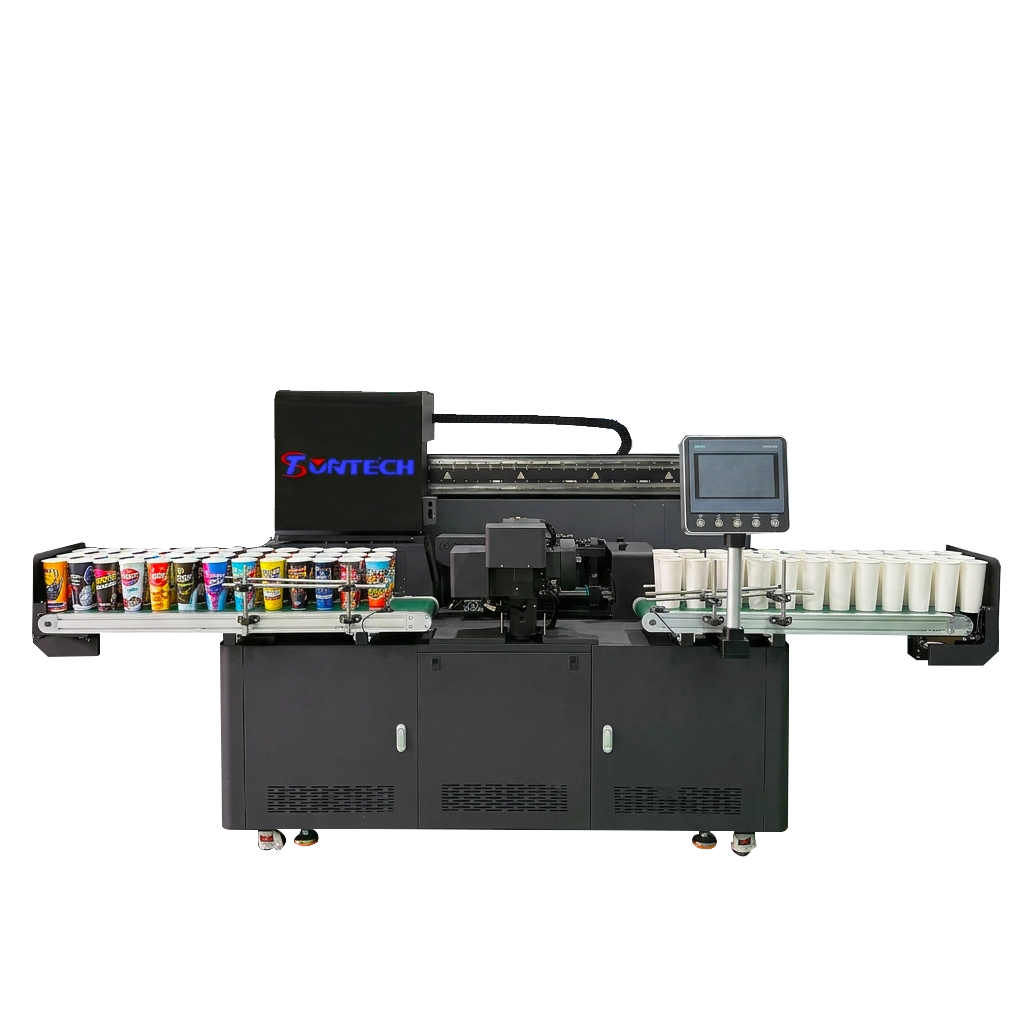
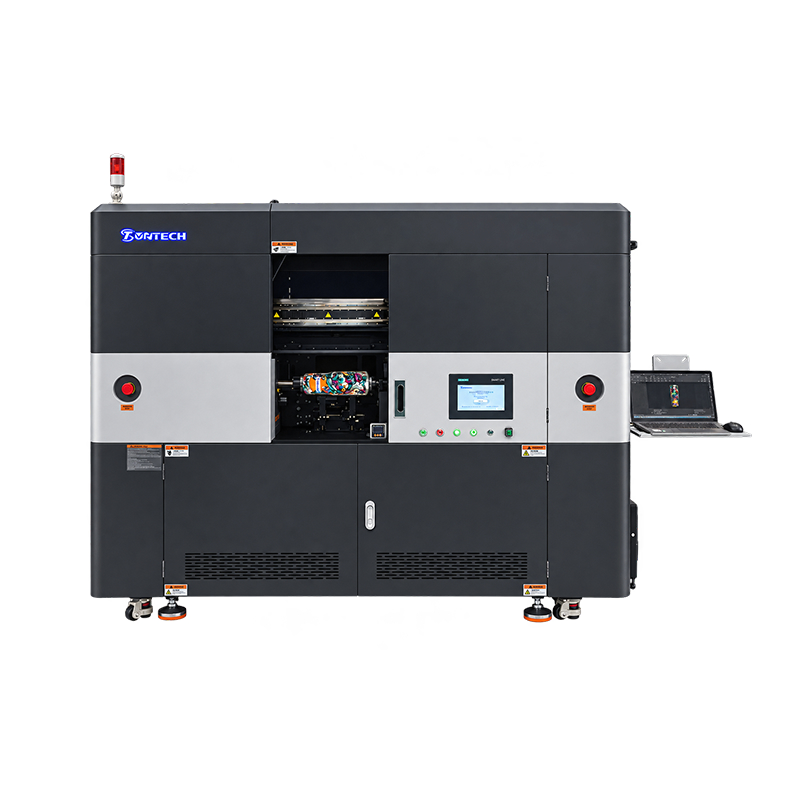
An increasing number of drinkware manufacturers are switching to Impresoras UV because this technology enables high-resolution graphics to be printed directly onto bottles, tumblers, cups, and other curved or irregular surfaces, with fast curing and reduced production limitations compared with traditional printing methods. According to The Printing Ink Manual by R. H. Leach and Printing Technology by J. Michael Adams and Penny Ann Dolin, UV curing technology improves print durability by instantly polymerising inks with ultraviolet radiation to create strong adhesion and high-quality surface finishes. Modern UV printing systems enable drinkware producers to create customised designs, shorten production cycles, and increase manufacturing flexibility.
¿Por qué más fabricantes de recipientes para beber están cambiando a la impresión UV?
The global drinkware market has undergone significant changes in recent years. Consumers are no longer satisfied with simple, functional products; instead, they expect personalised bottles, reusable cups, travel mugs, and promotional drinkware featuring unique colours, logos, patterns, and customised artwork.
This shift has prompted manufacturers to adopt more flexible decoration technologies. One of the fastest-growing methods of drinkware customisation is UV printing technology, which combines high-quality printing with fast production speeds and the ability to print directly onto different materials.
Traditional decoration methods such as screen printing, heat transfer, and pad printing still have applications in the drinkware industry. However, they often require additional preparation steps or printing plates, and can be restrictive in terms of design complexity. UV printers provide manufacturers with a more efficient alternative by enabling digital printing directly onto product surfaces with minimal setup.
Today, many manufacturers are switching to UV printing to meet the growing demand for customised products, small-batch production, and premium-quality finishes.
What Is a UV Printer?
A UV printer is a digital printing machine that uses ultraviolet light to instantly cure specially formulated UV inks during the printing process.
Unlike conventional printing systems, which rely on ink drying through evaporation or absorption, UV printing uses a process called photopolymerisation. Exposing UV ink to ultraviolet light causes the ink molecules to rapidly solidify and form a durable layer on the printing surface.
The basic UV printing process includes the following steps:
- Product positioning on the printer platform;
- Digital image transfer from software to print head;
- UV ink deposition onto the drinkware surface;
- Instant curing through UV LED lamps;
- Final inspection and packaging.
This process allows manufacturers to print directly onto materials such as:
- Stainless steel
- Aluminium
- Glass
- Ceramic
- Plastic
- Acrylic
- Coated surfaces
Because no traditional printing plates are required, UV printing provides greater flexibility for customised drinkware production.
Why Drinkware Manufacturers Prefer UV Printing?
-
Direct Printing on Different Drinkware Materials
One of the biggest advantages of UV printers is their ability to print directly onto various drinkware materials.
Modern consumers purchase drinkware made from many different substrates, including:
- Stainless steel tumblers
- Vacuum-insulated bottles
- Glass cups
- Ceramic mugs
- Plastic bottles
Traditional printing methods often require different processes depending on the material. For example, screen printing may require specific inks, surface treatments, or drying conditions.
UV printing simplifies production because the same digital printing system can handle multiple materials with appropriate ink configurations and surface preparation.
This flexibility allows manufacturers to expand product categories without investing in multiple decoration systems.
-
Higher Customization Capability
Personalization has become a major trend in the drinkware industry.
Customers increasingly request:
- Custom names
- Corporate logos
- Limited-edition designs
- Full-color artwork
- Personalized gifts
UV printing supports high-resolution digital designs without requiring expensive setup procedures.
Compared with traditional methods, UV printers provide advantages such as:
- No printing plates
- No minimum order quantity
- Faster design changes
- Easy production of unique products
This makes UV printing especially valuable for:
- Online customized drinkware businesses
- Promotional product suppliers
- Small-batch manufacturers
- Premium beverage brands
A manufacturer can produce hundreds of different designs in one production run without changing physical tooling.
-
Superior Print Quality and Visual Effects
Drinkware products are often purchased based on appearance. A high-quality surface finish can significantly influence consumer purchasing decisions.
UV printers can produce:
- Sharp text
- Detailed graphics
- Smooth gradients
- Vibrant colors
- Three-dimensional effects
Many advanced UV printing systems support:
- CMYK color printing
- White ink printing
- Clear varnish printing
- Layered texture effects
White ink capability is particularly important because many drinkware products have dark or transparent surfaces. A white base layer improves color brightness and allows manufacturers to print vivid designs on challenging substrates.
-
Faster Production and Shorter Delivery Cycles
Market demand for customized products is becoming increasingly unpredictable. Manufacturers need equipment that can respond quickly to changing orders.
UV printing reduces production preparation time because:
- Digital files can be changed instantly
- No screen preparation is required
- No drying waiting period is needed
- Products can be handled immediately after printing
This helps manufacturers achieve:
- Faster order fulfillment
- Reduced inventory pressure
- More flexible production scheduling
For businesses operating in competitive markets, production speed can become a significant advantage.
UV Printing vs Traditional Drinkware Decoration Methods
| Característica | UV Printing | Screen Printing | Heat Transfer |
| Design Preparation | Digital file only | Requires screens | Requires transfer materials |
| Color Capability | Full-color images | Limited colors | Full-color possible |
| Setup Time | Very short | Longer setup | Medium setup |
| Small Batch Production | Excellent | Less economical | Good |
| Surface Compatibility | Wide range of materials | Material dependent | Requires a suitable coating |
| Customization Flexibility | Very high | Limited | Medium |
-
Reduced Production Waste
Sustainability is becoming increasingly important in manufacturing industries, including drinkware production.
UV printing helps reduce waste through:
- Digital production processes
- Accurate ink placement
- Reduced setup materials
- Lower rejected product rates
Unlike traditional methods that may require large quantities of test prints or disposable screens, UV printing allows manufacturers to adjust designs digitally before production.
This makes it suitable for companies seeking more efficient and environmentally responsible manufacturing methods.
-
Better Support for Premium Drinkware Products
The drinkware market is moving toward higher-value products rather than only low-cost mass production.
Premium products often require:
- Unique artwork
- High-end finishes
- Complex patterns
- Brand differentiation
UV printing supports these requirements by enabling manufacturers to create visually attractive products with greater design freedom.
Luxury tumblers, corporate gift bottles, sports bottles, and limited-edition collections increasingly rely on advanced printing technologies to create stronger brand recognition.
-
Lower Long-Term Production Costs
Although the initial investment in a UV printer may be higher than that of some traditional printing equipment, many drinkware manufacturers find that the long-term operating costs are significantly lower.
Traditional decoration processes often involve additional expenses, including:
- Printing plate production
- Screen preparation
- Multiple setup procedures
- Large minimum order quantities
- Additional labor requirements
UV printing reduces many of these costs because the production process is fully digital. Once the artwork file is prepared, manufacturers can immediately start printing without creating physical printing tools.
For companies producing customized drinkware, this provides important economic advantages:
- Lower cost for small-batch orders
- Faster product changeover
- Reduced inventory risk
- Improved production flexibility
This is particularly valuable as the market shifts from mass-produced identical products toward personalized and on-demand manufacturing.
-
Ability to Print on Complex Shapes and Surfaces
One reason more drinkware manufacturers are adopting UV printing is its ability to handle products with challenging geometries.
Many drinkware products are not simple flat surfaces. Common examples include:
- Cylindrical tumblers
- Curved bottles
- Tapered cups
- Textured containers
Modern UV printing solutions can use rotary printing attachments or specialized fixtures to accurately position products during printing.
This capability allows manufacturers to decorate products that would be difficult or impossible to process using conventional flat printing methods.
As drinkware designs continue becoming more diverse, flexible printing technology has become a key competitive advantage.
-
Improved Durability and Resistance
Drinkware products are exposed to frequent handling, washing, temperature changes, and outdoor environments. Therefore, printed graphics must maintain their appearance over time.
UV-cured inks provide excellent durability because the curing process creates a strong polymerized ink layer on the product surface.
High-quality UV printing can provide resistance against:
- Scratching
- Fading
- Moisture
- Daily handling
- Mild chemical exposure
For reusable bottles and tumblers, this durability improves customer satisfaction and strengthens brand reputation.
However, manufacturers should select appropriate ink formulations and surface preparation methods according to the material being printed.
-
Supporting Sustainable and On-Demand Manufacturing
The growth of personalized drinkware has changed how manufacturers manage production.
Previously, many companies relied on large inventory production because traditional printing methods were inefficient for small quantities. However, UV printing allows businesses to produce products closer to actual demand.
Benefits include:
- Reduced overproduction
- Lower warehouse requirements
- Less wasted inventory
- More efficient resource utilization
For brands offering customized drinkware through online platforms, UV printing enables a made-to-order business model that reduces unnecessary production.
Key Factors When Choosing a UV Printer for Drinkware Production
Selecting the right UV printer involves evaluating a number of technical and business factors.
-
Printing size and product compatibility
Manufacturers should first consider the size and shape of the products they need to print.
Important questions to ask include:
- What is the maximum printing diameter?
- Do cylindrical products need to be printed?
- Is rotary printing necessary?
- What materials will be printed?
A printer suitable for small promotional cups may not meet the requirements of large insulated tumblers or industrial bottles.
-
Ink configuration and colour performance
The final appearance of printed drinkware is directly affected by ink capability.
Important considerations include:
- CMYK colour range
- White ink capability
- Clear varnish function
- Ink adhesion performance
White ink is especially important for printing on dark surfaces because it creates a foundation layer that improves colour accuracy.
Clear varnish or gloss effects can also be used to create premium finishes for luxury products.
-
Print speed and production volume
Different manufacturers have different production requirements.
Small customisation businesses may prioritise:
- Flexible operation
- High design variety
- Lower investment cost
Large-scale manufacturers may require:
- Higher printing speed
- Automated loading systems
- – Continuous production capability
The ideal UV printer should match the company’s expected production volume rather than simply focusing on maximum speed.
-
Software and automation features
Modern UV printers increasingly include intelligent software systems that improve production efficiency.
Useful features include:
- Automatic calibration
- Print management software
- Colour control systems
- Remote monitoring
These functions reduce operator dependency and help maintain consistent quality during long production runs.
UV Printing Trends in the Drinkware Industry in 2026
The drinkware printing industry is expected to continue evolving as customization and sustainability become stronger market drivers.
Several trends are shaping future UV printing development:
-
Increased Automation
Manufacturers are moving toward automated production lines that combine:
- Robotic loading
- Automatic positioning
- Digital inspection systems
Automation improves efficiency while reducing labor requirements.
- Growth of Personalized Products
Consumers increasingly prefer products that reflect individual identity.
Future demand will continue increasing for:
- Personalized bottles
- Corporate gift products
- Limited-edition collections
- Event-specific drinkware
UV printing provides the flexibility required for these markets.
- More Environmentally Friendly Printing Solutions
Sustainable manufacturing will influence future UV printing technology.
Expected developments include:
- Lower energy consumption UV LED systems
- More environmentally friendly inks
- Reduced production waste
- Improved recycling compatibility
Frequently Asked Questions About UV Printers
Q1: Can UV printers print inside cups?
No. Standard UV printers mainly print on flat or external surfaces. Printing inside cups requires specialized equipment or modified cylindrical printing systems designed for internal surfaces.
Q2: Can UV printers print tapered tumblers?
Yes. With a rotary printing attachment or cylindrical UV printer, tapered tumblers can be printed. Proper adjustment of rotation speed and print height is needed to maintain image accuracy on curved surfaces.
Q3: Can UV printers print powder-coated bottles?
Yes. UV printers can print directly on powder-coated bottles without removing the coating. The UV ink adheres well to coated surfaces, especially when combined with proper surface preparation or primer.
Q4: Does UV ink fade outdoors?
UV ink is highly resistant to fading, but long-term outdoor exposure, strong sunlight, weather conditions, and ink quality can affect durability. High-quality UV inks can maintain good color performance for years under normal outdoor conditions.
Q5: How long does UV ink last?
The lifespan of UV ink depends on the application and environment. Indoor applications can last many years, while outdoor prints typically last several years when properly cured and protected.
Q6: Can UV printers print one piece?
Yes. One of the biggest advantages of UV printing is low-volume customization. UV printers can print single pieces without requiring plates, screens, or minimum order quantities.
Q7: Is cylinder printing profitable?
Yes. Cylinder UV printing can be highly profitable because it supports personalized products with higher margins, including tumblers, bottles, mugs, and promotional items. Profitability depends on equipment cost, production speed, product demand, and marketing strategy.
Q8: Can I print personalized gifts?
Yes. UV printers are ideal for personalized gifts such as tumblers, phone cases, glassware, metal bottles, wood products, acrylic items, and custom souvenirs. They allow businesses to offer unique designs with fast turnaround times.
Conclusión
The increasing adoption of UV printers in the drinkware industry reflects a significant trend towards customisation, efficiency, and flexible manufacturing. Compared with traditional decoration methods, UV printing enables manufacturers to produce high-quality designs on a wide variety of drinkware surfaces in less time with greater creative freedom.
For businesses producing bottles, tumblers, cups, and promotional drinkware, UV printing offers several competitive advantages, including faster turnaround times, reduced production waste, enhanced design capabilities, and improved support for personalised products.
As consumer demand for unique and premium products continues to grow, manufacturers that invest in advanced UV printing technology will be better placed to respond to changing market expectations. The future of drinkware decoration will increasingly depend on digital printing solutions that combine quality, efficiency, and manufacturing flexibility.