

Quick Answer: DTF printing requires a modified or purpose-built inkjet printer capable of depositing water-based pigment inks — including a mandatory white ink layer — onto a PET (polyethylene terephthalate) release film. This film is then heat-transferred to fabric.
According to the technical standards of Textile World (2022) and the Specialty Graphic Imaging Association (SGIA), a functional DTF setup requires precise printhead engineering, dual-channel ink management, and a calibrated powder-curing station to achieve full-colour, wash-fast transfers with ≥50 wash durability. Unlike sublimation or screen printing, DTF is substrate-agnostic — the quality, throughput, and long-term cost of ownership of your output will be directly determined by the printer type and ink system you choose.
Understanding DTF Printing: What the Technology Actually Requires
Before selecting the necessary hardware, it is helpful to understand the demands that the DTF printing process places on the equipment. Despite the name suggesting simplicity, the DTF (Direct-to-Film) workflow involves four distinct production stages: 1) printing a CMYK colour layer, 2) flooding a white ink underbase, 3) applying a thermoplastic adhesive powder, and 4) curing and heat-pressing the finished transfer onto the target garment. Each stage has specific requirements for the printer, and not meeting these compromises the entire output.
The most fundamental constraint is the printhead. DTF inks are dense, pigment-rich formulations, particularly the titanium dioxide-based white ink, which can clog conventional Epson-style drop-on-demand printheads if the printer lacks adequate agitation, white ink recirculation, or maintenance cycles. This is why off-the-shelf consumer inkjet printers — even high-end photo printers — are never suitable for DTF use without substantial hardware modification. What is needed is a printer platform that has been designed, or modified, to reliably handle DTF fluid dynamics day after day.
The second constraint is ink channel architecture. DTF systems require a minimum of five ink channels: Cyan, Magenta, Yellow, Black (CMYK), and White (W). Some higher-end DTF printers offer six or eight channels, adding light cyan and light magenta for photographic-grade gradient reproduction. This is important if your business produces lifestyle apparel or photorealistic artwork rather than logo-based decoration.
Third, the print media pathway must accommodate PET film rolls, which behave very differently from paper or vinyl. The film is non-porous, dimensionally sensitive to heat, and must be fed with precise tension control to avoid print registration errors. A properly spec’d DTF printer includes a roll-to-roll feeder or a flatbed platen capable of accepting 30–60 cm film widths, with adjustable pressure rollers and an anti-static system to prevent the film from lifting mid-print.
The Four Main DTF Printer Categories
The market currently offers four distinct hardware pathways for DTF production, each suited to a different business scale and budget profile.
① Entry-Level Modified Epson Desktop Printers
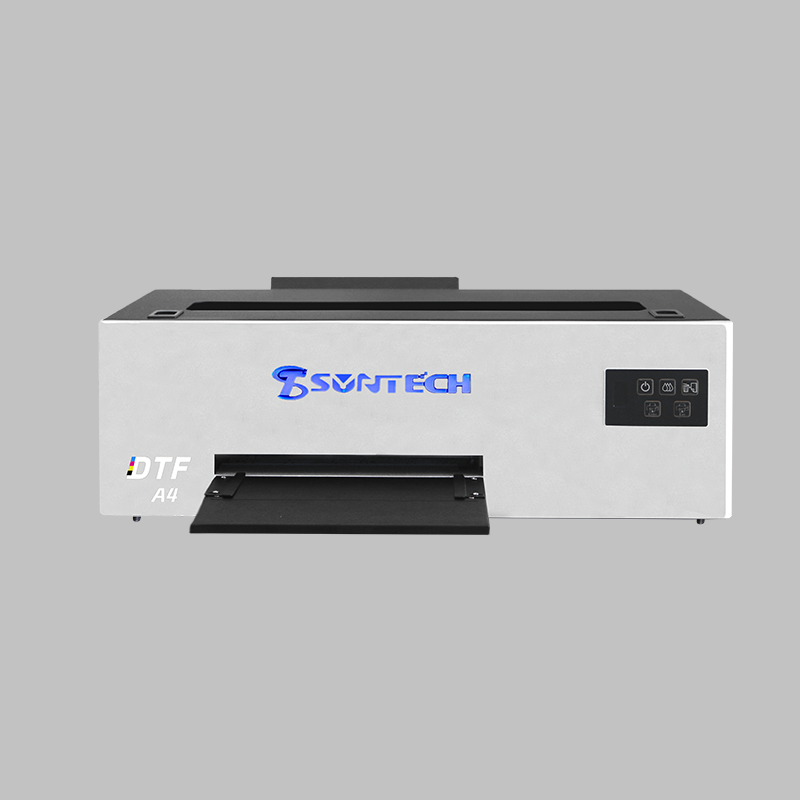
The most popular starting point for small businesses and individual decorators is a modified Epson EcoTank or WorkForce series printer, most commonly the L1800, ET-16650, or P600, which has been converted for DTF operation by a third-party supplier. This process involves replacing the original equipment manufacturer (OEM) ink cartridge system with a continuous ink supply system (CISS) that carries DTF-formulated inks, and adding a white ink channel in place of the light black or gloss optimiser channel originally provided by Epson. Print width is usually restricted to A3 (33 cm), and throughput is typically between 1 and 3 square metres per hour.
While modified desktop printers are cost-effective for start-ups — full conversion kits cost between US$300 and US$800 — they carry real risks. The warranty is voided, white ink recirculation is either manual or absent, and improper maintenance is the primary reason why small DTF operations fail within the first year due to printhead failure. If you choose this option, make sure you budget for replacement printheads and only use DTF-certified inks that are compatible with your specific Epson model.
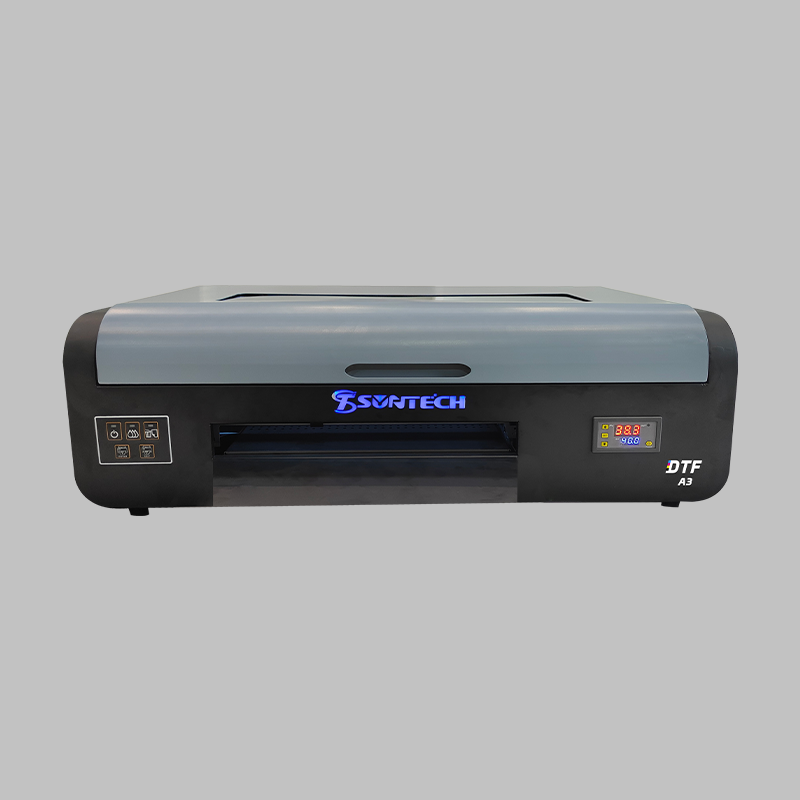
② Purpose-Built Prosumer DTF Printers (A3/A4 Format)
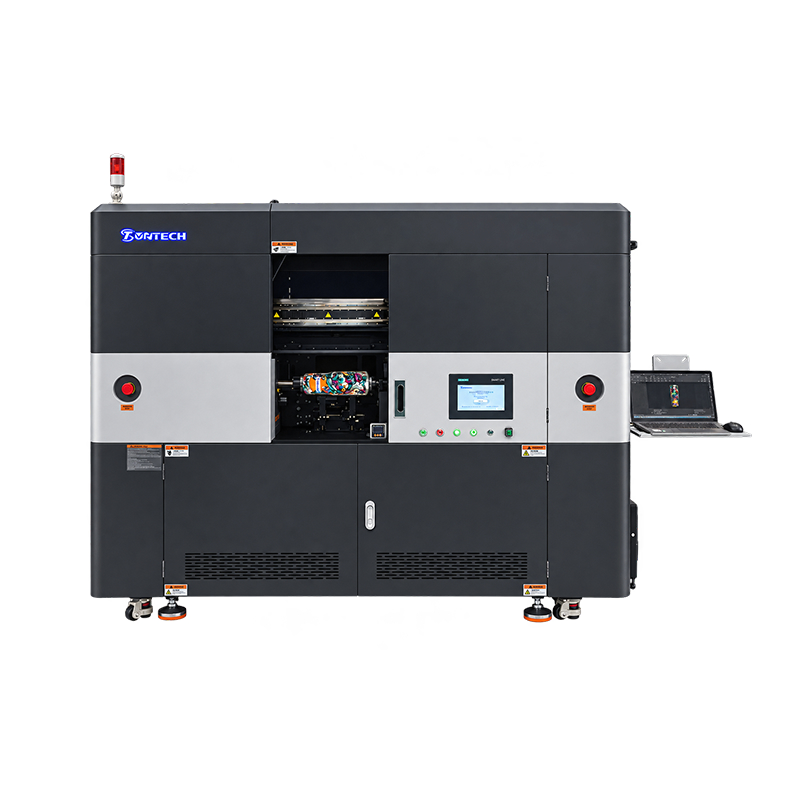
A growing number of manufacturers, including Prestige, Vetaphone and ColDesi, now produce compact direct-to-film (DTF) printers designed from the ground up for this workflow, rather than adapting photo printing hardware. These printers come with white ink agitation, automatic printhead cleaning cycles, and roll film feeding as standard. Print widths range from 30–43 cm, with a throughput of 3–6 sq m/hr, and list prices ranging from US$2,500 to US$7,000.
For small studios producing 20–100 transfers per day, this category offers the best balance of reliability, print quality, and manageable capital investment. Many units also incorporate a powder shaker and curing oven in a combined workflow station, reducing floor space and eliminating the need for manual adhesive application.
③ Wide-Format Industrial DTF Printers (60 cm – 1.8 m)
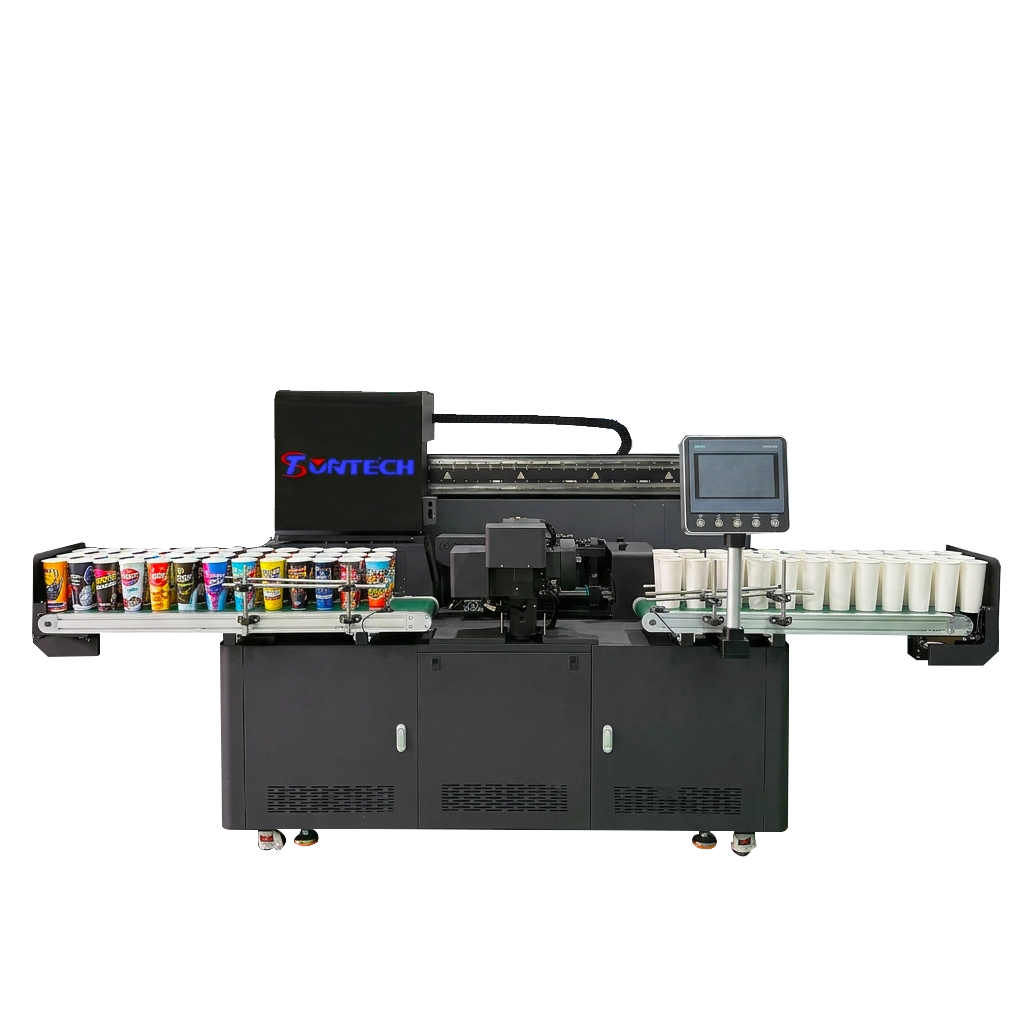
Commercial decorators, contract printers, and factories producing gang sheets in large quantities operate wide-format direct-to-film (DTF) systems from manufacturers such as Mimaki (TxF150-75), Roland, and Epson (SureColor F-series, DTF-configured). Various Chinese OEM brands, including Oric, Hancolor, and Fedar, also produce these systems. These platforms support print widths of 60 cm, 1.2 m, or 1.8 m, with a throughput of over 20–40 sq m/hr in draft mode.
Industrial units use Epson i3200, Kyocera KJ4B, or Ricoh Gen6 printheads, all of which are rated for pigment ink duty cycles at this volume. They also include built-in white ink recirculation loops, automatic bulk ink supply, and tension-controlled roll feeding. Prices start from around US$8,000 for the 60 cm class and increase to over US$30,000 for dual-head 1.8 m configurations.
④ Hybrid and Flatbed DTF Systems
Some production environments benefit from flatbed or hybrid configurations — particularly those transferring DTF prints to rigid substrates (wood, acrylic, foam board) in addition to fabric. Flatbed DTF printers use UV-curable or water-based DTF inks depending on substrate requirements and offer single-sheet production without roll handling. These are a niche category; most garment decorators will not require them unless they are diversifying into hard-goods customisation.
Printhead Comparison: The Heart of DTF Performance
| Epson XP600 | Seiko Epson | 800 nozzles | 5760 dpi | Water-based pigment | Entry / A3 desktop |
| Epson i3200-A1 | Seiko Epson | 3,200 nozzles | 2,400 dpi | Water-based pigment | Mid-volume 60 cm |
| Ricoh Gen5 | Ricoh | 1,280 nozzles | 1.200 dpi | Wide fluid range | Industrial wide-format |
| Ricoh Gen6 | Ricoh | 1,280 nozzles | 1.200 dpi | Low-viscosity pigment | High-speed industrial |
| Kyocera KJ4B-YH | Kyocera | 2,656 nozzles | 600 dpi | High-viscosity fluids | Ultra-high-speed |
| Konica Minolta 1024i | KM | 1,024 nozzles | 720 dpi | Solvent & water-based | Hybrid industrial |
The Epson XP600 and i3200 heads dominate the DTF market because they offer the smallest droplet size (3–5 picoliters) for photographic-level detail at an accessible price point. Ricoh Gen5/Gen6 heads are preferred in high-throughput environments because their stainless-steel face plates and piezoelectric actuation provide superior durability against the abrasive properties of white DTF ink. Kyocera KJ4B heads lead in raw speed, but their 600 dpi native resolution makes them less suited for fine-detail artwork unless oversampling is applied.
Essential Components Beyond the Printer
The DTF printer is just one component of a four-part hardware setup. Incomplete setups are the main reason for poor adhesion, cracked transfers, and rejected production runs.
Powder applicator/shaker: Immediately after printing and while the ink is still wet, a hot-melt thermoplastic adhesive powder (either TPU- or EVA-based) must be applied evenly across the entire printed surface. Manual powder application can be inconsistent; automatic powder shakers use vibrating trays and adjustable conveyor speeds to ensure uniform coverage. For consistent production of more than 30 transfers per day, an automatic shaker is essential.
Curing Oven/Tunnel Dryer: The adhesive powder must be melted at 120–160 °C for 2–3 minutes to bond with the ink layer and form a solid adhesive sheet. Desktop flash-cure units are suitable for low volumes, whereas tunnel conveyor ovens calibrated for DTF dwell time are standard at a commercial scale. Undercured transfers will peel after washing, while overcured transfers will become brittle and crack.
Heat press: The final transfer requires a commercial-grade heat press to apply 160–180°C at medium-to-firm pressure for 10–15 seconds. Cheap heat presses with uneven temperature distribution across the platen — which can be measured using thermal strips — will cause inconsistent adhesion across the transfer, resulting in ghost edges, peeling corners, or colour banding in the cured garment.
Software RIP: A Raster Image Processor (RIP) is mandatory for professional DTF output. RIP software manages ink density curves, white ink underbase generation, colour profiles, and gang sheet nesting. Industry-standard options include Wasatch SoftRIP, Maintop, and AccuRIP Black Pearl. Printing directly from Adobe Illustrator or Photoshop without RIP software will result in washed-out colours and inadequate white channel density.
DTF Printer Selection Matrix by Business Scale
| Hobbyist/startup (< 20 transfers/day) | Modified Epson L1800 / ET-16650 | A3 (33 cm) | 20–50 transfers | US$500–1,200 |
| Small studio (20–100 transfers/day) | Purpose-built prosumer (ColDesi, Prestige) | A3–A4 (30–43 cm) | 100–300 transfers | US$3,000–7,000 |
| Mid-volume decorator (100–500 transfers/day) | 60 cm industrial (Fedar, Oric, Hancolor) | 60 cm | 300–1,000 transfers | US$8,000–16,000 |
| Commercial contract printer (500+ transfers/day) | Wide-format dual-head (Mimaki TxF, Roland) | 1.2–1.8 m | 1,000+ transfers | US$20,000–45,000+ |
| Flexible / hard-goods diversification | Flatbed hybrid | Variable | Variable | US$12,000–30,000 |
Environmental and Sustainability Considerations
The sustainability profile of galvanised steel and aluminium has become an increasingly important factor in public-sector procurement specifications, green building certification frameworks such as LEED and BREEAM, and corporate sustainability reporting. This adds a further dimension to materials selection, sitting alongside the traditional criteria of strength and cost.
Aluminium is produced from bauxite ore via the highly energy-intensive Bayer-Hall-Héroult process: primary aluminium smelting consumes around 13–15 kWh of electricity per kilogram of metal produced. This results in an estimated production carbon footprint of 8–17 kg CO₂e/kg, depending on the electricity grid mix. However, recycling aluminium requires only 5% of the energy required for primary production, and the global recycling rate for aluminium used in construction and transportation exceeds 90% at the end of its life. The embodied carbon footprint of recycled aluminium is approximately 0.5–1.0 kg CO₂e/kg, which is competitive with or better than that of galvanised steel on a lifecycle basis.
Hot-dip galvanised steel has an embodied carbon footprint of around 2.0–2.8 kg CO₂e/kg for the combined steel and zinc coating system. Zinc is highly recyclable (with a global recovery rate of around 80%), and steel recycling is well established, with electric arc furnace steelmaking routinely accepting galvanised scrap. The main sustainability issue with galvanised steel is zinc runoff during rainfall — zinc is recognised as an aquatic toxicant at concentrations above 0.1 mg/L — and this is becoming increasingly regulated under stormwater management frameworks in urban construction contexts.
FAQ: Galvanised Steel vs Aluminium — Most Searched Questions
Q1: Is galvanised steel stronger than aluminium?
Yes, in absolute terms — galvanised structural steel delivers ultimate tensile strength of 400–550 MPa versus 228–310 MPa for common structural aluminium alloys. However, on a strength-to-weight basis, aluminium’s specific strength is approximately twice that of galvanised mild steel, making it superior for applications where weight is a constraint.
Q2: Which is more rust-resistant — galvanised steel or aluminium?
Both materials resist corrosion effectively, but by different mechanisms and in different environments. Aluminium outperforms galvanised steel in marine, coastal, and chloride-rich environments where zinc coatings dissolve faster; galvanised steel is more cost-effective in rural and inland temperate environments where its zinc carbonate patina provides decades of maintenance-free protection.
Q3: Why is aluminium used instead of galvanised steel in some structural applications?
The primary drivers are weight reduction, corrosion performance in aggressive environments, and fabrication flexibility. Aluminium is approximately one-third the weight of steel per unit volume, enabling lighter structures with lower foundation and transportation loads, and it can be extruded into complex profiles that reduce fabrication steps compared to steel.
Q4: Can galvanised steel and aluminium be used together in the same structure?
Yes, but galvanic corrosion must be managed carefully. The electrochemical potential difference between zinc and aluminium is relatively small, but direct contact between bare (ungalvanised) steel and aluminium in the presence of an electrolyte will cause accelerated aluminium corrosion. Isolation gaskets, compatible sealants, and appropriate paint coatings are standard engineering controls for mixed-material assemblies.
Q5: What is the lifespan of galvanised steel compared to aluminium?
Hot-dip galvanised steel with ASTM A123-compliant zinc coating thickness can last 70–100 years in rural atmospheric conditions and 20–40 years in marine or industrial environments before requiring coating maintenance. Aluminium structures in comparable conditions typically achieve similar or longer service lives with minimal maintenance, since the self-healing oxide layer continuously renews without requiring periodic reapplication.
Q6: Which is cheaper — galvanised steel or aluminium?
On a per-kilogram basis, galvanised steel is consistently less expensive than aluminium: structural steel is typically priced at $600–900/tonne (pre-galvanizing), while primary aluminium trades at $2,200–2,600/tonne on the LME. However, on a per-unit-of-structural-performance basis — accounting for weight, section efficiency, fabrication costs, and maintenance over a 30–50 year service life — aluminium is frequently competitive or superior, particularly in corrosive service environments.
Conclusión
The question of whether galvanised steel or aluminium is ‘stronger’ cannot be answered with a single, universal response, and any materials guide that suggests otherwise is oversimplifying a decision with significant engineering and economic implications. Galvanised steel has clear advantages in terms of absolute tensile and yield strength, elastic modulus (stiffness), and cost per kilogram.
This makes it the obvious choice for heavy structural applications, agricultural buildings, transmission infrastructure, and cost-sensitive construction projects where corrosion exposure is moderate and manageable. Aluminium, on the other hand, has clear advantages in terms of specific strength, corrosion resistance in marine and chloride-rich environments, fabrication versatility, weight-sensitive applications and long-term lifecycle costs in aggressive service conditions. Engineers and intelligent buyers must match the material profile to the actual performance requirements of the specific application rather than assuming that a material with a higher tensile strength is automatically the right specification.
References:
① ASM International, ASM Metals Handbook, Volume 2: Properties and Selection of Nonferrous Alloys and Special-Purpose Materials, 10th Edition.
② American Galvanizers Association (AGA), Zinc Coating and Surface Finishing Technical Manual, 2023 Edition.
③ ASTM B308/B308M-2021 — Standard Specification for Aluminum-Alloy 6061-T6 Standard Structural Profiles.
④ ASTM A123/A123M-2017 — Standard Specification for Zinc (Hot-Dip Galvanized) Coatings on Iron and Steel Products.
⑤ EN ISO 1461:2022 — Hot-Dip Galvanized Coatings on Fabricated Iron and Steel Articles.
⑥ Institution of Structural Engineers, Structural Materials Selection Guide, 2022.
⑦ ASM International, Materials Selection in Mechanical Design, 5th Edition, Michael F. Ashby.