
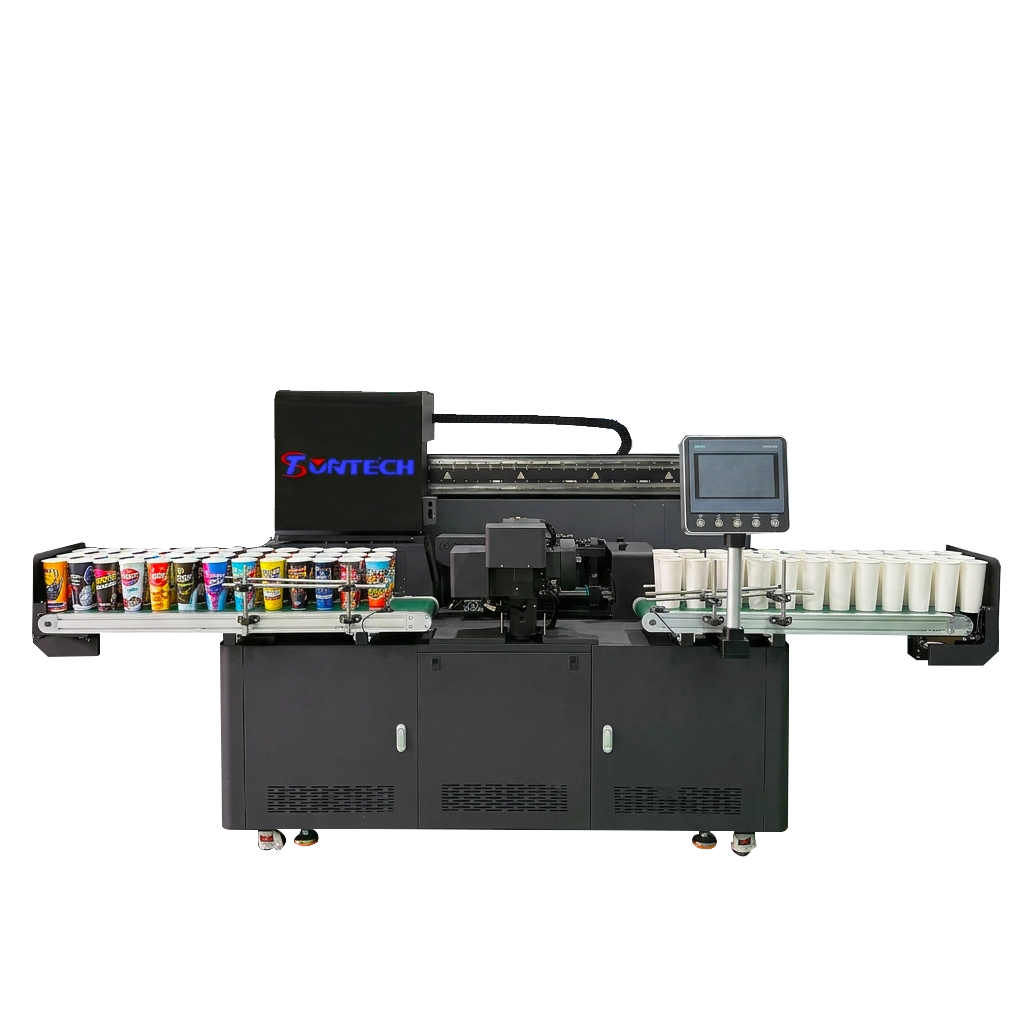
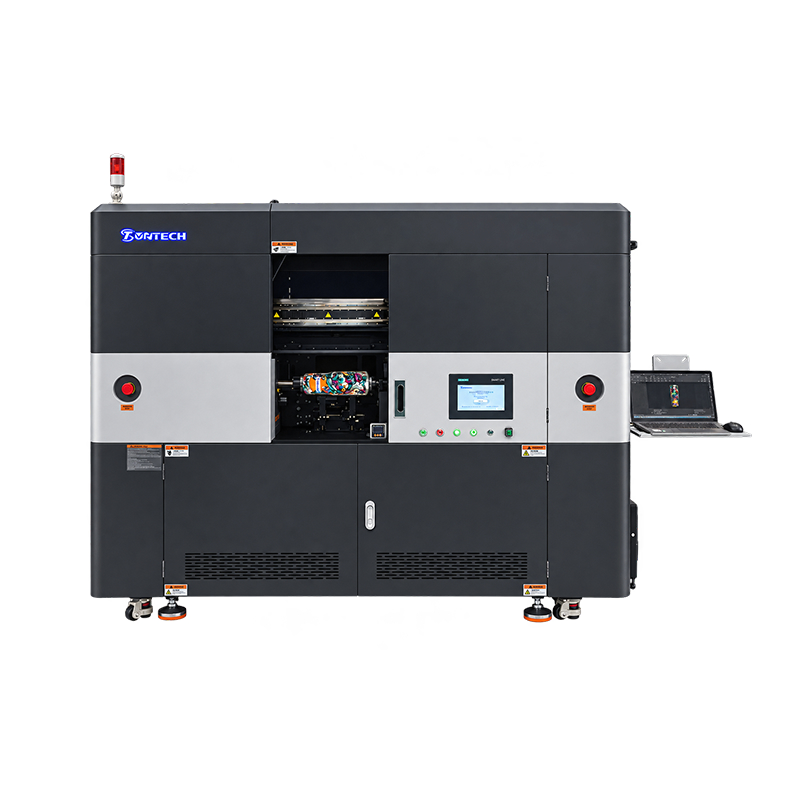
A УФ DTF принтер is widely regarded as one of the most versatile and profitable digital printing solutions for custom product decoration, packaging, promotional branding, industrial labelling and small-batch personalisation. Unlike traditional printing systems, UV DTF (ultraviolet direct-to-film) technology enables users to transfer durable, full-colour graphics onto irregular, curved, hard and non-porous surfaces without the need for direct substrate feeding.
According to research on digital printing published by Printing Industries of America and Smithers Market Reports, and industrial inkjet studies from ScienceDirect, UV-curable printing systems offer strong adhesion, fast curing, reduced production waste, and excellent compatibility with modern, customisation-driven manufacturing markets.
As the global demand for personalised products, short-run production and on-demand branding continues to grow, UV DTF printers are becoming a highly attractive investment for print shops, startups, gift manufacturers, ecommerce sellers and industrial decorators. However, whether buying a UV DTF printer is truly ‘worth it’ depends on production scale, target market, operational capability, maintenance expectations, and longterm business strategy.
Introduction: Why UV DTF Printing Is Growing So Fast?
The digital printing industry has undergone a dramatic transformation over the last decade. Traditional printing methods that once dominated the industrial decoration market are being replaced by increasingly popular flexible digital technologies, which can support short production cycles, personalisation, and high-speed, on-demand manufacturing.
One of the newest and fastest-growing technologies in this transformation is the UV DTF printer.
For many businesses, UV DTF printing represents a breakthrough because it overcomes one of the biggest limitations in product decoration by enabling the printing of durable, high-quality graphics on hard and irregular surfaces without the need for complicated setup procedures.
Today’s consumers increasingly expect:
- Personalised products;
- Small-batch customisation;
- Fast delivery;
- Premium visual quality;
- Durable branding;
- Unique packaging aesthetics.
At the same time, businesses increasingly require production systems that are:
- Flexible
- Cost-efficient
- Экономия места
- Easy to scale
- Suitable for short-run manufacturing
This shift has accelerated global interest in UV DTF technology.
Unlike traditional UV flatbed printing systems, which require the substrate to be placed directly inside the printer, UV DTF printing creates transferable adhesive graphics that can be applied to many different surfaces later on.
This article explores the real commercial value, advantages, limitations, applications, market opportunities, operating costs, and longterm profitability of UV DTF printers, helping businesses to determine whether this technology aligns with their production goals.
What Is a UV DTF Printer?
A UV DTF printer is a digital printing system that uses ultraviolet curable inks to print designs onto a special transfer film. This film can then be applied directly to various hard surfaces.
The term ‘DTF’ stands for ‘direct to film’.
Unlike textile DTF printing, UV DTF printing is primarily designed for rigid or semirigid materials rather than fabrics.
The process typically involves the following steps:
- Printing colour graphics onto release film;
- Applying adhesive layers;
- UV curing the printed image;
- Laminating protective film;
- Transferring the design onto the target surface.
The final transferred graphic behaves similarly to a highly durable sticker, but offers significantly better visual quality, adhesion, and customisation capability.
UV DTF printing is especially valuable because it eliminates many limitations of traditional decoration methods.
How Does UV DTF Printing Work?
Understanding the printing process helps to explain why UV DTF printers have become so important commercially.
Step 1: Preparing the digital artwork
The process begins with the creation of the graphic design using RIP software.
The software controls:
- Ink density
- Colour management
- White ink layering
- Varnish effects
- Разрешение печати
Step 2: Printing on release film
The printer deposits UV-curable inks onto a specialised release film.
Most systems print:
- CMYK colours
- White ink layers
- Optional varnish coatings
White ink is especially important because it improves opacity on transparent or dark surfaces.
Step 3: UV Curing
Integrated UV lamps instantly cure the inks.
This process creates:
- Fast drying
- Strong adhesion
- Scratch resistance
- Chemical resistance
Unlike solvent printing, UV curing minimises drying delays.
Step 4: Film lamination
A protective adhesive film is laminated over the printed image.
Step 5: Graphic transfer
The finished transfer is applied directly to the target object.
The film adheres to surfaces such as:
- Glass
- Metal
- Plastic
- Ceramic
- Wood
- Acrylic
This flexibility is one reason why UV DTF technology has been adopted so quickly across customisation industries.
Why Are Businesses Buying UV DTF Printers?
The global growth of customisation markets is one of the main reasons for the increasing popularity of UV DTF printers.
Modern consumers increasingly prefer personalised products to mass-produced goods.
E-commerce growth
Online marketplaces have dramatically increased demand for customised products.
Popular categories include:
- Personalised drinkware
- Beauty packaging
- Wedding gifts
- Corporate branding products
- Luxury packaging
- Рекламные товары
UV DTF technology supports all of these applications.
Demand for small-batch manufacturing
Traditional industrial decoration methods often require expensive setup procedures.
UV DTF printing allows for:
- Low-volume production
- Fast customisation
- On-demand manufacturing
This significantly lowers entry barriers for small businesses.
Product diversity
One UV DTF printer can support dozens of product categories.
This improves business flexibility.
High profit margins
Customised products often generate significantly higher margins than generic merchandise.
Many businesses recover equipment costs relatively quickly through premium personalised products.
Major Advantages of UV DTF Printers
The popularity of UV DTF printers is driven by several major commercial and technical advantages.
Широкая совместимость с материалами
One of the biggest benefits is compatibility with many surfaces.
UV DTF transfers work well on:
| Surface Type | Compatibility |
| Glass | Excellent |
| Metal | Excellent |
| Plastic | Excellent |
| Ceramic | Excellent |
| Wood | Good |
| Acrylic | Excellent |
| Leather | Moderate |
This versatility expands potential business opportunities.
No need for direct printing setup
Unlike flatbed printers, UV DTF systems do not require objects to fit inside the printer.
This dramatically simplifies production.
High visual quality
Modern UV DTF printers produce:
- Vivid colours
- Gloss effects
- High resolution
- Strong detail reproduction
A premium appearance that helps businesses compete in the luxury customisation market.
Fast production speed
UV curing enables immediate handling after printing.
This improves workflow efficiency.
Strong adhesion and durability
UV-cured inks offer:
- Scratch resistance
- Water resistance
- Chemical resistance
- UV stability
This makes UV DTF suitable for commercial and industrial applications.
Industries Using UV DTF Printers
UV DTF technology has experienced rapid expansion across multiple industries.
Promotional products industry
Customised promotional merchandise is one of the largest market segments.
Examples include:
- Corporate gifts
- Branded bottles
- Event merchandise
Packaging industry
Luxury packaging is increasingly decorated using UV DTF.
Personalised gift industry
Consumers are increasingly purchasing:
- Personalised cups
- Customised containers
- Decorative products
Industrial labelling
UV DTF supports durable industrial labels and branding applications.
Cosmetic packaging
Premium cosmetic brands often require highly decorative packaging solutions.
UV DTF printing offers a strong visual impact.
Is a UV DTF Printer Profitable?
Profitability depends heavily on business strategy.
However, many businesses are attracted to UV DTF systems because of their flexibility and relatively low production costs.
- Revenue potential
Customised products usually command premium pricing.
- Lower inventory risk
On-demand production reduces the risk of having unsold inventory.
- Small team operation
Many UV DTF businesses operate successfully with minimal staffing.
- Fast market adaptation
Businesses can respond quickly to social media trends and seasonal demand.
Costs and Investment Considerations
Before purchasing a UV DTF printer, it is important for buyers to carefully evaluate the total operating costs.
Equipment cost
Printer prices vary significantly depending on:
- Ширина печати
- Printhead type
- Automation level
- Production speed
Consumables
Ongoing costs include:
- UV inks
- Transfer films
- Adhesive materials
- Cleaning fluids
Maintenance:
UV printing systems require regular maintenance to prevent printhead clogging.
Training requirements
Operators must understand:
- Colour management
- Программное обеспечение RIP
- Film handling
- Maintenance procedures
Common Challenges of UV DTF Printing
Despite its advantages, UV DTF technology has limitations.
- Printhead maintenance:
UV inks can clog printheads if they are not maintained properly.
- Material compatibility variations
Certain textured surfaces may reduce adhesion quality.
- Film waste
Improper handling can increase consumable waste.
- Learning curve
It may take beginners time to achieve consistent production.
Understanding these challenges helps businesses avoid unrealistic expectations.
How to Choose the Right UV DTF Printer?
The performance level of not all UV DTF systems is the same.
Important considerations include:
- Printhead technology
Higher-quality printheads improve:
- Разрешение
- Скорость
- Reliability
- Ink stability:
Stable ink systems reduce maintenance problems.
- Software compatibility
Good RIP software improves production efficiency.
- Technical support
Reliable after-sales support is extremely important.
- Automation features
Advanced systems may include:
- Automatic cleaning
- White ink circulation
- Film tension control
Why is Shenzhen Suntech Digital Equipment relevant in the UV DTF Market?
As demand for UV DTF printing grows globally, equipment manufacturers are competing more fiercely than ever before.
- Print quality
- Stability
- Automation
- Production efficiency
- Technical support
Shenzhen Suntech Digital Equipment has become increasingly associated with digital printing equipment solutions that support UV DTF production applications for customised product manufacturing and industrial decoration markets.
Modern businesses increasingly prioritise suppliers capable of offering:
- Reliable machine stability
- Consistent print quality
- Technical support systems
- Flexible production capability
- Longterm equipment reliability
In competitive customisation industries, equipment quality significantly influences profitability and operational efficiency.
Future Trends in UV DTF Printing
The UV DTF industry is continuing to evolve rapidly.
Several important trends are influencing its future development.
- AI-driven workflow automation
Artificial intelligence may improve:
- Colour correction;
- Production optimisation;
- Predictive maintenance;
- Eco-friendly UV inks.
Manufacturers are increasingly developing lower-VOC ink systems.
- Higher-speed production
Industrial-scale UV DTF systems are continuing to improve output speeds.
- Smart packaging applications
UV DTF may increasingly support:
- QR code integration
- Interactive branding
- Personalised packaging systems
- Expanded material compatibility
Future transfer technologies may support more complex substrates.
These innovations will likely lead to further adoption of UV DTF.
FAQ About UV DTF Printers
What is a UV DTF printer used for?
It is used to create transferable graphics for decorating hard surfaces such as glass, metal, plastic, ceramic, and wood products.
Is UV DTF printing durable?
Yes. UV-cured graphics offer strong resistance to water, scratches, and fading.
Can UV DTF print on curved objects?
Yes. This is one of its biggest advantages compared with flatbed printing.
Is UV DTF profitable for small businesses?
Many small businesses find UV DTF profitable because it supports low-volume customization and premium pricing.
What materials work best with UV DTF transfers?
Glass, metal, plastic, acrylic, and ceramic surfaces usually provide excellent results.
How long do UV DTF prints last?
Durability depends on material and usage conditions, but high-quality transfers can remain stable for years under normal use.
Заключение
A UV DTF printer is definitely worth considering for businesses focused on customisation, promotional products, packaging decoration, personalised merchandise and short-run manufacturing. Its ability to produce durable, high-quality graphics on hard and irregular surfaces gives it a significant advantage over many traditional printing systems.
As the global demand for personalised products and flexible manufacturing continues to increase, UV DTF technology offers significant commercial potential for entrepreneurs, print shops, industrial decorators and ecommerce sellers who are looking for scalable production opportunities with relatively low barriers to entry.
However, profitability depends heavily on selecting the right equipment, understanding maintenance requirements, targeting the right customer markets, and maintaining consistent production quality. Those that combine strong design capability, efficient workflow management and reliable equipment partnerships — such as those supported by suppliers like Shenzhen Suntech Digital Equipment — will likely remain highly competitive within the rapidly growing UV DTF printing industry.