
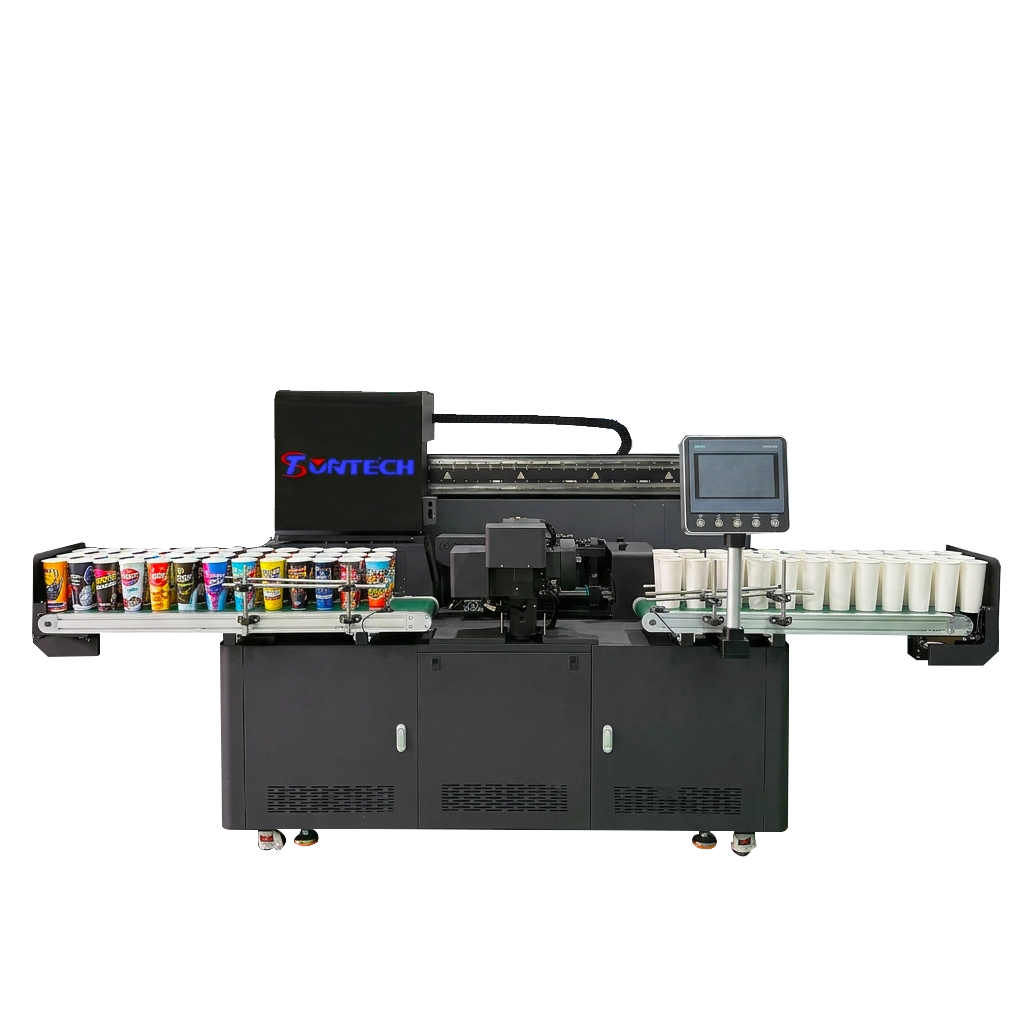

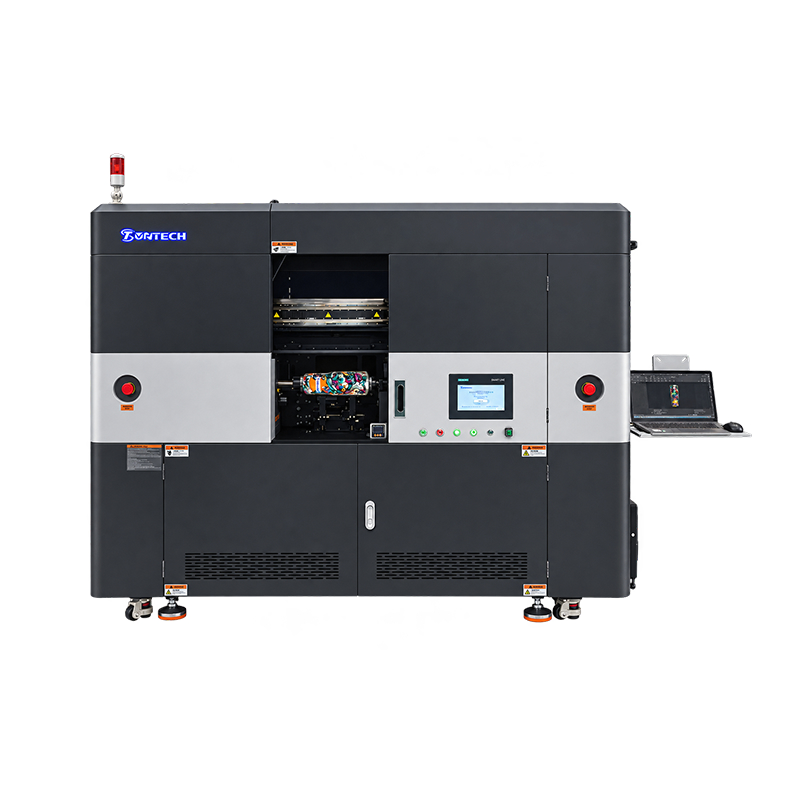
A Impresora plana UV is a type of digital inkjet printing technology that prints directly onto substrates using ink that cures and hardens instantly as it dries under ultraviolet light.
As indicated by The Handbook of Industrial Inkjet Printing and other works, such as imaging, UV-curable materials books, the UV flatbed printing system has made it possible to adopt digital direct-to-substrate printing with high resolution and durability, a variety of materials, which find applications in advertising, packaging, manufacturing, interior decoration, electronics, and customized products.
Understanding the UV Flatbed Printer and Why It Matters Today
The modern UV flatbed printer is one of the most transformative technologies in digital printing, fundamentally changing how graphics, images, textures, and branding elements are applied to industrial materials. Unlike traditional printers, which require paper, vinyl transfer films or specialised intermediate media, UV flatbed printers can print directly onto a wide range of flat or semi-flat substrates, including glass, acrylic, wood, leather, ceramics, PVC, aluminium, metal sheets, plastics, composite boards and packaging materials.
This direct-to-substrate capability has dramatically increased manufacturing flexibility in many different industries. Businesses no longer require large production runs or expensive screen-printing setups to create customised products. Instead, UV flatbed systems enable on-demand digital manufacturing with a fast turnaround, personalised graphics and the ability to print variable data.
The core technological breakthrough behind UV flatbed printing is ultraviolet curing. During printing, specially formulated UV-curable inks are deposited onto the substrate surface. UV LED lamps then expose the ink to ultraviolet radiation, causing instant polymerisation and hardening. This eliminates the need for traditional drying times and enables printed products to be handled immediately.
The growing demand for customised manufacturing, short production cycles, personalised consumer products, flexible packaging, industrial decoration, and small-batch production has accelerated the adoption of UV flatbed printing worldwide.
Industrial manufacturers such as Shenzhen Suntech Digital Equipment have expanded the development of UV printers into multiple sectors, offering solutions for industrial signage, customized gifts, electronics decoration, packaging, advertising boards, home décor, cylindrical products, promotional products, and leather applications. As digital manufacturing becomes increasingly important in Industry 4.0 environments, UV flatbed printers are evolving from simple printing devices into integrated production platforms.
How Does a UV Flatbed Printer Work?
To understand what a UV flatbed printer is used for, it is important to understand how the technology functions.
A UV flatbed printer operates using several coordinated systems:
| System Component | Function |
| Cabezal de impresión | Deposits UV ink droplets |
| Flatbed Vacuum Table | Holds substrate securely |
| UV LED Lamps | Instantly cure ink |
| Motion Control System | Guides print carriage |
| Software RIP | Processes digital image data |
| Ink Supply System | Delivers controlled ink flow |
| Height Detection System | Prevents nozzle collision |
Unlike roll-to-roll printers, which are mainly designed for flexible media, flatbed printers keep the substrate stationary while the print carriage moves across the surface.
The workflow generally follows these steps:
1) Digital artwork is processed using RIP software.
2) The substrate is positioned on the vacuum table.
3) Printheads then spray UV-curable ink onto the surface.
4) UV LED lamps then instantly cure the ink.
5) The finished products are ready immediately after printing.
This instant-curing process provides several advantages, including faster production, reduced smudging, improved adhesion, stronger colour stability, and higher scratch resistance.
Modern UV flatbed systems also support white ink printing, varnish effects, embossing textures, multilayer printing, glossy finishes, and matte effects. Some advanced systems can even produce simulated 3D textures and raised surface effects.
According to industrial product information from Shenzhen Suntech Digital Equipment, many modern machines support CMYK + White + Varnish configurations, enabling highly sophisticated decorative effects and industrial-grade image quality.
Main Applications of UV Flatbed Printers
The UV flatbed printer market continues to grow rapidly, largely thanks to the technology’s extraordinary versatility. These systems support a wide range of industries, from advertising to electronics manufacturing.
- Advertising and Signage Industry
The advertising sector is one of the largest users of UV flatbed printing technology.
Applications include outdoor signs, acrylic displays, exhibition boards, POP displays, illuminated signage, promotional panels, and retail graphics.
Because UV printers can print directly onto rigid substrates, several traditional production steps are eliminated.
Large-format UV flatbed systems are particularly valuable in shopping malls, airports, commercial buildings, exhibitions, and event production.
According to Shenzhen Suntech Digital Equipment, large-format UV printers can handle advertising materials measuring up to 3200×2000 mm without requiring splicing.
- Packaging industry
Packaging manufacturers are increasingly using UV flatbed printers for:
- Prototype packaging
- Luxury gift boxes
- Short-run packaging
- Spot UV decoration
- Personalised packaging
UV technology enables premium visual effects that improve shelf appeal.
Luxury brands frequently use varnish textures, embossing simulations, metallic effects, and layered gloss finishes to differentiate products in competitive retail environments.
- Home decoration and furniture
Interior design applications have expanded rapidly in recent years.
UV flatbed printers can now produce decorative wall panels, ceramic tile graphics, glass artwork, wood decoration, cabinet graphics, and custom furniture surfaces. Direct printing onto wood, glass and composite boards enables highly customised interior aesthetics.
- Electronics and consumer products
Many manufacturers use UV flatbed systems for phone cases, laptop covers, electronic accessories, promotional gadgets, and industrial control panels. The ability to print on irregular industrial materials has made UV printing increasingly valuable in electronics manufacturing.
- Industrial Manufacturing
Industrial applications include:
- Membrane panels
- Equipment labels
- Machine graphics
- Automotive panels
- Control interfaces
UV printing supports durable industrial marking with strong adhesion and chemical resistance.
Materials That a UV Flatbed Printer Can Print On
One of the most important advantages of UV flatbed technology is broad material compatibility.
Below is a simplified material compatibility table:
| Material | UV Printing Compatibility |
| Acrylic | Excellent |
| Glass | Excellent |
| Wood | Excellent |
| PVC | Excellent |
| Leather | Excellent |
| Aluminum | Excellent |
| Ceramic | Good |
| Plastic | Excellent |
| Foam Board | Excellent |
| Metal Sheets | Excellent |
| Composite Panels | Excellent |
| Fabric | Limited |
| Silicone | Challenging |
According to industry discussions and commercial printing professionals, some materials may require primers or special adhesion treatments to ensure long-term durability.
Smooth, non-porous surfaces, such as glass, ceramic mugs, and polished metal, sometimes require specialised coatings to improve ink adhesion.
Modern UV flatbed systems can support printing on rigid and semi-flexible materials, as well as textured surfaces and uneven substrates. This flexibility is one reason why UV flatbed technology is increasingly replacing traditional screen printing for short-run production.
Advantages of UV Flatbed Printers Compared With Traditional Printing
The growth of UV flatbed printing is largely driven by advantages over older production methods.
| Característica | Impresora plana UV | Traditional Printing |
| Direct-to-substrate printing | Yes | Often limited |
| Instant curing | Yes | No |
| Short-run efficiency | Excellent | Poor |
| Customization | High | Limited |
| Setup time | Low | High |
| Material flexibility | Very high | Moderate |
| Variable data printing | Easy | Difficult |
| Environmental efficiency | Improved | Depends on solvent systems |
Traditional screen printing remains cost-effective for massive production volumes, but UV flatbed printing dominates:
- Customization
- Prototyping
- Small batches
- Premium graphics
- Rapid production
Another major advantage is workflow simplification.
UV flatbed systems reduce:
- Transfer steps
- Drying time
- Manual labor
- Inventory requirements
This aligns closely with modern on-demand manufacturing trends.
Important Technical Features to Consider
When evaluating a UV flatbed printer, businesses should understand several critical technical factors.
- Printhead technology
Modern systems may use:
- Epson XP600
- Ricoh G5/G6
- Industrial grayscale heads
- Industrial-grade heads
Industrial-grade heads improve:
- Velocidad
- Durabilidad
- Droplet precision
- Grayscale control
Shenzhen Suntech Digital Equipment offers systems using both Epson and Ricoh industrial printheads, depending on production requirements.
- Resolución de impresión
High-end UV systems can achieve the following resolutions:
- 720 DPI
- 1440 DPI
Grayscale variable droplet printing
Higher resolution improves:
- Photographic detail
- Gradient smoothness
- Fine text quality
- Configuración de tinta
Common configurations include:
- CMYK
- CMYK + white
- CMYK + white + varnish
White ink is especially important for printing on transparent or dark materials.
- Curing technology
LED UV curing systems provide:
- Low heat generation
- Energy efficiency
- A long lifespan
- Instant drying
- Automation features
Modern industrial systems increasingly integrate the following features to improve industrial production efficiency:
- Automatic height detection
- CCD vision positioning
- Conveyor systems
- Remote monitoring
- MES integration
Common Challenges and Limitations
Despite their advantages, UV flatbed printers are not the perfect solution for every application.
Maintenance requirements
UV printers require regular maintenance to prevent clogging of the printheads by dried ink.
Industry professionals emphasise the importance of frequent printing, humidity control, nozzle cleaning, and proper ventilation.
Adhesion limitations
Not all materials achieve perfect adhesion without primers.
Some difficult substrates include silicone, smooth ceramics, and powder-coated metals.
Environmental conditions
UV printing environments require stable humidity, controlled temperature, and proper airflow.
Ink safety
Liquid UV inks require careful handling and ventilation before curing.
Initial investment
Industrial-grade UV flatbed systems can represent a significant capital investment, although the production flexibility they offer often offsets the costs over time.
Emerging Trends in UV Flatbed Printing
The UV flatbed printer industry is continuing to evolve rapidly.
- AI-assisted printing
Modern systems are increasingly integrating automated calibration, predictive maintenance, and AI image optimisation.
- Smart factory integration
UV printers are becoming connected manufacturing devices within Industry 4.0 ecosystems.
- Expanded material compatibility
Research is ongoing to improve flexible UV inks, adhesion chemistry, and hybrid substrate printing.
- 3D texture printing
Advanced systems are increasingly supporting raised textures, tactile surfaces, and simulated embossing.
- Sustainable printing
Manufacturers are focusing on:
- Lower VOC emissions
- Energy-efficient curing
- Recyclable ink systems
These trends are reshaping the global industrial digital printing landscape.
FAQ About UV Flatbed Printers
- What is a UV flatbed printer used for?
A UV flatbed printer is used for directly printing high-resolution graphics onto materials such as acrylic, wood, glass, metal, leather, PVC, ceramic, and plastic.
- Can UV flatbed printers print on wood?
Yes. UV flatbed printers are widely used for direct printing on wood panels, furniture surfaces, signs, and decorative products.
- What materials cannot be printed easily with UV printers?
Silicone, some smooth ceramics, and certain coated metals may require primers or specialized adhesion treatments.
- Is UV printing durable?
Yes. UV-cured inks typically provide strong durability, scratch resistance, and good color stability.
- What industries use UV flatbed printers?
Industries include advertising, packaging, furniture, electronics, manufacturing, interior decoration, promotional products, and customized gift production.
- What is the difference between UV printing and traditional printing?
UV printing uses ultraviolet light to instantly cure ink directly on substrates, while traditional printing often requires drying time and additional transfer processes.
Conclusión
The UV flatbed printer is one of the most versatile and transformative technologies in modern digital manufacturing. By combining the precision of inkjet technology with UV-curable chemistry, these systems enable businesses to print directly onto a wide range of materials while achieving high-resolution graphics, rapid production cycles and highly customised output.
Applications now extend far beyond traditional signage and advertising into industrial manufacturing, packaging, electronics, furniture decoration, consumer products, and smart manufacturing environments. With the continued growth of personalisation, short-run production and on-demand manufacturing on a global scale, UV flatbed printing technology is expected to play an increasingly central role in industrial production systems.
Manufacturers such as Shenzhen Suntech Digital Equipment continue to advance UV flatbed printer technology by incorporating industrial-grade printheads, intelligent automation systems, expanded material compatibility, and integrated digital manufacturing solutions. These innovations are helping to transform UV printing from a specialised niche into a mainstream production technology across global industries.